5.1 Measurement of the sound absorption of a room is part of the procedure for other acoustical measurements, such as determining the sound power level of a noise source or the sound transmission loss of a partition. It is also used in certain calculations such as predicting the sound pressure level in a room when the sound power level of a noise source in the room is known.
5.2 The sound absorption coefficient of a surface is a property of the material composing the surface. It is ideally defined as the fraction of the randomly incident sound power absorbed by the surface, but in this test method it is operationally defined in 4.2. The relationship between the theoretically defined and the operationally measured coefficients is under continuing study.
5.3 Diffraction effects4 usually cause the apparent area of a specimen to be greater than its geometrical area, thereby increasing the coefficients measured according to this test method. When the test specimen is highly absorptive, these values may exceed unity.
5.4 The coefficients measured by this test method should be used with caution because not only are the areas encountered in practical usage usually larger than the test specimen, but also the sound field is rarely diffuse. In the laboratory, measurements must be made under reproducible conditions, but in practical usage the conditions that determine the effective absorption are often unpredictable. Regardless of the differences and the necessity for judgment, coefficients measured by this test method have been used successfully by architects and consultants in the acoustical design of architectural spaces.
5.5 Field Measurements—When sound absorption measurements are made in a building in which the size and shape of the room are not under the operator’s control, the approximation to a diffuse sound field is not likely to be very close. This matter should be considered when assessing the accuracy of measurements made under field conditions. (See Test Method E2235 for a procedure that can be used in the field with less sophisticated instrumentation.)

Copyrighted standard notice
According to international copyright regulations and DASM policy, only the standard summary and test methodology are displayed. Direct download is not available.
VILAS 1541
DASM conducts testing according to this standard
DASM Acoustic Laboratory has accredited capability to conduct 1 testing method(s) compliant with standard ASTM C423-22:
- Determination of sound absorption coefficient – reverberation room method(ASTM C423-22; ISO 354:2003)
VILAS 1541 · ISO/IEC 17025
Need advice on SOUND DESIGN & SIMULATION SERVICES?
Acoustical design services, sound simulation using software for projects specializing in acoustics
Related Articles
Articles from the same category or related topics
- 3 min read
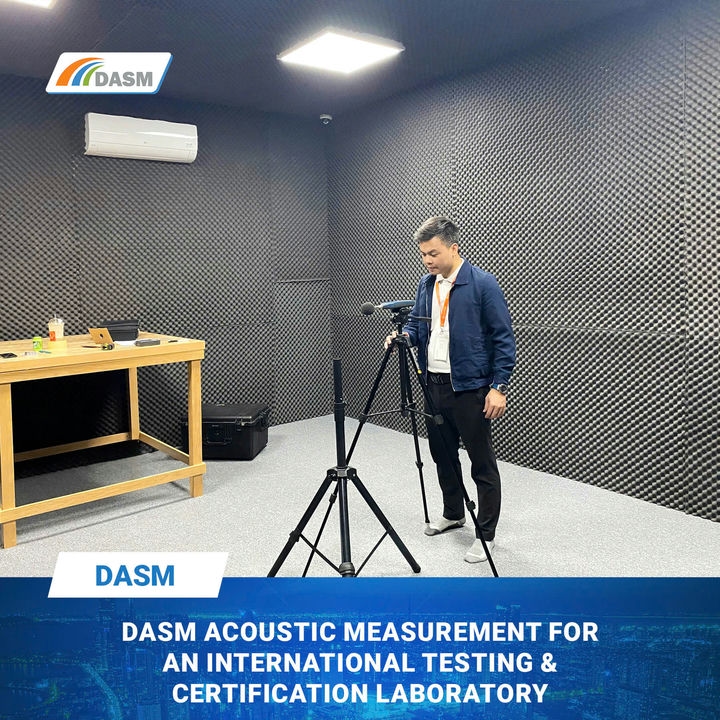
Advanced Acoustic Measurement & Noise Emission Testing for International Testing & Certification Laboratories
DASM provides advanced acoustic measurement and noise emission testing services for Testing & Certification laboratories, ISO-compliant procedures
Read more → - 4 min read
Sound Absorption: Definition, Formula, Measurement & Applications
Learn what sound absorption is, how it works, absorption coefficient (α), testing methods like Kundt’s tube (ISO 10534-2) and reverberation room (ISO 354)
Read more → - 6 min read
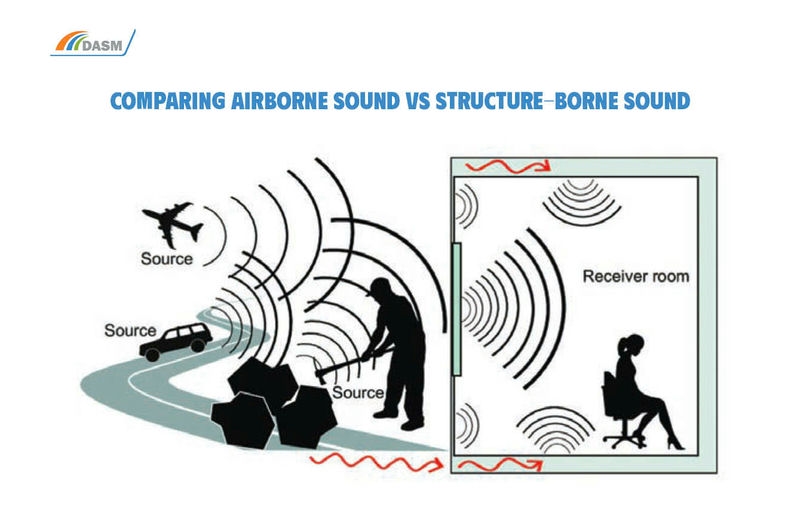
What Is The Difference Between Airborne Sound And Structure-Borne Sound?
Airborne sound and structure-borne sound are different, yet many people still can’t distinguish them clearly.
Read more →