Significance and Use
5.1 The insertion loss of a pipe lagging system depends upon the lagging system materials, the method used to apply the materials, the pipe wall thickness, the size and shape of the bare and lagged pipe, and the mechanisms causing noise radiation from the pipe. Insertion losses measured using this test method should be used with some caution. In the laboratory, measurements must be made under reproducible conditions, but in practical usage in the field, the conditions that determine the effective insertion loss are difficult to predict and they may lead to slightly different results. Insertion losses measured with this test method can be used successfully for acoustical design purposes. Insertion losses measured with this test method are most useful for pipes and lagging systems which are similar to those used in the laboratory configuration.
5.2 This test method may be used to rank-order pipe lagging systems according to insertion loss or to estimate the field insertion loss of pipe lagging systems installed in the field.
5.3 This test method assumes that pipe wall stresses resulting from different methods of supporting the test pipe in the laboratory do not have a significant effect upon the measured insertion loss.
5.4 Pipe lagging systems typically have small insertion loss, and sometimes negative insertion loss, at frequencies below 500 Hz. The results obtained at frequencies below 500 Hz may be somewhat erratic. Sound sources used with this test method normally have a low frequency limit in the range from 300 to 500 Hz. For these reasons, the lowest band of frequencies for which results are required is centered at 500 Hz.
Scope
1.1 This test method covers the measurement of the insertion loss of pipe lagging systems under laboratory conditions.
1.2 A procedure for accrediting a laboratory for purposes of this test method is given in Annex A1.
1.3 This standard does not purport to address all of the safety concerns, if any, associated with its use. It is the responsibility of the user of this standard to establish appropriate safety and health practices and determine the applicability of regulatory limitations prior to use.
Copyrighted standard notice
According to international copyright regulations and DASM policy, only the standard summary and test methodology are displayed. Direct download is not available.
VILAS 1541
DASM conducts testing according to this standard
DASM Acoustic Laboratory has accredited capability to conduct 1 testing method(s) compliant with standard ASTM E1222-90(2016):
- Determination of insertion loss of lagging for industrial piping systems(ASTM E1222-90(2016))
VILAS 1541 · ISO/IEC 17025
Need acoustic engineering advice?
Get in touch with DASM specialists for on-site surveys, VILAS 1541 testing, and optimized solutions for your facility.
Related Articles
Articles from the same category or related topics
- 3 min read
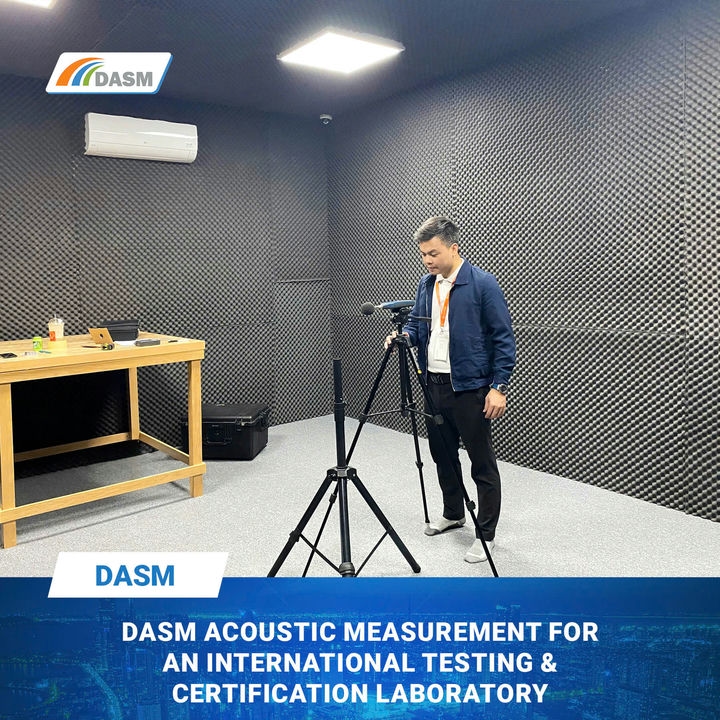
Advanced Acoustic Measurement & Noise Emission Testing for International Testing & Certification Laboratories
DASM provides advanced acoustic measurement and noise emission testing services for Testing & Certification laboratories, ISO-compliant procedures
Read more → - 4 min read
Sound Absorption: Definition, Formula, Measurement & Applications
Learn what sound absorption is, how it works, absorption coefficient (α), testing methods like Kundt’s tube (ISO 10534-2) and reverberation room (ISO 354)
Read more → - 6 min read
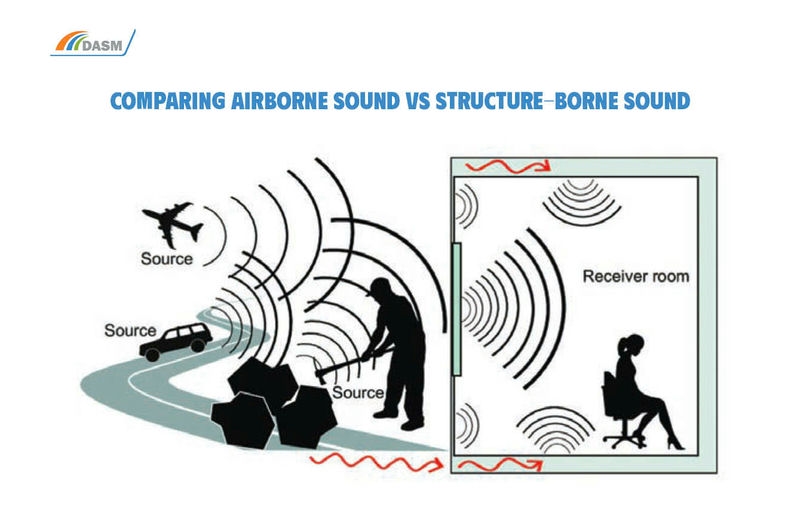
What Is The Difference Between Airborne Sound And Structure-Borne Sound?
Airborne sound and structure-borne sound are different, yet many people still can’t distinguish them clearly.
Read more →