Significance and Use
5.1 Sound transmission loss as defined in Terminology C634, refers to the response of specimens exposed to a diffuse incident sound field, and this is the test condition approached by this laboratory test method. The test results are therefore most directly relevant to the performance of similar specimens exposed to similar sound fields. They provide, however, a useful general measure of performance for the variety of sound fields to which a partition or element may typically be exposed.
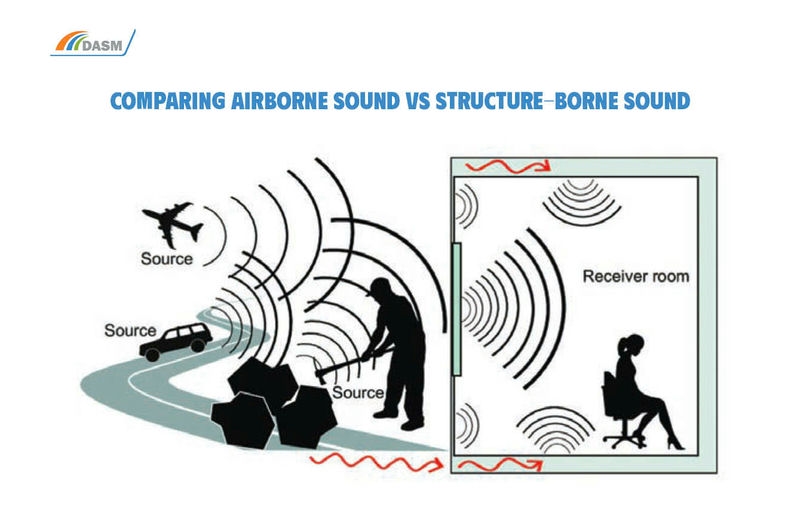
5.2 In laboratories designed to satisfy the requirements of this test method, the intent is that only significant path for sound transmission between the rooms is through the test specimen. This is not generally the case in buildings where there are often many other paths for sounds—flanking sound transmission. Consequently sound ratings obtained using this test method do not relate directly to sound isolation in buildings; they represent an upper limit to what would be measured in a field test.
5.3 This test method is not intended for field tests. Field tests shall be performed according to Test Method E336.
NOTE 2: The comparable quantity measured using Test Method E336 is called the apparent sound transmission loss because of the presence of flanking sound transmission.
Scope
1.1 This test method covers the laboratory measurement of airborne sound transmission loss of building partitions such as walls of all kinds, operable partitions, floor-ceiling assemblies, doors, windows, roofs, panels, and other space-dividing elements.
1.2 Laboratories are designed so the test specimen constitutes the primary sound transmission path between the two test rooms and so approximately diffuse sound fields exist in the rooms.
1.3 Laboratory Accreditation—The requirements for accrediting a laboratory for performing this test method are given in Annex A4.
1.4 This standard does not purport to address all of the safety concerns, if any, associated with its use. It is the responsibility of the user of this standard to establish appropriate safety and health practices and determine the applicability of regulatory limitations prior to use.

Copyrighted standard notice
According to international copyright regulations and DASM policy, only the standard summary and test methodology are displayed. Direct download is not available.
VILAS 1541
DASM conducts testing according to this standard
DASM Acoustic Laboratory has accredited capability to conduct 1 testing method(s) compliant with standard ASTM E90-09(2016):
- Evaluation of sound transmission loss between partitions and structures in buildings(ASTM E90-09(2016))
VILAS 1541 · ISO/IEC 17025
Need advice on SOUND DESIGN & SIMULATION SERVICES?
Acoustical design services, sound simulation using software for projects specializing in acoustics
Related Articles
Articles from the same category or related topics
- 3 min read
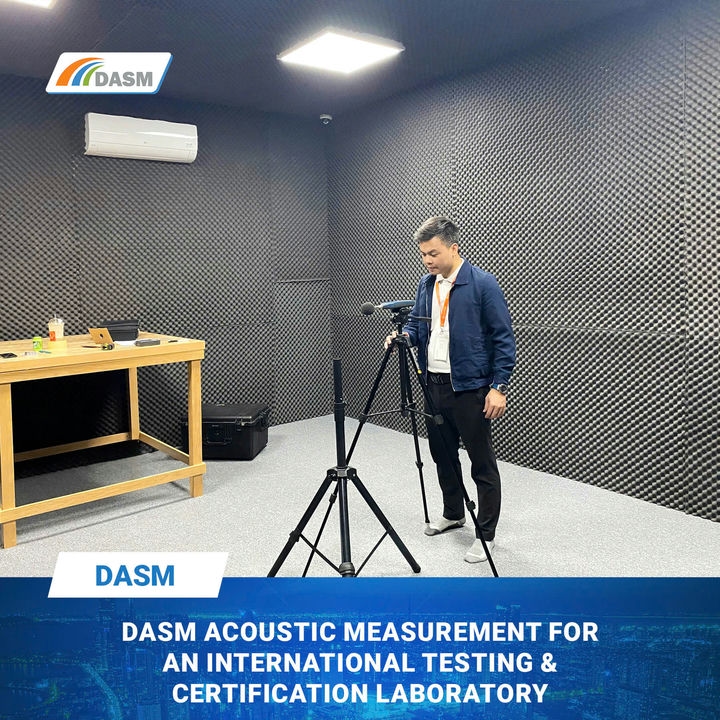
Advanced Acoustic Measurement & Noise Emission Testing for International Testing & Certification Laboratories
DASM provides advanced acoustic measurement and noise emission testing services for Testing & Certification laboratories, ISO-compliant procedures
Read more → - 4 min read
Sound Absorption: Definition, Formula, Measurement & Applications
Learn what sound absorption is, how it works, absorption coefficient (α), testing methods like Kundt’s tube (ISO 10534-2) and reverberation room (ISO 354)
Read more → - 6 min read
What Is The Difference Between Airborne Sound And Structure-Borne Sound?
Airborne sound and structure-borne sound are different, yet many people still can’t distinguish them clearly.
Read more →