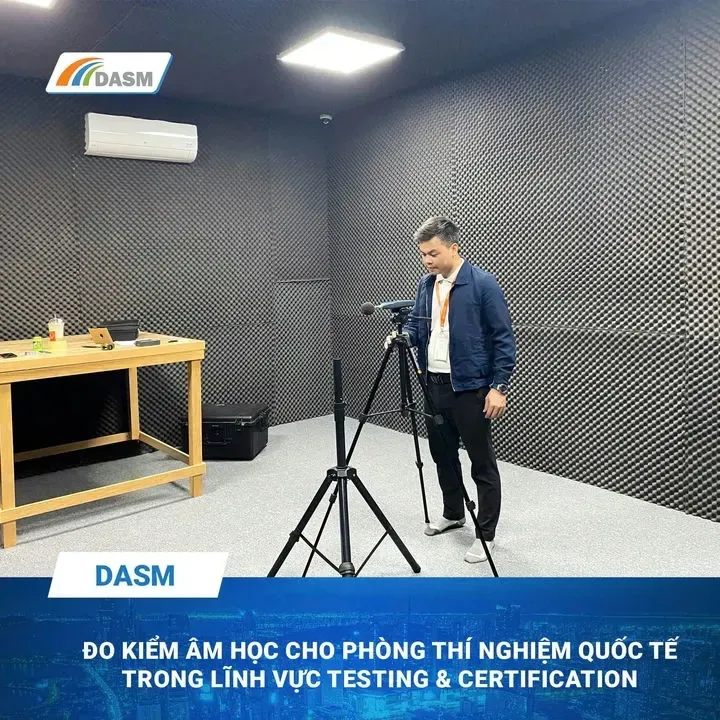
DASM participated in the workshop on long-span bridges for high-speed railways to update structural design trends, approach the problem of noise and vibration control – building acoustics, and prepare capacity for large-scale infrastructure projects.
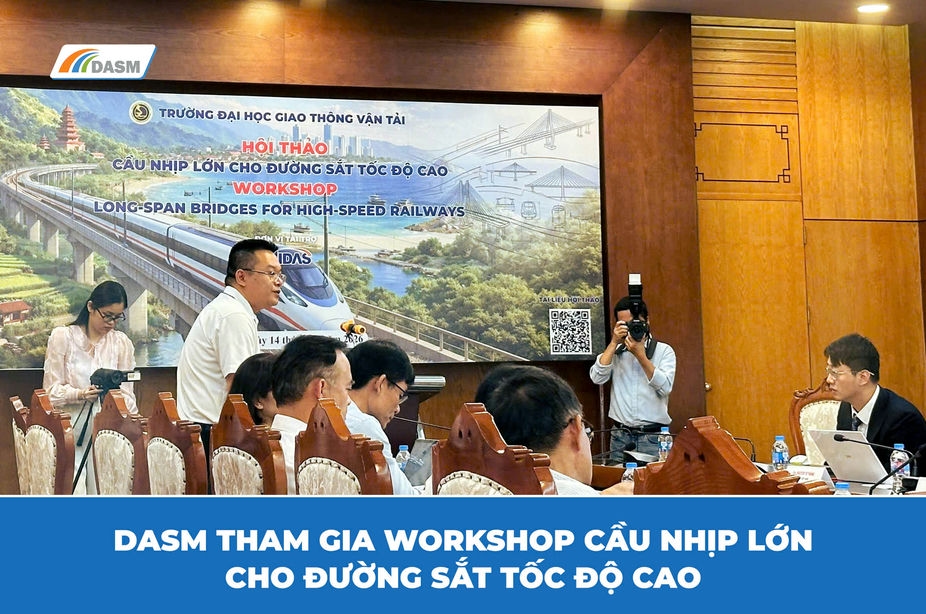
Introduction to the workshop on long-span bridges for high-speed railways
Recently, DASM experts participated in the international scientific conference "Long-span bridges for high-speed railways" organized by University of Transport and Technology, with the companionship of MIDAS.
The conference focused on in-depth topics in the design and structural analysis of long-span bridges serving high-speed railway systems, including:
- Rail–Structure Interaction (RSI) analysis
- Types of long-span bridge structures and modern design trends
- Application of structural analysis software such as Midas Civil in simulation and verification
These are core issues in ensuring the stability, durability, and operational performance of high-speed railway systems – a field that requires a very high degree of precision and synchronization among structural, dynamic, and operational environmental factors.
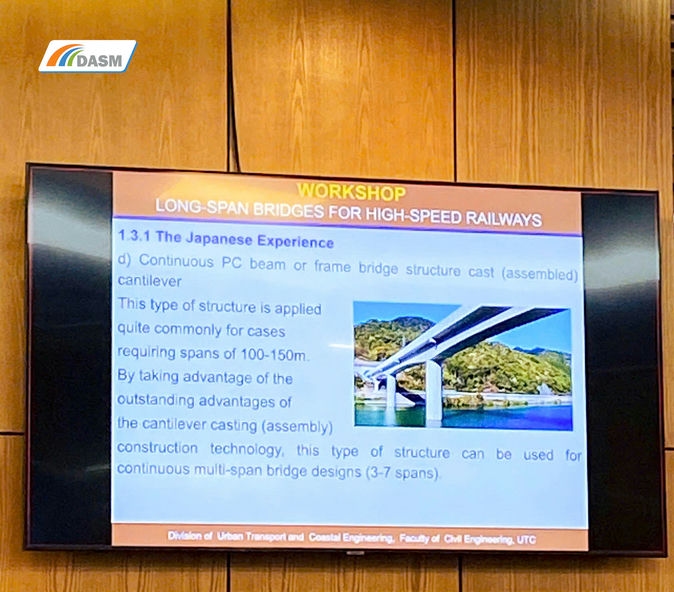
DASM approaches the system problem – preparing for acoustic and vibration requirements
Participating in the workshop is not only to update long-span bridge structural technologies, but more importantly, DASM aims to approach the overall problem of high-speed railway infrastructure systems.
In works operating at high speeds, factors such as:
- Structural oscillation
- Vibration propagation in the foundation and structures
make acoustic radiation and environmental noise particularly sensitive and have a direct impact on:
- Operational safety
- Stability of the structure – rail system
- Quality of the surrounding living environment
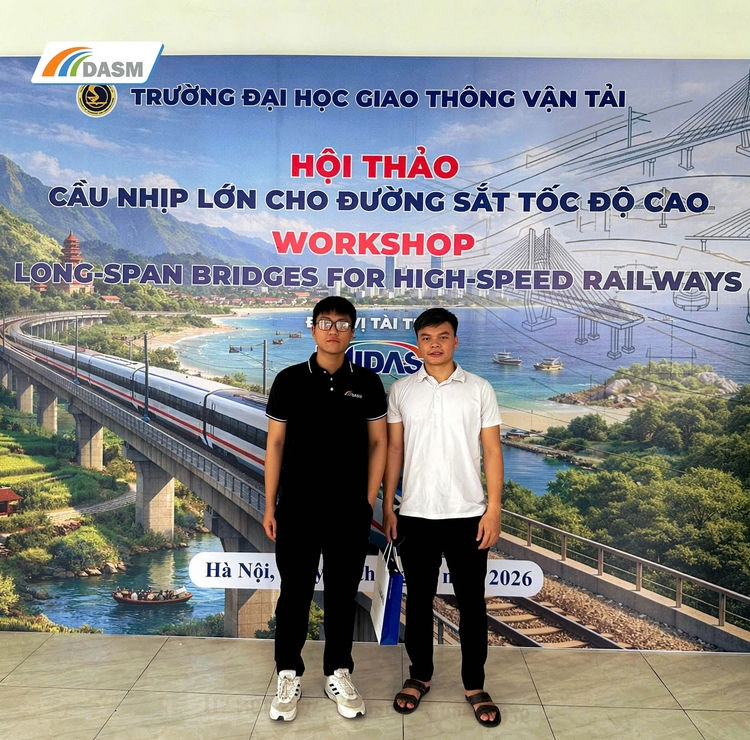
Therefore, the problems of building acoustics and vibration control cannot be separated from the design and operation process of the system.
Approaching analysis models like RSI and advanced simulation methods helps DASM:
- Better understand the generation and propagation mechanisms of vibration and noise
- Orient appropriate testing and evaluation solutions
- Prepare technical capacity for large-scale infrastructure projects in the future
This is also an important step in DASM's development strategy to expand the research scope from quite novel areas, from building acoustics to acoustics in complex structural systems – high-speed railways.
DASM's prominent services in the field of building acoustics and vibration
With an in-depth development orientation, DASM currently provides technical services in the field of building acoustics and vibration, serving a diverse range of projects from civil to industrial and transportation infrastructure. Some of DASM's prominent services in this segment include:
1. Acoustic testing and measurement
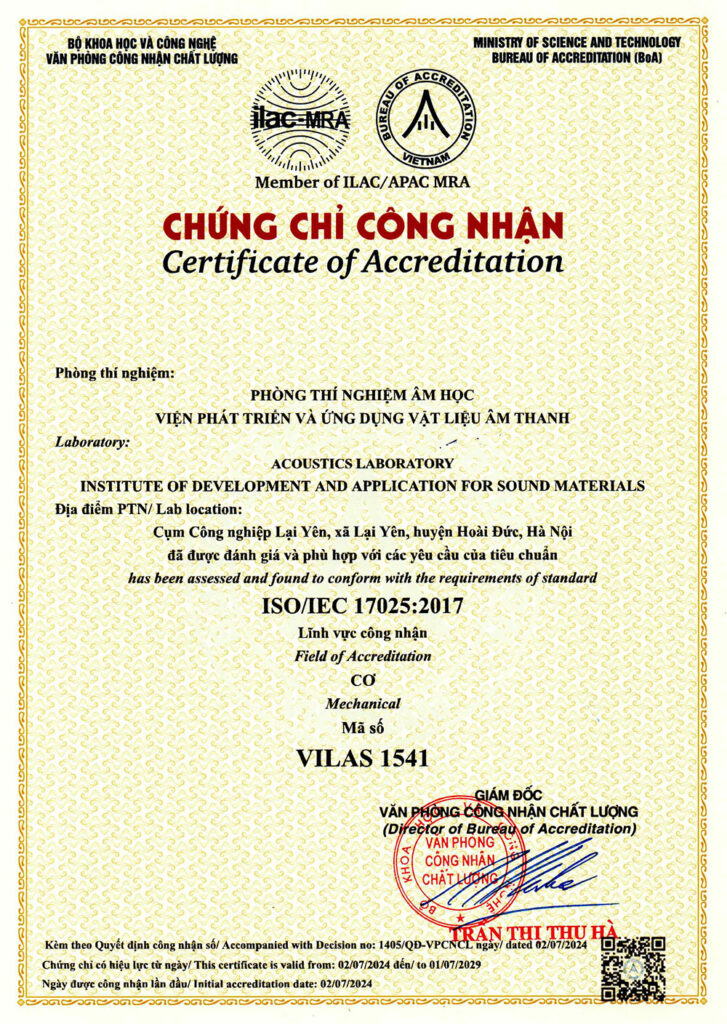
DASM owns an acoustic laboratory certified by VILAS – being the first laboratory in Vietnam in this field to achieve accreditation standards. Testing capabilities include:
- Measuring the sound absorption coefficient of materials
- Measuring the sound insulation of structures
- Evaluating acoustic indicators according to international standards
Acoustic tests are performed under strictly controlled conditions, ensuring high accuracy, repeatability, and reliability.
2. Survey, measurement, and analysis of structural vibration
DASM provides services:
- Measuring foundation and structural vibration
- Analyzing frequency spectra and oscillation characteristics
- Evaluating the impact of vibration on structures and humans
This is an important basis to:
- Control vibration in transportation infrastructure works
- Ensure environmental standards and operational safety
3. Consulting and designing noise and vibration control solutions
DASM deploys technical solutions including:
- Building acoustics consulting and design
- Designing standard sound insulation and sound absorption systems for buildings
- Vibration reduction solutions for equipment and structures
- Optimizing the acoustic environment in buildings
Acoustic solutions are built based on calculation models, actual measurement data, and international technical standards, ensuring feasibility and long-term effectiveness.
Participating in the workshop on long-span bridges for high-speed railways is an important step helping DASM approach modern infrastructure design trends, while preparing capacity for complex problems related to acoustics and vibration in large-scale system works.
With the foundation of a VILAS-standard laboratory and a team of experienced experts, DASM is gradually affirming its position as a pioneer in the field of testing, measurement, and consulting in building acoustics in Vietnam.
VILAS 1541 · ISO/IEC 17025
Need advice on Vibration & Noise Control?
Measure, test, and consult solutions to reduce the amount of noise and vibration transmitted from the source to the surrounding environment.
Related Articles
Articles from the same category or related topics
- 6 min read
From Vietnamese Acoustic Knowledge to International Forums: DASM's Research Milestone in Acoustics Australia
A research paper on acoustic materials by DASM was published in Acoustics Australia, a world-renowned acoustic journal, marking a new step forward for DASM in the field of acoustics
Read more → - 3 min read
DASM Sound Absorption Testing for Noise Barriers According to ISO 354:2024 & EN ISO 11654:1997
DASM sound absorption testing for Noise Barriers in a reverberation room according to ISO 354:2024 and EN ISO 11654:1997 standards at a VILAS-certified laboratory
Read more → - 4 min read
DASM Granted 1st Extended Accreditation VILAS 1541 – Elevating Acoustic Material Testing Capabilities According to ISO/IEC 17025
The DASM Acoustics Laboratory (VILAS 1541) has officially received its 1st extended accreditation according to ISO/IEC 17025:2017 by the Bureau of Accreditation, BoA
Read more →