Introduction
This document specifies the engineering method for the measurement of sound pressure level from service equipment in buildings. For use of this document measurements are performed under specified operation conditions and operating cycles. Such conditions are given in Annex B.
The operating conditions and operating cycles given in Annex B are only used if they are not opposed to national requirements and regulations.
1. Scope
This document specifies methods for measuring the sound pressure level from service equipment in buildings installed to building structures. This document covers specifically measurements of sanitary installations, mechanical ventilation, heating and cooling service equipment, lifts, rubbish chutes, boilers, blowers, pumps and other auxiliary service equipment, and motor driven car park doors, but can also be applied to other equipment attached to or installed in buildings.
The methods are suitable for rooms with volumes of approximately 300 m3 or less in e.g. dwellings, hotels, schools, offices and hospitals. The standard is not in general intended for measurements in large auditoria and concert halls. However, the operating conditions and operating cycles in Annex B can be used in such cases.
The service equipment sound pressure level is determined as the maximum A- weighted and optionally C- weighted sound pressure level occurring during a specified operation cycle of the service equipment under test, or as the equivalent continuous sound pressure level determined with a specified integration time. A-weighted and C- weighted values are calculated from octave-band measurements.
2. Normative references
The following referenced documents are indispensable for the application of this document. For dated references, only the edition cited applies. For undated references, the latest edition of the referenced document (including any amendments) applies.
EN 60942, Electroacoustics — Sound calibrators (IEC 60942:2003).
EN 61260, Electroacoustics — Octave-band and fractional-octave-band filters (IEC 61260:1995).
EN 61672-1, Electroacoustics — Sound level meters — Part 1: Specifications (IEC 61672-1:2002).
EN 61672-2, Electroacoustics — Sound level meters — Part 2: Pattern evaluation tests (IEC 61672-2:2003).
EN ISO 3382, Acoustics — Measurement of the reverberation time of rooms with reference to other acoustical parameters (ISO 3382:1997).

Copyrighted standard notice
According to international copyright regulations and DASM policy, only the standard summary and test methodology are displayed. Direct download is not available.
VILAS 1541
DASM conducts testing according to this standard
DASM Acoustic Laboratory has accredited capability to conduct 1 testing method(s) compliant with standard ISO 16032:2004:
- Sound pressure level measurement(TCVN 8776:2011; ISO 16032:2004)
VILAS 1541 · ISO/IEC 17025
Need advice on SOUND DESIGN & SIMULATION SERVICES?
Acoustical design services, sound simulation using software for projects specializing in acoustics
Related Articles
Articles from the same category or related topics
- 3 min read
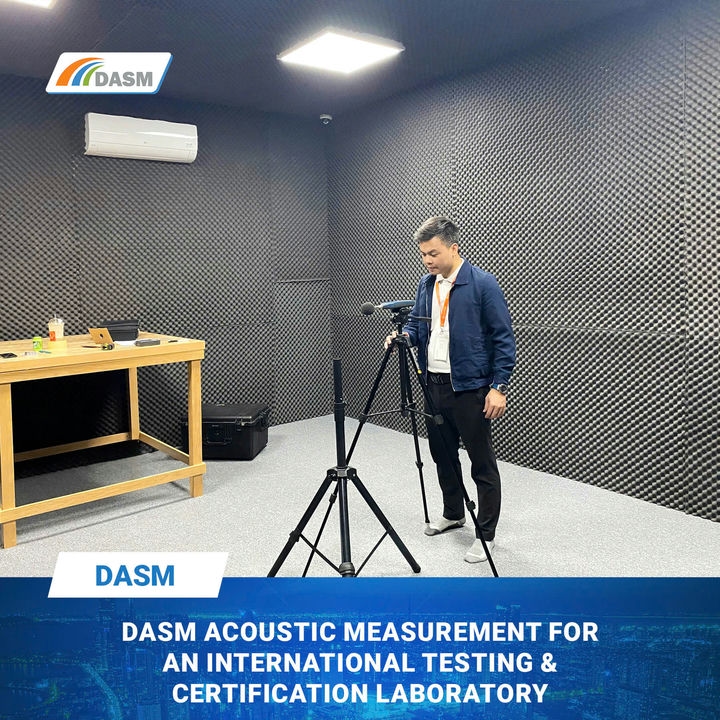
Advanced Acoustic Measurement & Noise Emission Testing for International Testing & Certification Laboratories
DASM provides advanced acoustic measurement and noise emission testing services for Testing & Certification laboratories, ISO-compliant procedures
Read more → - 4 min read
Sound Absorption: Definition, Formula, Measurement & Applications
Learn what sound absorption is, how it works, absorption coefficient (α), testing methods like Kundt’s tube (ISO 10534-2) and reverberation room (ISO 354)
Read more → - 6 min read
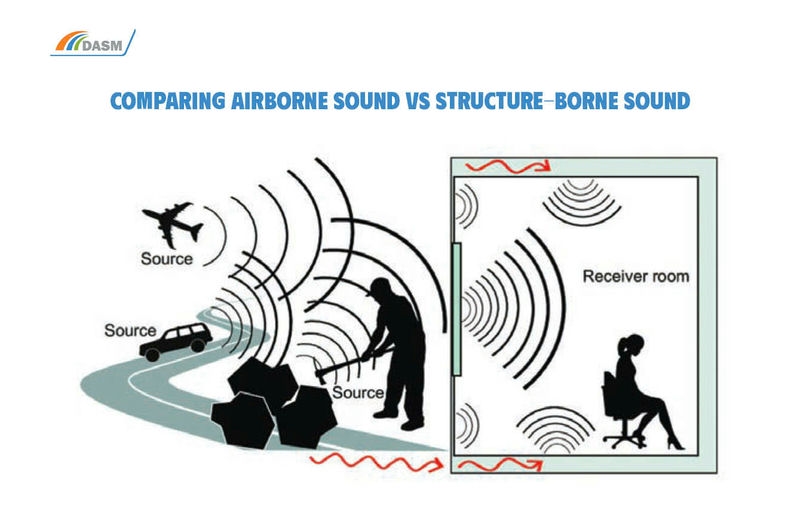
What Is The Difference Between Airborne Sound And Structure-Borne Sound?
Airborne sound and structure-borne sound are different, yet many people still can’t distinguish them clearly.
Read more →