National Standard TCVN 9729-10:2013 - Reciprocating internal combustion engine driven alternating current generating sets - Part 10: Measurement of airborne noise by the enveloping surface method
This standard specifies measurement methods for determining the airborne noise emitted from a reciprocating internal combustion engine-driven generating set, with all noise sources, such as exhaust and cooling systems, as well as all other engine noise sources, evaluated based on comparative results. However, when the exhaust and cooling systems are ducted to a remote location, their noise contribution is excluded from this standard.
The characteristic value of the noise level is the sound power level.
Measurement results obtained in accordance with this standard are classified with grade 2 or grade 3 accuracy depending on compliance with acoustic measurement conditions. Grade 2 accuracy (e.g., engineering method according to ISO 3744) requires the measurement area to be a free sound field over a reflecting plane (with environmental correction factor K2A ≤ 2 dB) and with negligible background noise level (background noise correction factor K1A ≤ 1.3 dB). Grade 3 accuracy (e.g., survey method according to ISO 3746) requires an environmental correction factor K2A ≤ 7 dB, and a background noise correction factor K1A ≤ 3 dB.
For the operation of a generating set under steady-state conditions, this standard allows for the calculation of the A-weighted sound power level as well as octave or one-third octave band sound power with appropriate accuracy.
This standard applies to AC generating sets driven by RIC engines in stationary or mobile applications with rigid or resilient mounting. It can be used on land or at sea, but does not apply to generating sets used on aircraft, excavators, or locomotives.
Copyrighted standard notice
According to international copyright regulations and DASM policy, only the standard summary and test methodology are displayed. Direct download is not available.
VILAS 1541
DASM conducts testing according to this standard
DASM Acoustic Laboratory has accredited capability to conduct 1 testing method(s) compliant with standard TCVN 9729-10:2013:
- Airborne noise measurement – enveloping surface method(TCVN 9729-10:2013; ISO 8528-10:1998)
VILAS 1541 · ISO/IEC 17025
Need advice on Noise Survey & Assessment Services?
Measuring ambient environmental, factory and residential noise to support environmental impact assessment (EIA).
Related Articles
Articles from the same category or related topics
- 3 min read
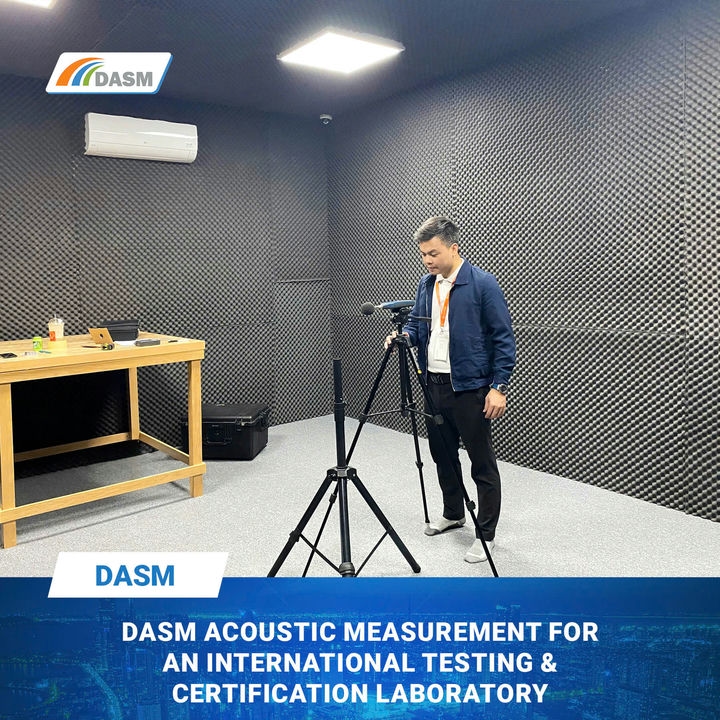
Advanced Acoustic Measurement & Noise Emission Testing for International Testing & Certification Laboratories
DASM provides advanced acoustic measurement and noise emission testing services for Testing & Certification laboratories, ISO-compliant procedures
Read more → - 4 min read
Sound Absorption: Definition, Formula, Measurement & Applications
Learn what sound absorption is, how it works, absorption coefficient (α), testing methods like Kundt’s tube (ISO 10534-2) and reverberation room (ISO 354)
Read more → - 6 min read
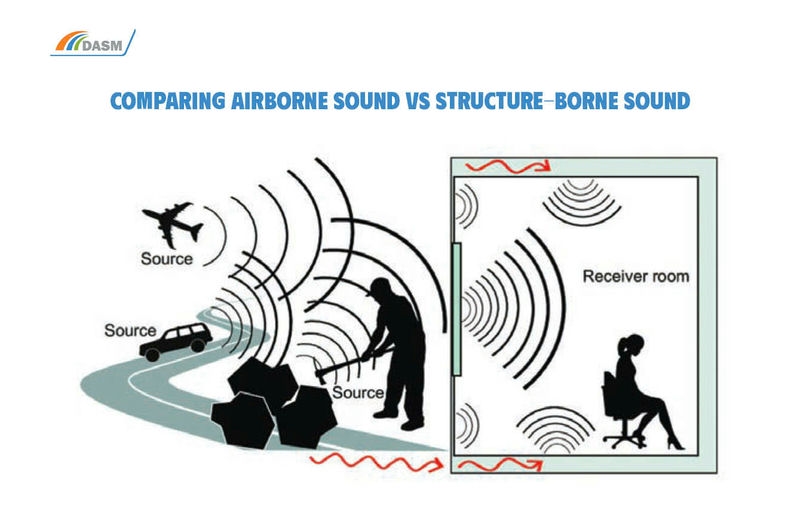
What Is The Difference Between Airborne Sound And Structure-Borne Sound?
Airborne sound and structure-borne sound are different, yet many people still can’t distinguish them clearly.
Read more →