Significance and Use
5.1 The specific airflow resistance of an acoustical material is one of the properties that determine its sound-absorptive and sound-transmitting properties. Measurement of specific airflow resistance is useful during product development, for quality control during manufacture, and for specification purposes.
5.2 Valid measurements are made only in the region of laminar airflow where, aside from random measurement errors, the airflow resistance (R = P/U) is constant. When the airflow is turbulent, the apparent airflow resistance increases with an increase of volume velocity and the term “airflow resistance” does not apply.
5.3 The specific airflow resistance measured by this test method may differ from the specific resistance measured by the impedance tube method in Test Method E384 for two reasons. In the presence of sound, the particle velocity inside a porous material is alternating while in this test method, the velocity is constant and in one direction only. Also, the particle velocity inside a porous material is not the same as the linear velocity measured outside the specimen.
Scope
1.1 This test method covers the measurement of airflow resistance and the related measurements of specific airflow resistance and airflow resistivity of porous materials that can be used for the absorption and attenuation of sound. Materials cover a range from thick boards or blankets to thin mats, fabrics, papers, and screens. When the material is anisotropic, provision is made for measurements along different axes of the specimen.
1.2 This test method is designed for the measurement of values of specific airflow resistance ranging from 100 to 10 000 mks rayls (Pa·s/m) with linear airflow velocities ranging from 0.5 to 50 mm/s and pressure differences across the specimen ranging from 0.1 to 250 Pa. The upper limit of this range of linear airflow velocities is a point at which the airflow through most porous materials is in partial or complete transition from laminar to turbulent flow.
1.3 A procedure for accrediting a laboratory for the purposes of this test method is given in Annex A1.
1.4 The values stated in SI units are to be regarded as standard. No other units of measurement are included in this standard.
1.5 This standard does not purport to address all of the safety concerns, if any, associated with its use. It is the responsibility of the user of this standard to establish appropriate safety and health practices and determine the applicability of regulatory limitations prior to use.

Thông báo bản quyền tiêu chuẩn
Theo quyết định kỹ thuật và quy định bản quyền quốc tế, Viện DASM chỉ hiển thị phần tóm tắt và quy chuẩn phương pháp đo, không cung cấp tệp tải về có bản quyền.
VILAS 1541
DASM thực hiện phép thử theo tiêu chuẩn này
Phòng thử nghiệm âm học DASM được công nhận năng lực thực hiện 1 phép thử theo tiêu chuẩn ASTM C522-03(2016):
- Xác định hệ số sức kháng âm bằng dòng khí(ASTM C522-03(2016)/ ISO 9053-1:2018)
VILAS 1541 · ISO/IEC 17025
Cần tư vấn giải pháp âm học chuyên sâu?
Liên hệ ngay với chuyên gia Viện DASM để được khảo sát thực tế, đo kiểm chuẩn VILAS 1541 và tư vấn giải pháp tối ưu cho công trình của bạn.
Bài viết liên quan
Các bài viết cùng chuyên mục hoặc chủ đề tương tự
- 5 phút đọc
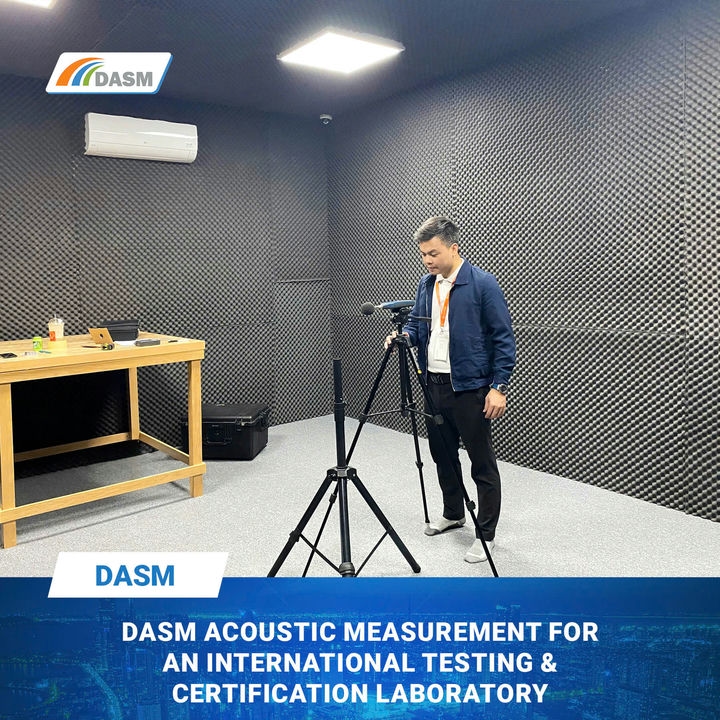
Đo lường âm học nâng cao và thử nghiệm phát xạ tiếng ồn dành cho các phòng thử nghiệm và chứng nhận quốc tế
DASM cung cấp các dịch vụ đo lường âm học nâng cao và thử nghiệm phát xạ tiếng ồn cho các phòng thử nghiệm và chứng nhận, tuân thủ các quy trình ISO
Đọc tiếp → - 5 phút đọc
Hút âm: Định nghĩa, Công thức, Đo lường & Ứng dụng
Tìm hiểu về hút âm là gì, cơ chế hoạt động, hệ số hút âm (α), các phương pháp thử nghiệm như ống Kundt (ISO 10534-2) và phòng âm vang (ISO 354)
Đọc tiếp → - 10 phút đọc
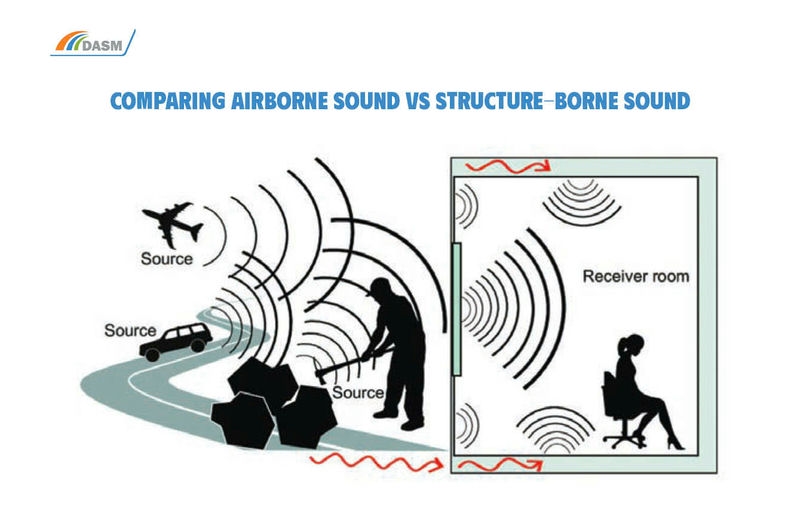
Sự khác biệt giữa âm thanh truyền qua không khí và âm thanh truyền qua kết cấu là gì?
Âm thanh truyền qua không khí và âm thanh truyền qua kết cấu là hai hiện tượng khác nhau, tuy nhiên nhiều người vẫn chưa thể phân biệt rõ ràng giữa chúng.
Đọc tiếp →