Significance and Use
The material loss factor and modulus of damping materials are useful in designing measures to control vibration in structures and the sound that is radiated by those structures, especially at resonance. This test method determines the properties of a damping material by indirect measurement using damped cantilever beam theory. By applying beam theory, the resultant damping material properties are made independent of the geometry of the test specimen used to obtain them. These damping material properties can then be used with mathematical models to design damping systems and predict their performance prior to hardware fabrication. These models include simple beam and plate analogies as well as finite element analysis models.
This test method has been found to produce good results when used for testing materials consisting of one homogeneous layer. In some damping applications, a damping design may consist of two or more layers with significantly different characteristics. These complicated designs must have their constituent layers tested separately if the predictions of the mathematical models are to have the highest possible accuracy.
Scope
1.1 This test method measures the vibration-damping properties of materials: the loss factor, η, and Young’s modulus, E, or the shear modulus, G. Accurate over a frequency range of 50 to 5000 Hz and over the useful temperature range of the material, this method is useful in testing materials that have application in structural vibration, building acoustics, and the control of audible noise. Such materials include metals, enamels, ceramics, rubbers, plastics, reinforced epoxy matrices, and woods that can be formed to cantilever beam test specimen configurations.
1.2 This standard does not purport to address all the safety concerns, if any, associated with its use. It is the responsibility of the user of this standard to establish appropriate safety and health practices and determine the applicability of regulatory limitations prior to use.

Thông báo bản quyền tiêu chuẩn
Theo quyết định kỹ thuật và quy định bản quyền quốc tế, Viện DASM chỉ hiển thị phần tóm tắt và quy chuẩn phương pháp đo, không cung cấp tệp tải về có bản quyền.
VILAS 1541 · ISO/IEC 17025
Cần tư vấn giải pháp âm học chuyên sâu?
Liên hệ ngay với chuyên gia Viện DASM để được khảo sát thực tế, đo kiểm chuẩn VILAS 1541 và tư vấn giải pháp tối ưu cho công trình của bạn.
Bài viết liên quan
Các bài viết cùng chuyên mục hoặc chủ đề tương tự
- 5 phút đọc
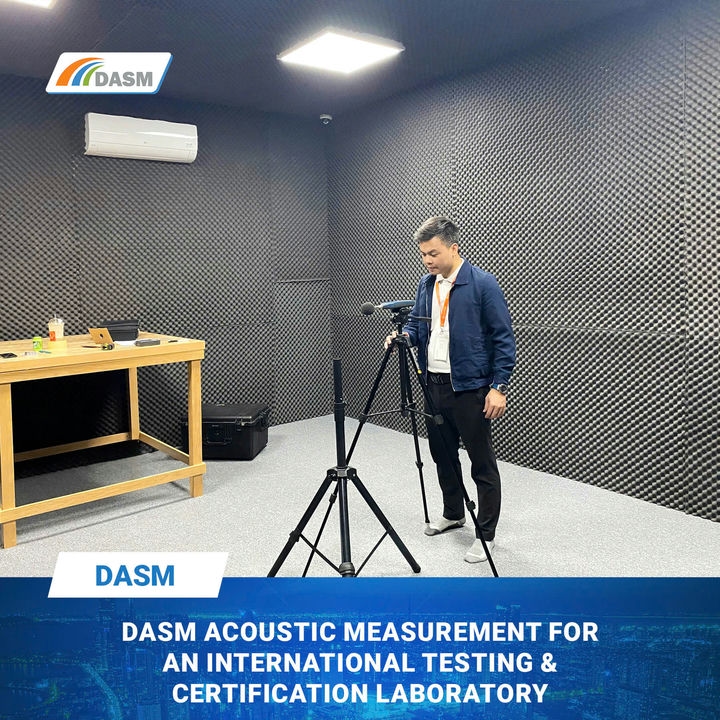
Đo lường âm học nâng cao và thử nghiệm phát xạ tiếng ồn dành cho các phòng thử nghiệm và chứng nhận quốc tế
DASM cung cấp các dịch vụ đo lường âm học nâng cao và thử nghiệm phát xạ tiếng ồn cho các phòng thử nghiệm và chứng nhận, tuân thủ các quy trình ISO
Đọc tiếp → - 5 phút đọc
Hút âm: Định nghĩa, Công thức, Đo lường & Ứng dụng
Tìm hiểu về hút âm là gì, cơ chế hoạt động, hệ số hút âm (α), các phương pháp thử nghiệm như ống Kundt (ISO 10534-2) và phòng âm vang (ISO 354)
Đọc tiếp → - 10 phút đọc
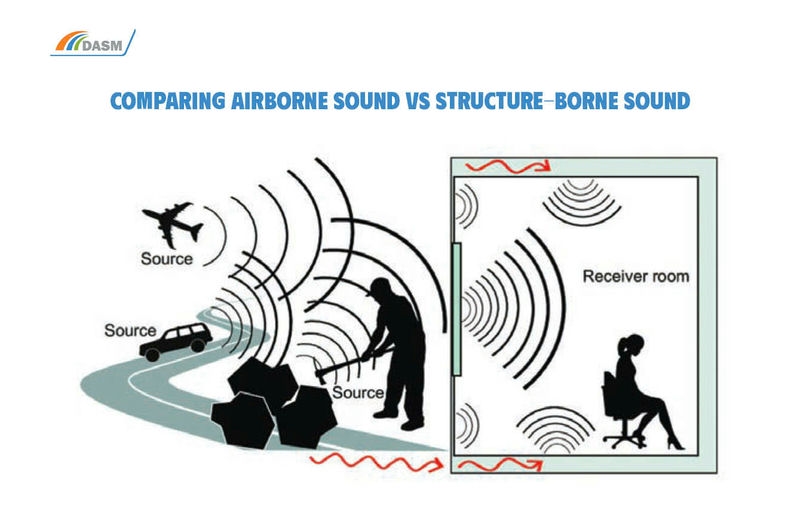
Sự khác biệt giữa âm thanh truyền qua không khí và âm thanh truyền qua kết cấu là gì?
Âm thanh truyền qua không khí và âm thanh truyền qua kết cấu là hai hiện tượng khác nhau, tuy nhiên nhiều người vẫn chưa thể phân biệt rõ ràng giữa chúng.
Đọc tiếp →