
Significance and Use
5.1 Sound transmission loss as defined in Terminology C634, refers to the response of specimens exposed to a diffuse incident sound field, and this is the test condition approached by this laboratory test method. The test results are therefore most directly relevant to the performance of similar specimens exposed to similar sound fields. They provide, however, a useful general measure of performance for the variety of sound fields to which a partition or element may typically be exposed.
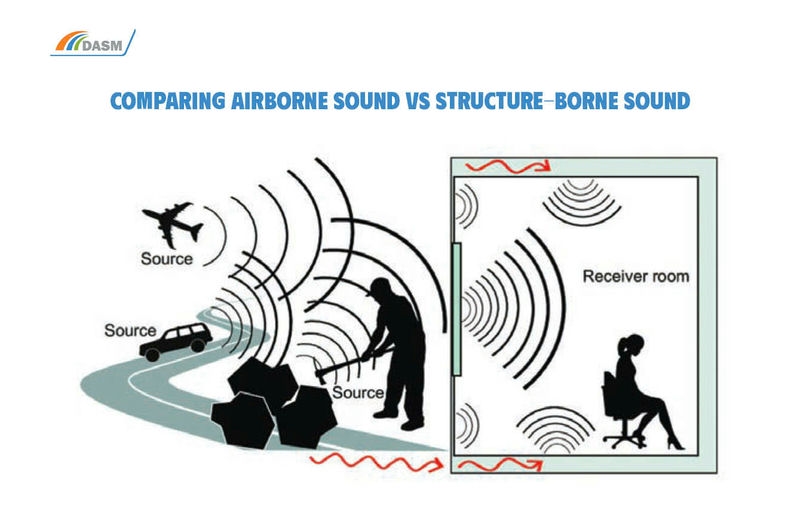
5.2 In laboratories designed to satisfy the requirements of this test method, the intent is that only significant path for sound transmission between the rooms is through the test specimen. This is not generally the case in buildings where there are often many other paths for sounds—flanking sound transmission. Consequently sound ratings obtained using this test method do not relate directly to sound isolation in buildings; they represent an upper limit to what would be measured in a field test.
5.3 This test method is not intended for field tests. Field tests shall be performed according to Test Method E336.
NOTE 2: The comparable quantity measured using Test Method E336 is called the apparent sound transmission loss because of the presence of flanking sound transmission.
Scope
1.1 This test method covers the laboratory measurement of airborne sound transmission loss of building partitions such as walls of all kinds, operable partitions, floor-ceiling assemblies, doors, windows, roofs, panels, and other space-dividing elements.
1.2 Laboratories are designed so the test specimen constitutes the primary sound transmission path between the two test rooms and so approximately diffuse sound fields exist in the rooms.
1.3 Laboratory Accreditation—The requirements for accrediting a laboratory for performing this test method are given in Annex A4.
1.4 This standard does not purport to address all of the safety concerns, if any, associated with its use. It is the responsibility of the user of this standard to establish appropriate safety and health practices and determine the applicability of regulatory limitations prior to use.
Thông báo bản quyền tiêu chuẩn
Theo quyết định kỹ thuật và quy định bản quyền quốc tế, Viện DASM chỉ hiển thị phần tóm tắt và quy chuẩn phương pháp đo, không cung cấp tệp tải về có bản quyền.
VILAS 1541
DASM thực hiện phép thử theo tiêu chuẩn này
Phòng thử nghiệm âm học DASM được công nhận năng lực thực hiện 1 phép thử theo tiêu chuẩn ASTM E90-09(2016):
- Đánh giá sự tổn thất truyền âm giữa các vách ngăn và các kết cấu trong toà nhà(ASTM E90-09(2016))
VILAS 1541 · ISO/IEC 17025
Cần tư vấn giải pháp âm học chuyên sâu?
Liên hệ ngay với chuyên gia Viện DASM để được khảo sát thực tế, đo kiểm chuẩn VILAS 1541 và tư vấn giải pháp tối ưu cho công trình của bạn.
Bài viết liên quan
Các bài viết cùng chuyên mục hoặc chủ đề tương tự
- 5 phút đọc
Đo lường âm học nâng cao và thử nghiệm phát xạ tiếng ồn dành cho các phòng thử nghiệm và chứng nhận quốc tế
DASM cung cấp các dịch vụ đo lường âm học nâng cao và thử nghiệm phát xạ tiếng ồn cho các phòng thử nghiệm và chứng nhận, tuân thủ các quy trình ISO
Đọc tiếp → - 5 phút đọc
Hút âm: Định nghĩa, Công thức, Đo lường & Ứng dụng
Tìm hiểu về hút âm là gì, cơ chế hoạt động, hệ số hút âm (α), các phương pháp thử nghiệm như ống Kundt (ISO 10534-2) và phòng âm vang (ISO 354)
Đọc tiếp → - 10 phút đọc
Sự khác biệt giữa âm thanh truyền qua không khí và âm thanh truyền qua kết cấu là gì?
Âm thanh truyền qua không khí và âm thanh truyền qua kết cấu là hai hiện tượng khác nhau, tuy nhiên nhiều người vẫn chưa thể phân biệt rõ ràng giữa chúng.
Đọc tiếp →