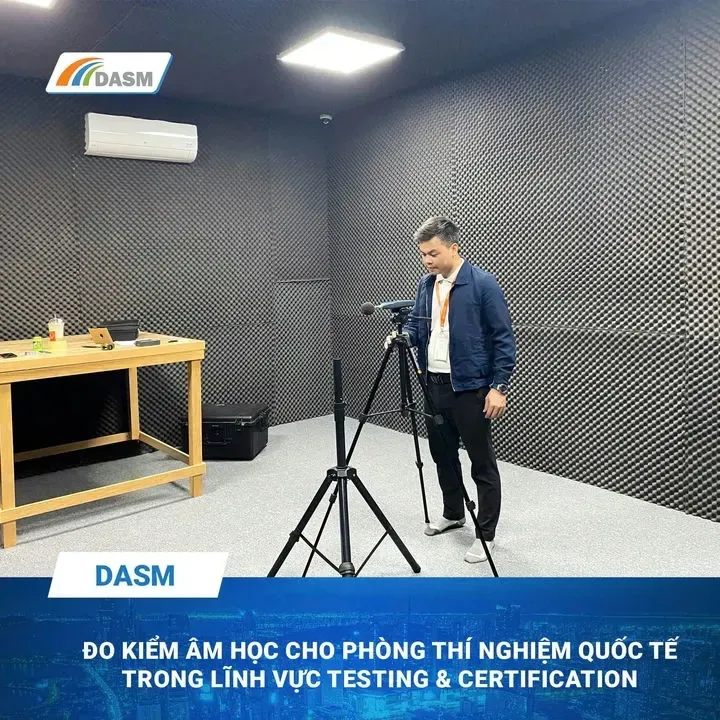
Adapter noise measurement according to ISO 3745-2012 standard helps evaluate product quality, detect design flaws, optimize performance, and ensure equipment meets EMC standards. Learn more about the measurement and material testing process at DASM Institute!
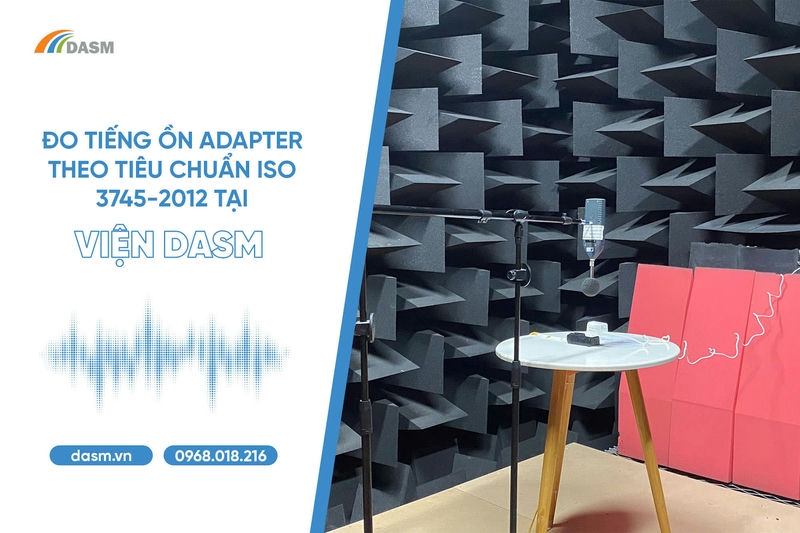
Have you measured adapter noise yet? Do not let a small detail like noise affect the user experience and market competitiveness!
Electronic devices such as charging adapters and switching power supplies can emit noise due to switching oscillations, vibrations in the electrical circuit, or magnetostriction effects of the transformer. Although the sound pressure level is not high, in quiet environments like libraries, offices, and bedrooms, this noise can cause annoyance and affect device performance.
DASM Institute applies accurate measurement methods according to ISO 3745-2012, helping businesses control sound power levels, optimize designs, and ensure products meet international standards.
How important is the sound attenuation testing of air ducts?
Why Is Adapter Noise Measurement Necessary?
- Evaluate product quality – Ensure adapters operate quietly without affecting users.
- Detect design flaws – Check issues related to switching, magnetostriction, mechanical resonance, and electromagnetic interference (EMI).
- Comply with noise standards – Meet ISO 3745-2012, IEC 62368-1, and CISPR 32, ensuring product reliability and quality.
- Optimize design, reduce customer complaints – Reduce noise, enhance product lifespan, and limit technical errors.
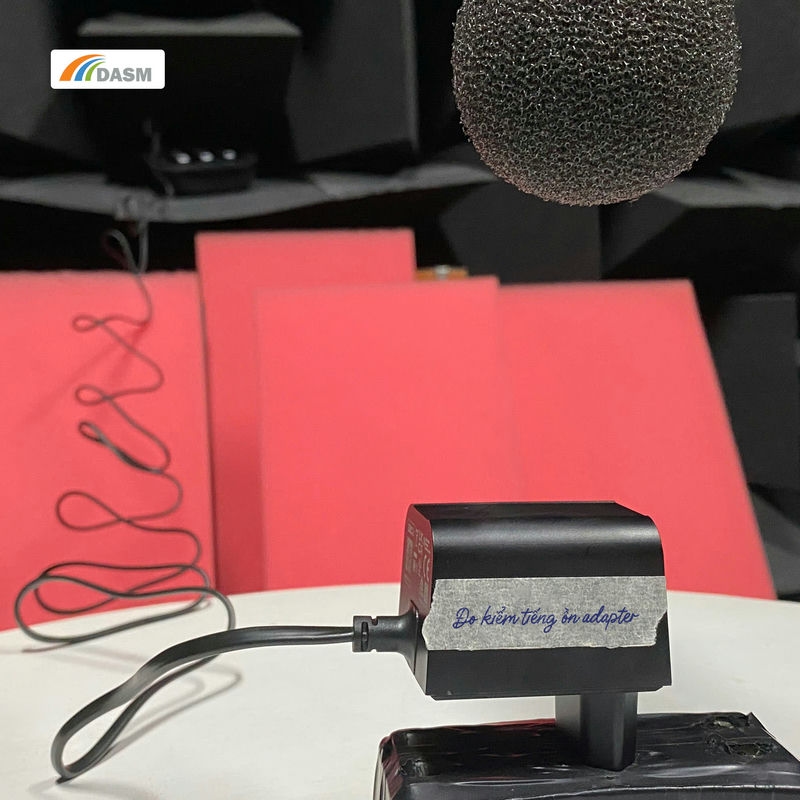
Causes of Adapter Noise
Adapter noise can arise from multiple physical factors:
- Magnetostriction Noise: Transformers expand and contract when alternating current flows, causing vibrations.
- Switching Frequency Noise: Occurs in SMPS switching power supplies, located in the kHz frequency range, affecting performance.
- Mechanical Resonance Noise: Components such as MLCC capacitors, inductors, and transformers can vibrate, generating ultrasonic noise.
- Arcing Noise: Poor quality contacts or faulty solder joints can create electromagnetic interference, causing the circuit to emit unstable sound.
Adapter Noise Measurement Method at DASM Institute
-
Applied Standard – ISO 3745-2012
ISO 3745-2012 specifies sound power levels and sound energy levels using the sound pressure method in anechoic or hemi-anechoic rooms.
-
Measurement Environment
Specialized sound absorption room with low background noise level (~17 dB) helps eliminate environmental interference.
ISO-compliant testing space, ensuring maximum accuracy.
-
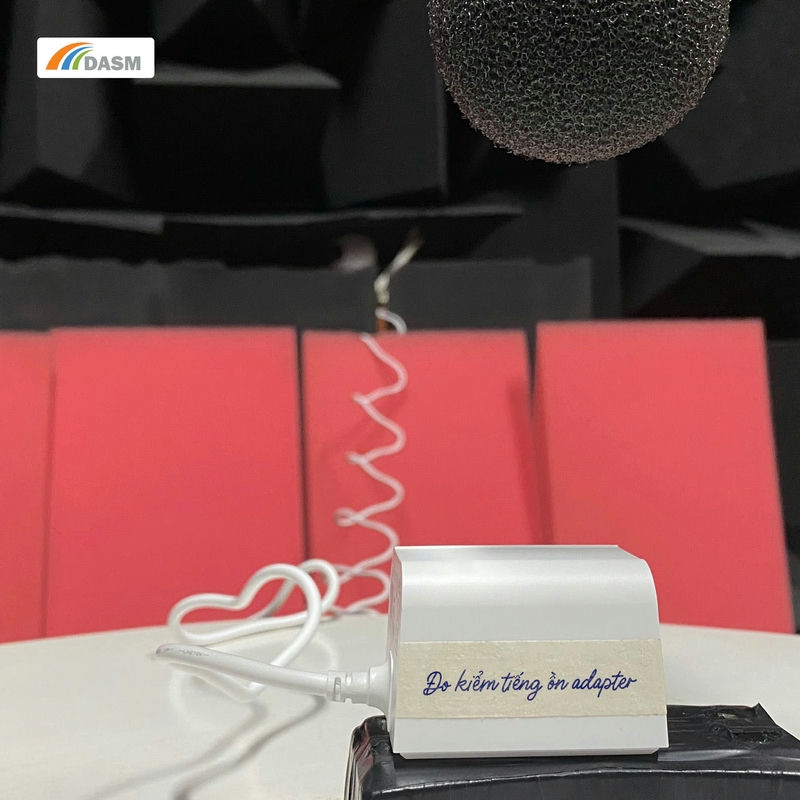
Measurement Equipment
Class 1 NOR140 measurement microphone – IEC 61672-1 standard, accurately measuring SPL (Sound Pressure Level) & noise frequency.
FFT (Fast Fourier Transform) analyzer – Analyzes frequency bands, helping identify the cause of noise.
-
Adapter Noise Measurement Process
Step 1: Place the adapter under standard operating conditions.
Step 2: Record SPL sound pressure at multiple positions around the device.
Step 3: Analyze the noise frequency spectrum using the FFT analyzer.
Step 4: Compare with ISO 3745-2012, IEC 62368-1, and CISPR 32 standards.
Step 5: Provide technical solutions to optimize the design, helping to reduce noise effectively.
Results & Benefits of Adapter Noise Measurement
Determine the noise level to evaluate whether design improvements are needed.
Ensure the adapter meets the ISO 3745-2012 standard.
Detect noise errors, optimize circuits & components to enhance performance.
Consult on noise reduction solutions, making products high quality & competitive.
Why Choose DASM Institute?
ISO-compliant equipment ensuring accurate measurements.
Experts with many years of experience in acoustics, noise measurement & EMC.
Systematic, professional testing process providing detailed reports.
Support businesses in optimizing designs to reduce noise & improve quality.
Customers in need of noise testing for ADAPTERS & ELECTRONIC DEVICES according to international standard ISO 3745-2012 in Vietnam, please contact the Hotline of the Institute for Development and Application of Acoustic Materials for specific consultation.
VILAS 1541 · ISO/IEC 17025
Need advice on Noise Survey & Assessment Services?
Measuring ambient environmental, factory and residential noise to support environmental impact assessment (EIA).
Related Articles
Articles from the same category or related topics
- 6 min read
From Vietnamese Acoustic Knowledge to International Forums: DASM's Research Milestone in Acoustics Australia
A research paper on acoustic materials by DASM was published in Acoustics Australia, a world-renowned acoustic journal, marking a new step forward for DASM in the field of acoustics
Read more → - 3 min read
DASM Sound Absorption Testing for Noise Barriers According to ISO 354:2024 & EN ISO 11654:1997
DASM sound absorption testing for Noise Barriers in a reverberation room according to ISO 354:2024 and EN ISO 11654:1997 standards at a VILAS-certified laboratory
Read more → - 4 min read
DASM Participates in Long-Span Bridge Workshop for High-Speed Railways – Expanding Research Capabilities in Acoustics and Structural Vibration
DASM participates in the long-span bridge workshop for high-speed railways to update structural design trends, control structural vibration and acoustics, and prepare capabilities for projects
Read more →