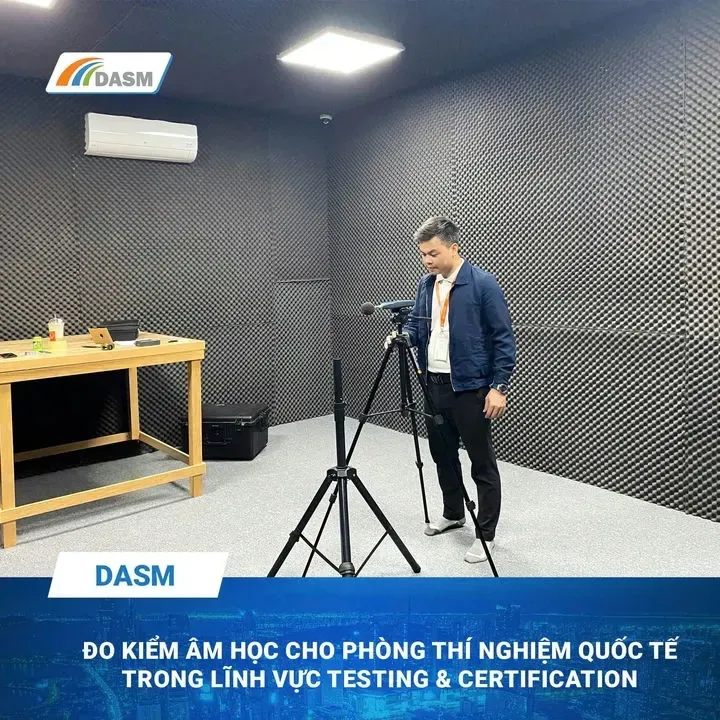
What is the audio frequency range?
Audio frequency or audible frequency is a periodic vibration with a frequency falling within the band audible to the average human, which is the range of human hearing. The unit of frequency in the SI system is the hertz (Hz). The property of sound that is most determined by frequency is pitch.
The generally accepted standard hearing range for humans is 20 to 20,000 Hz. In air at atmospheric pressure, these waves represent sound waves with wavelengths ranging from 17 meters (56 ft) to 1.7 cm (0.67 in). Frequencies below 20 Hz are often felt rather than heard. High frequencies are the first to be affected by hearing loss due to aging or long-term exposure to very loud noise.
The audio frequency range is generally established as 20 Hz to 20,000 Hz, although most people can hear less than this full range, and as they age, this range tends to narrow at both ends. The relationship between music and audio frequencies is that every time you go up an octave, you double the frequency. With a piano, the lowest note, A, is approximately 27 Hz while the highest note, C, is about 4186 Hz, but at lower amplitudes. For example, the 27 Hz "A" on a piano also produces a much quieter 54 Hz harmonic, as well as an even quieter 81 Hz, and so on. These harmonics are very important for high-fidelity speaker systems that want to accurately reproduce the source.
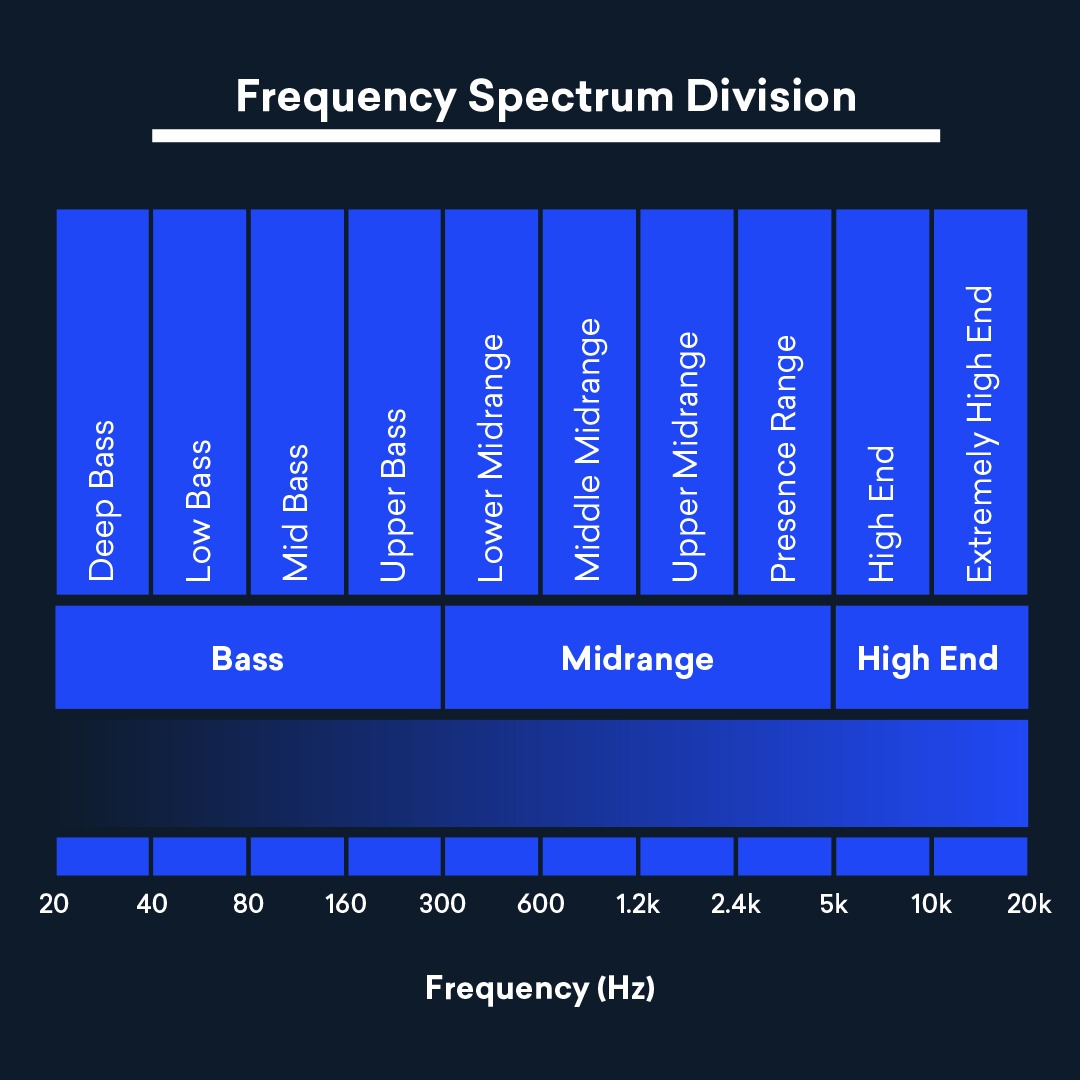
What are the small subranges of the audible frequency range?
Within the 20 Hz to 20 kHz audio frequency range, there are seven frequency subsets used to help define bands that can be targeted in the design of recording or playback systems.
| Frequency Subset | Frequency Range | Description |
| Sub-bass | 16 to 60 Hz | This is the low musical range – an upright bass, tuba, bass guitar |
| Bass | 60 to 250 Hz | This is the normal vocal range |
| Lower Midrange | 250 to 500 Hz | In the lower midrange are typical brass instruments, and acoustic mid-range instruments, such as the alto saxophone and the midrange of the clarinet (nearly a flute) |
| Midrange | 500 Hz to 2 kHz | The name might suggest midrange, but it lies at the higher end of the fundamental frequencies produced by most instruments. Here, one can find instruments like the violin and piccolo (nearly a flute) |
| Higher Midrange | 2 to 4 kHz | As mentioned, harmonics are multiples of the fundamental frequency, so if fundamentals are expected for a horn in the lower midrange, harmonics can be expected at 2x, 3x, and 4x the fundamental, which puts them in this range |
| Presence | 4 to 6 kHz | Harmonics for violin and piccolo |
| Brilliance | 6 to 20 kHz | Above 6 kHz is where sounds become whiny and whistling because they have too high a pitch. In this range, sibilants (unwanted whistling sounds sometimes produced when pronouncing an 's') and harmonic overtones for certain percussion sounds are found |
Sound in certain frequency bands
Some musical notes will have a frequency level from 262 to 494 Hz.
| Musical note | Abbreviation | Matching frequency range 440 Hz | Matching frequency range 432 Hz |
| Do | C | 261.63 Hz | 256 Hz |
| Re | D | 293.66 Hz | 288 Hz |
| Mi | E | 329.63 Hz | 324 Hz |
| Fa | F | 349.23 Hz | 342 Hz |
| Son | G | 392.00 Hz | 384 Hz |
| La | A | 440.00 Hz | 432 Hz |
| B | B | 493.88 Hz | 484 Hz |
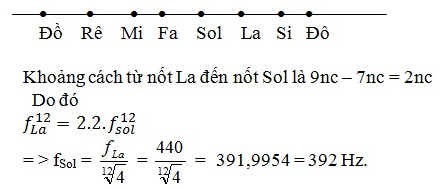
Method for calculating the frequency of musical notes.
VILAS 1541 · ISO/IEC 17025
Need acoustic engineering advice?
Get in touch with DASM specialists for on-site surveys, VILAS 1541 testing, and optimized solutions for your facility.
Related Articles
Articles from the same category or related topics
- 6 min read
From Vietnamese Acoustic Knowledge to International Forums: DASM's Research Milestone in Acoustics Australia
A research paper on acoustic materials by DASM was published in Acoustics Australia, a world-renowned acoustic journal, marking a new step forward for DASM in the field of acoustics
Read more → - 3 min read
DASM Sound Absorption Testing for Noise Barriers According to ISO 354:2024 & EN ISO 11654:1997
DASM sound absorption testing for Noise Barriers in a reverberation room according to ISO 354:2024 and EN ISO 11654:1997 standards at a VILAS-certified laboratory
Read more → - 4 min read
DASM Participates in Long-Span Bridge Workshop for High-Speed Railways – Expanding Research Capabilities in Acoustics and Structural Vibration
DASM participates in the long-span bridge workshop for high-speed railways to update structural design trends, control structural vibration and acoustics, and prepare capabilities for projects
Read more →