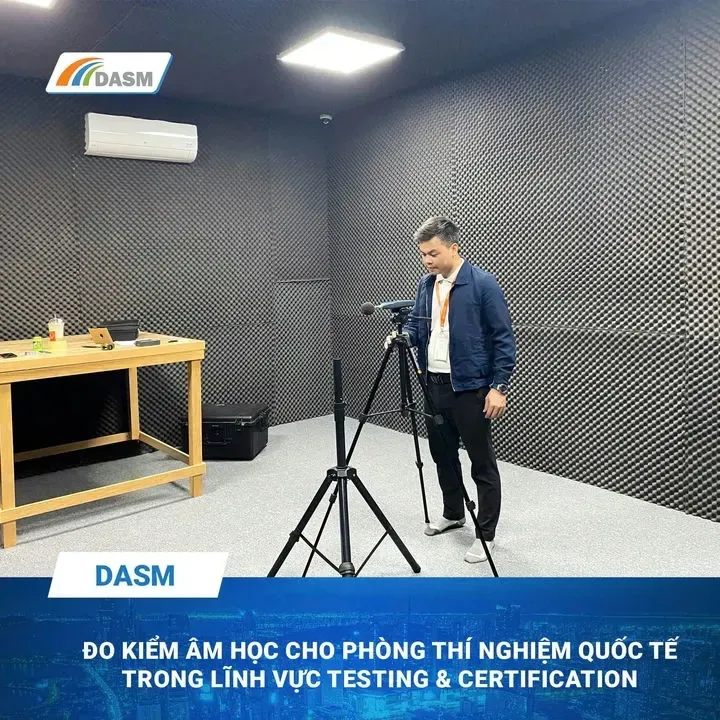
In the context of rapid urbanization, noise in the living environment has increasingly become a concerning issue. Not only originating from traffic, construction sites, or factories, noise also arises from sports and recreational activities such as basketball, volleyball, or Pickleball, which are becoming highly popular in many residential areas. The resonance of these noise sources makes investigating and measuring noise, assessing noise more urgent than ever.
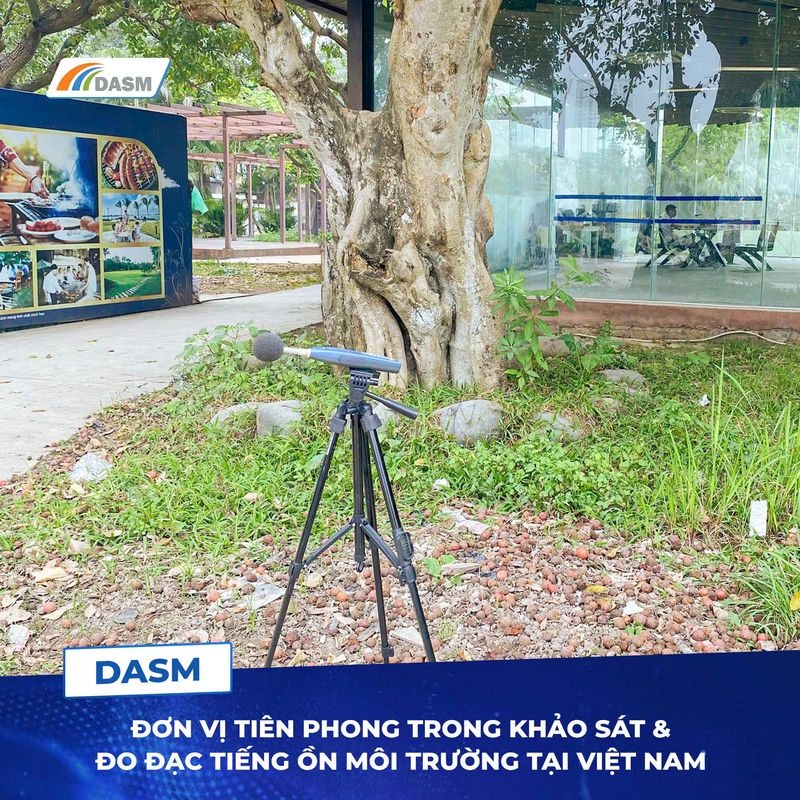
Therefore, surveying and measuring environmental noise serves as a fundamental step to clearly understand the current status, determine the impact levels, and provide appropriate control solutions. This is also why investors and management units are increasingly focusing on collaborating with entities that have the capability for accurate and transparent testing.
Parallel to that demand, DASM possesses the first acoustics laboratory in Vietnam to achieve VILAS accreditation, meeting all international requirements for technical competence. As a result, all measurement results performed by DASM ensure high reliability, are widely recognized, and hold legal value in environmental dossiers.
The status of noise in the urban environment
Environmental noise is increasing in both intensity and frequency. While traffic noise accounts for the largest proportion, construction and manufacturing activities generate prolonged noise levels that have the potential to deeply affect public health. Besides, the increasing appearance of outdoor sports courts, especially basketball and Pickleball courts, has created additional noise sources in already sensitive residential areas.
All these factors make measuring and assessing noise not only for recording data but also as a scientific basis for proposing appropriate mitigation measures.
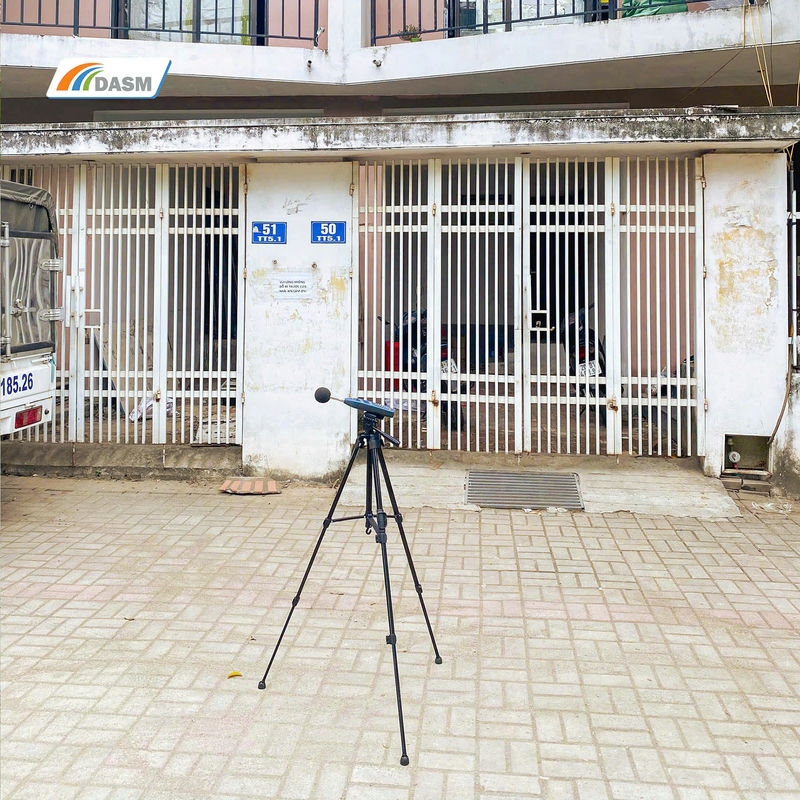
DASM's testing capability – VILAS-accredited laboratory
Thanks to being accredited under the VILAS system, DASM's acoustics laboratory fully complies with international standards such as IEC 61672, ensuring measurement equipment is accurate, periodically calibrated, and traceable. This helps DASM's measurement results possess legal validity, transparency, and suitability for submission to environmental management agencies.
Furthermore, DASM applies rigorous testing procedures according to international acoustic standards, ensuring the collected data reflects the actual environmental conditions.
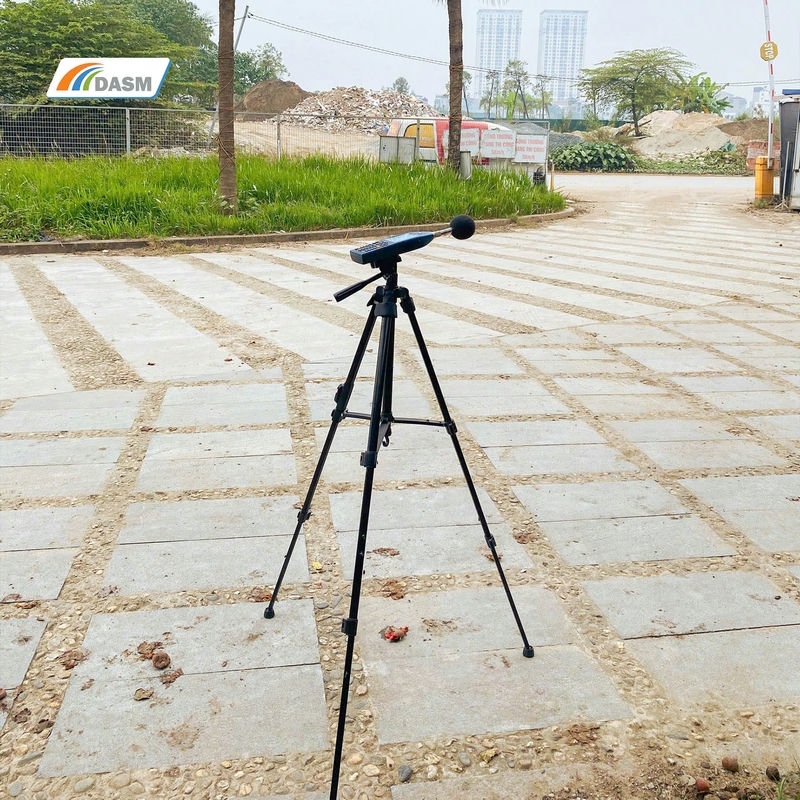
What does DASM measure and assess?
Based on the needs of each project, DASM implements various measurement categories:
1. Urban environmental noise measurement
This includes residential areas, new urban areas, schools, hospitals, and commercial areas – where high requirements for quietness are mandatory.
2. Industrial – construction noise measurement
Construction sites, factories, or industrial zones often generate continuous noise. Therefore, accurate measurement is essential to assess the overall impact level.
3. Noise measurement from sports – recreational activities
Basketball, volleyball, or Pickleball courts create characteristic rhythmic sounds. DASM utilizes frequency analysis measurement methods to identify the distinct noise characteristics of each type.
4. Continuous long-term measurement
Depending on the project's specifics, DASM can measure for 1 hour, 24 hours, or over multiple days to assess acoustic variations across day and night time frames.
5. Compliance assessment according to QCVN 26:2010/BTNMT
From there, DASM determines the level of compliance with current regulations and proposes treatment directions if thresholds are exceeded.
6. Noise source identification & impact scope
Through frequency spectrum analysis and sound propagation modeling, DASM indicates the primary noise sources, the scope of impact, and the acoustic risk level for surrounding areas.
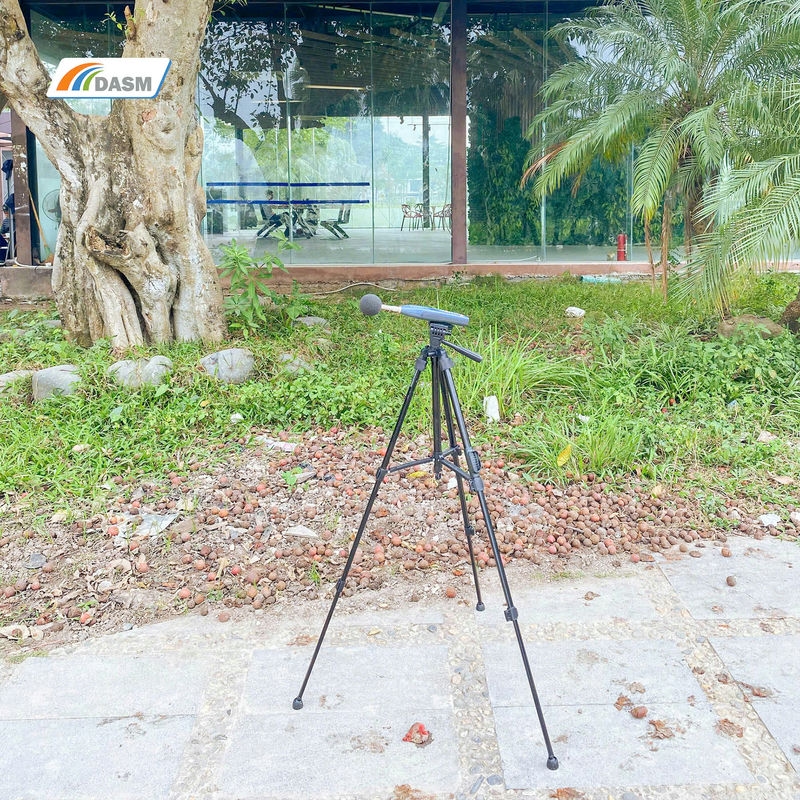
Objectives of noise survey and measurement
The obtained data not only serves environmental impact assessment purposes but also helps to:
- Determine the impact level on residents and surrounding structures
- Support the completion of legal reports for projects
- Serve as a foundation for designing sound insulation – sound absorption – acoustic control solutions
- Minimize complaints from residents and enhance project operational efficiency
- Consequently, noise surveying becomes an important tool in urban and industrial environmental management.
Benefits of using DASM's noise measurement and assessment services
By possessing internationally standardized capabilities, DASM brings many outstanding benefits to investors:
1. VILAS-recognized accuracy and legal validity
This ensures the data can be used in environmental dossiers and reports without the need for re-verification.
2. Scientific – easy-to-understand reports
In addition to raw data, DASM also provides charts, in-depth analyses, and comments presented clearly, facilitating decision-making.
3. Precise identification of noise sources
This helps investors address the issue accurately, saving significant costs.
4. Ensuring compliance with QCVN 26 standards
Helps projects avoid legal risks and enhances transparency in management tasks.
5. Proposing comprehensive acoustic solutions
From sound insulation – sound absorption to post-treatment acceptance testing, DASM accompanies every stage of the project.
6. Specialized acoustic engineering team
Experience in implementing hundreds of projects helps DASM provide accurate assessments and optimal solutions.
It can be said that DASM does not only provide service for noise measurement but also brings a system of scientific – international standard – acoustic solutions backed by the first VILAS laboratory in Vietnam. Thus, every project can be assured of the accuracy of data, the transparency of reports, and the effectiveness of the proposed noise reduction solutions.
VILAS 1541 · ISO/IEC 17025
Need advice on Noise Survey & Assessment Services?
Measuring ambient environmental, factory and residential noise to support environmental impact assessment (EIA).
Related Articles
Articles from the same category or related topics
- 6 min read
From Vietnamese Acoustic Knowledge to International Forums: DASM's Research Milestone in Acoustics Australia
A research paper on acoustic materials by DASM was published in Acoustics Australia, a world-renowned acoustic journal, marking a new step forward for DASM in the field of acoustics
Read more → - 3 min read
DASM Sound Absorption Testing for Noise Barriers According to ISO 354:2024 & EN ISO 11654:1997
DASM sound absorption testing for Noise Barriers in a reverberation room according to ISO 354:2024 and EN ISO 11654:1997 standards at a VILAS-certified laboratory
Read more → - 4 min read
DASM Participates in Long-Span Bridge Workshop for High-Speed Railways – Expanding Research Capabilities in Acoustics and Structural Vibration
DASM participates in the long-span bridge workshop for high-speed railways to update structural design trends, control structural vibration and acoustics, and prepare capabilities for projects
Read more →