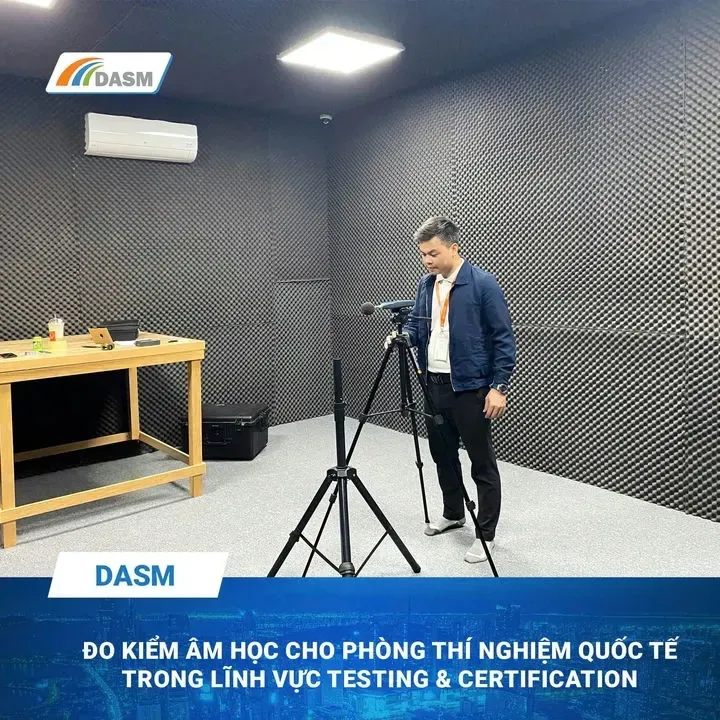
DASM Institute performs service of acoustic survey and noise measurement for the recording booth at the Ministry of Public Security (47 Pham Van Dong), including SNR measurement and acoustic characteristic evaluation according to ISO 3382 standard.
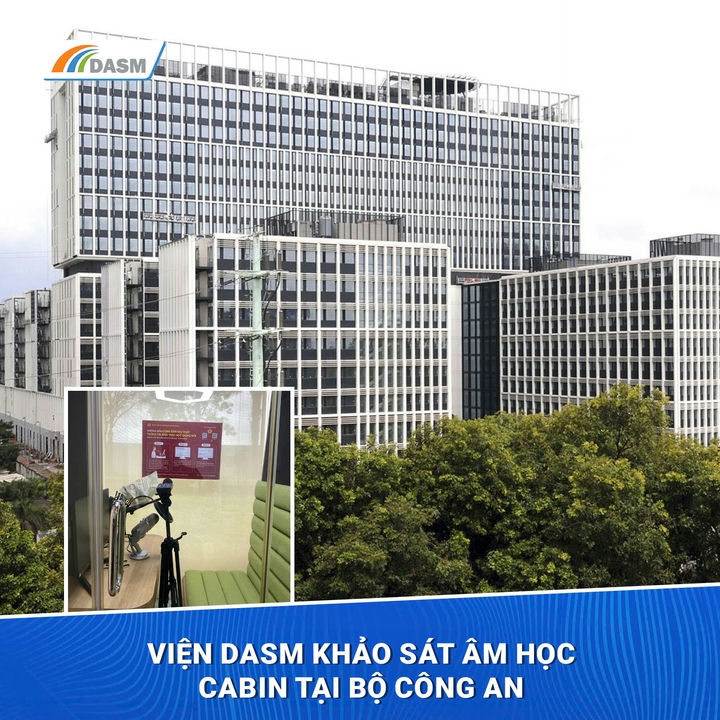
DASM Institute performs acoustic survey of the recording booth at the Ministry of Public Security – confirmed reputation
In modern voice signal recording and processing systems, the acoustic environment of the recording space plays a decisive role in the quality of the captured audio data. Recording booths, voice recording rooms, or acoustic signal analysis rooms are usually designed with very strict technical requirements to ensure signal clarity, limit background noise, and control acoustic reflections within the space.
Therefore, conducting acoustic surveys and noise measurements – the acoustic parameters of the recording booth is an important step in the process of evaluating and optimizing the recording environment. These measurements not only help determine the acoustic quality of the space but also provide a scientific basis to improve the operational efficiency of voice recognition and processing systems.
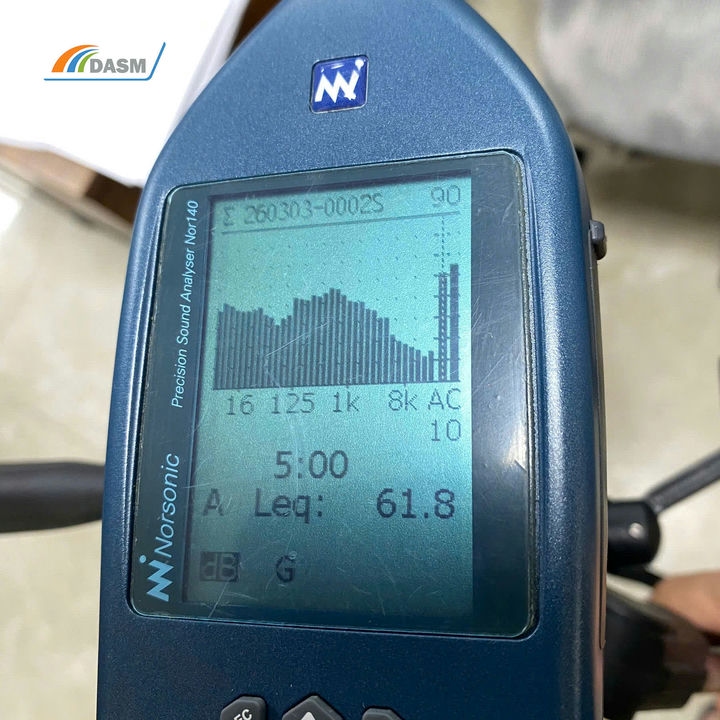
Recently, the DASM Institute for Development and Application of Acoustic Materials has conducted an acoustic survey and acoustic measurement of the recording booth at the Ministry of Public Security (47 Pham Van Dong, Hanoi). The activity of surveying and evaluating noise is carried out by the institute's team of acoustic experts with specialized measuring equipment, in order to evaluate important parameters of the recording environment serving the voice signal recording and analysis system.
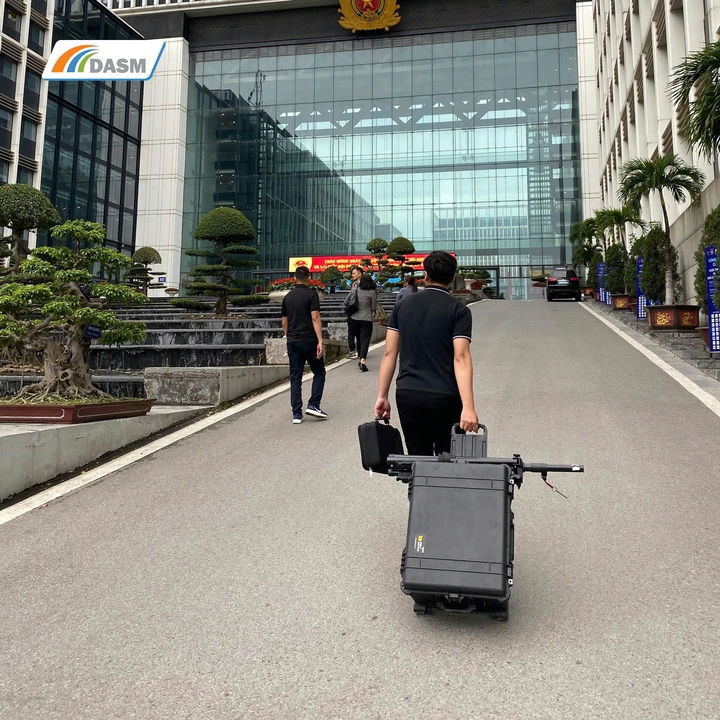
Through the process of measurement and data analysis, DASM experts have evaluated many important factors of the acoustic environment, including signal-to-noise ratio (SNR), reverberation time, acoustic energy attenuation characteristics, and acoustic reflection control capability within the booth.
Noise measurement – signal-to-noise ratio (SNR) in the recording booth
In voice recording systems, one of the most important technical indicators is Signal-to-Noise Ratio (SNR). This index represents the relationship between the useful audio signal level (voice signal) and the background noise level existing in the recording environment.
If the background noise level is too high compared to the voice signal, the recording system may face difficulties in recognizing or analyzing the audio data. Conversely, when SNR reaches a high value, the voice signal will be captured more clearly, thereby improving the accuracy of signal processing systems.
During the survey and evaluation at the recording booth, the DASM expert team conducted SNR measurements in two actual operating states of the space.
First, the measurement is performed when there is a speaker to record the actual voice signal during the recording process. This helps evaluate the acoustic energy level of the useful signal in the booth environment.
Then, the booth is placed in a static state, with no sound source, to measure the background noise level of the space. Background noise can originate from various sources such as electronic devices, ventilation systems, structural vibrations, or external environmental noise sources.
Through comparing these two values, experts can determine the ratio between the voice signal and background noise, thereby evaluating the suitability of the booth for voice recording and signal processing applications.
In addition, the SNR measurement process also helps detect potential noise sources in the system, thereby providing solutions to improve the acoustic environment if necessary.
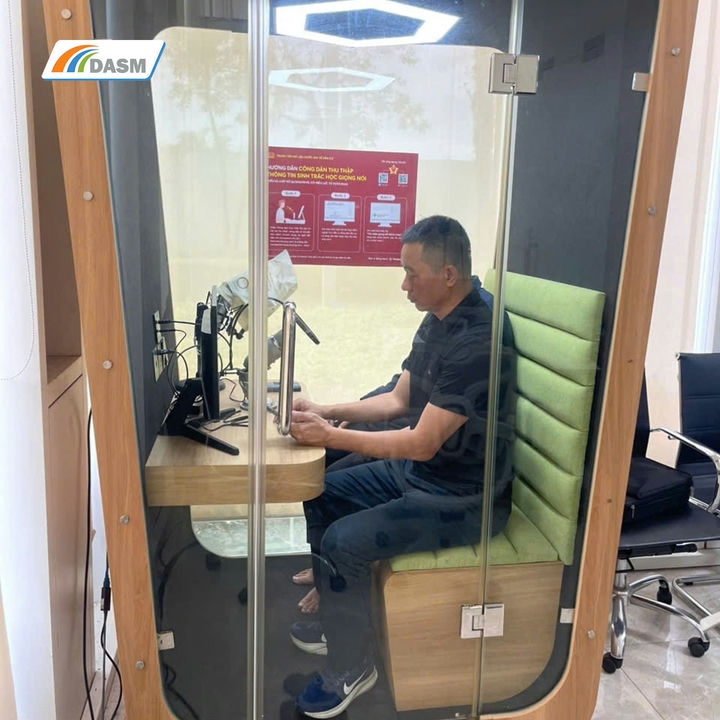
Evaluation of booth acoustic characteristics according to ISO 3382 standard
In addition to SNR measurement, the DASM expert team also evaluated the acoustic characteristics of the booth according to the international standard ISO 3382. This is a widely used standard in the field of room acoustics measurement, especially for spaces requiring strict sound control.
One of the important parameters measured during the acoustic survey is reverberation time (RT). Reverberation time represents the time required for the acoustic energy in a room to decay by 60 dB after the sound source stops operating.
This parameter has a direct impact on the clarity of the voice signal in the recording environment. If the reverberation time is too long, acoustic reflections will persist in the space, causing echoes and reducing signal clarity. Conversely, when the reverberation time is controlled at an appropriate level, the audio signal will be clear and less affected by reflections.
In addition to reverberation time, the survey team also analyzed the acoustic energy attenuation characteristics within the cabin space. The energy attenuation curve helps evaluate the sound absorption capacity of the sound-absorbing materials used in the booth.
At the same time, parameters related to the level of acoustic reflection and acoustic energy distribution in the room are also measured to determine the uniformity of the acoustic environment.
These data play an important role in evaluating the effectiveness of sound-absorbing and sound-insulating solutions applied in the recording booth.
The significance of surveying and measuring booth acoustics
Surveying and measuring the acoustic environment of the recording booth brings many important values to technology systems using audio signals.
First, acoustic measurements help objectively evaluate the quality of the recording environment, thereby ensuring the booth meets the technical requirements of the voice recording system.
In addition, measurement data also provides a scientific basis to optimize the acoustic design of the space, especially in systems requiring high accuracy such as voice recognition, audio signal analysis, or data recording.
In many cases, the survey results also help identify factors affecting sound quality, such as background noise, unwanted sound reflections, or uneven sound energy distribution in the room.
As a result, acoustic engineers can propose improvement solutions such as adding sound absorption materials, optimizing sound insulation structures, or adjusting equipment layout in the space.
In many cases, survey results also help identify factors affecting sound quality, such as background noise, unwanted sound reflections, or uneven distribution of sound energy in the room.
As a result, acoustic engineers can propose improvement solutions such as adding sound absorption materials, optimizing sound insulation structures, or adjusting equipment layout in the space.
Affirming the professional capacity of DASM Institute
Being selected to conduct noise surveys and acoustic testing for the recording studio cabin at the Ministry of Public Safety is clear evidence of the professional capacity and scientific prestige of DASM Institute in the field of acoustic research and measurement.
Currently, DASM possesses a team of acoustic experts with experience in noise survey, measurement, and acoustic environment analysis activities. In addition, the institute is equipped with a modern acoustic measurement system that meets the technical requirements for measurements according to international standards.
In particular, the acoustic laboratory of DASM has been accredited by the Bureau of Accreditation (BoA) to meet VILAS standards. This certification affirms that the laboratory meets strict requirements for technical competence, measurement methods, and quality management systems.
Thanks to that, the noise measurement results performed by DASM have high reliability and scientific value, and can be used in research, inspection, and technical evaluation activities.
Through projects involving practical noise surveys and evaluations as well as in-depth research activities, DASM Institute is gradually contributing to the development of the acoustics industry in Vietnam.
In the coming period, DASM will continue to expand its activities in testing, measurement, inspection, research, and architectural acoustics design consulting – acoustic solutions, aiming to support agencies, organizations, and enterprises in building acoustic environments that meet technical standards and are suitable for modern technological applications.
VILAS 1541 · ISO/IEC 17025
Need acoustic engineering advice?
Get in touch with DASM specialists for on-site surveys, VILAS 1541 testing, and optimized solutions for your facility.
Related Articles
Articles from the same category or related topics
- 6 min read
From Vietnamese Acoustic Knowledge to International Forums: DASM's Research Milestone in Acoustics Australia
A research paper on acoustic materials by DASM was published in Acoustics Australia, a world-renowned acoustic journal, marking a new step forward for DASM in the field of acoustics
Read more → - 3 min read
DASM Sound Absorption Testing for Noise Barriers According to ISO 354:2024 & EN ISO 11654:1997
DASM sound absorption testing for Noise Barriers in a reverberation room according to ISO 354:2024 and EN ISO 11654:1997 standards at a VILAS-certified laboratory
Read more → - 4 min read
DASM Participates in Long-Span Bridge Workshop for High-Speed Railways – Expanding Research Capabilities in Acoustics and Structural Vibration
DASM participates in the long-span bridge workshop for high-speed railways to update structural design trends, control structural vibration and acoustics, and prepare capabilities for projects
Read more →