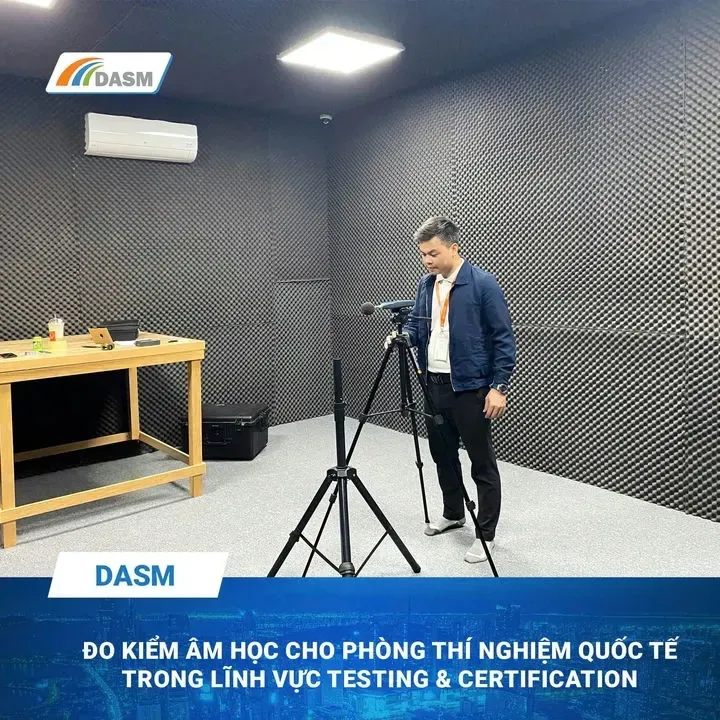
In the context of rapid urbanization, real estate projects high-end properties in Vietnam are increasingly focusing on the living experience – not only in terms of architectural aesthetics but also the quality of the acoustic environment. However, a concerning reality today is endogenous noise – especially originating from glass door systems, envelope materials, or mechanical structures – which can degrade utility value and negatively affect residents' mental health.
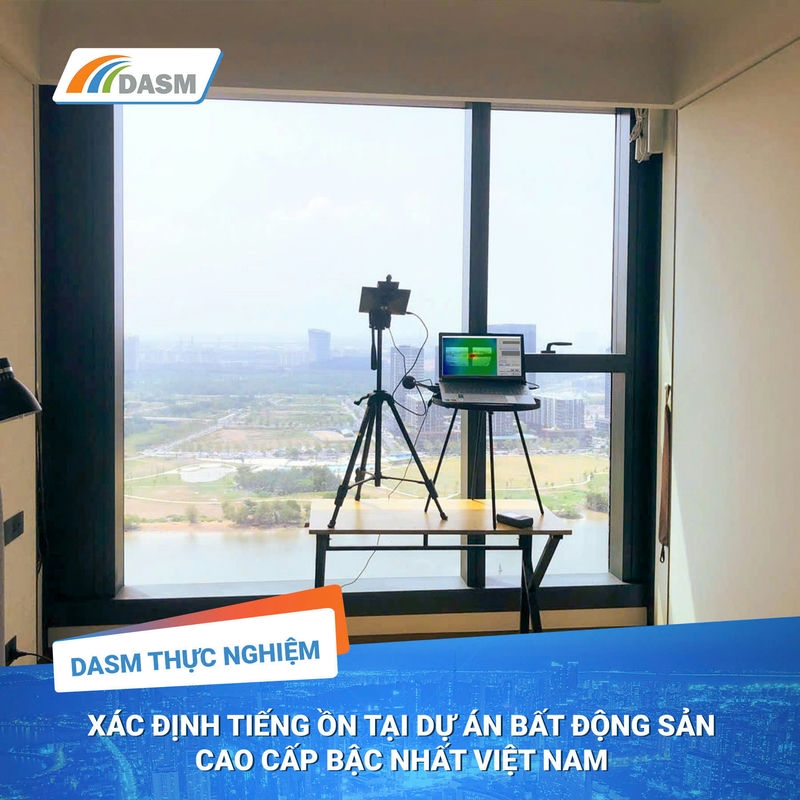
Faced with this challenge, the DASM Institute for Acoustics Materials Development and Application, a pioneer in the field of material testing, acoustic measurement, and building acoustics consulting, was invited by the investor to conduct testing, surveying, and noise assessment at one of the most expensive real estate projects in Vietnam – located along the Saigon River.
Although each apartment here costs up to tens of billions of dong and is designed to international standards, residents' complaints about annoying noise from the aluminum glass door system have posed an urgent requirement to analyze – identify noise sources and provide consulting on effective sound solutions .
DASM – Pioneer in Acoustic Camera Sound Localization Technology
DASM Institute identifies chiller noise for a leading Japanese manufacturing plant in Thai Binh
Objective and scope of acoustic survey and testing
Acoustic testing and surveys were conducted by DASM's team of experts with the objectives of:
- Accurately identifying the sources of abnormal sound generation within the aluminum glass door structure system.
- Quantitatively assessing sound pressure levels at sensitive locations according to international and national standards.
- Analyzing the physical causes of vibration and acoustic resonance phenomena in the reported area.
- Providing technical recommendations to minimize or completely eliminate unwanted sound phenomena.
The scope of testing, surveying, and noise assessment included several sample apartments on different floors in the building, featuring aluminum glass door systems with identical structures, but the sound generation phenomena did not occur simultaneously – indicating that the point sources and resonance frequencies are not constant.
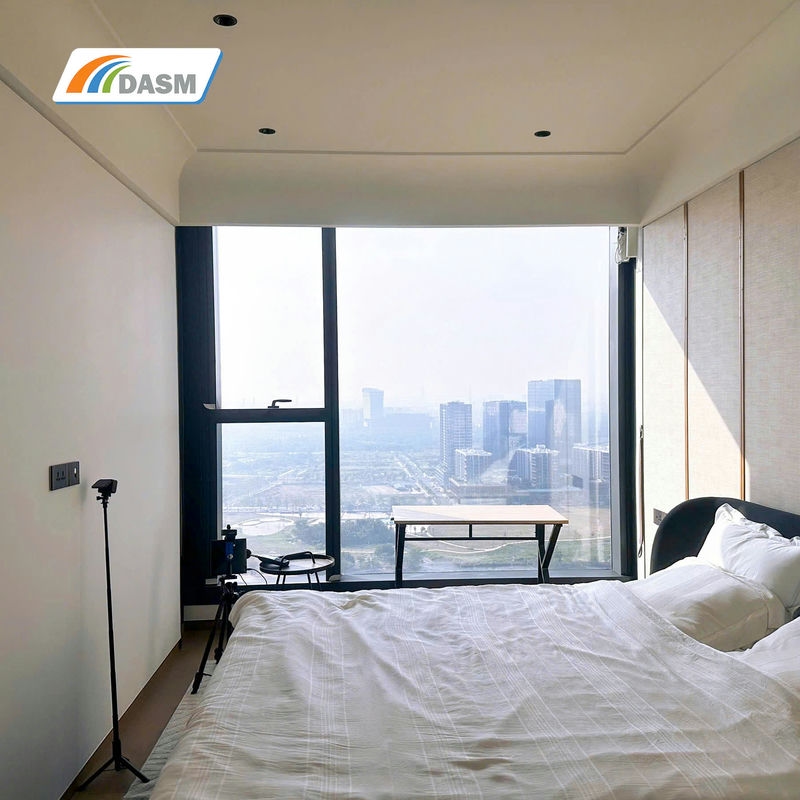
Field acoustic survey procedure
Standards applied for noise survey and assessment
All field measurement and survey activities were carried out in strict compliance with international and Vietnamese technical standards, including:
- ISO 1996-2:2017 / TCVN 7878-2:2018 – Acoustics – Description, measurement and assessment of environmental noise.
- ISO 16032:2024 – Acoustics – Measurement of sound pressure level in service equipment in buildings.
- ISO 9614-3:2002 – Acoustics – Determination of sound power levels of noise sources using sound intensity – Part 3: Precision method for measurement by scanning.
- QCVN 26:2010/BTNMT – National technical regulation on noise.
- TCXDVN 175:2005 – Guidelines for noise assessment in civil construction works.
Time and conditions of the survey
To ensure the representativeness of actual operating conditions, DASM conducted measurements during two main time frames:
- Morning: 7:30 AM – 11:00 AM (lower temperature and sound pressure)
- Evening: 5:00 PM – 10:00 PM (increased temperature differential, material expansion effect)
This allows for a full recording of the impact of physical factors such as temperature, humidity, and atmospheric pressure on the vibration and sound emission behavior of the structure.
Location and measurement method
Based on physical analysis and mechanical vibration principles, DASM identified potential locations causing resonance sounds, including:
- The interface boundary between the glass and the aluminum frame.
- The corners of the window frame – where residual stress is likely to concentrate.
- The hinge area – metal accessories directly connected to the wall, prone to micro-vibrations.
At each point, the equipment system collected sound and vibration signals to evaluate the resonance frequency, sound pressure level (SPL), and the propagation capability of sound waves in enclosed spaces.
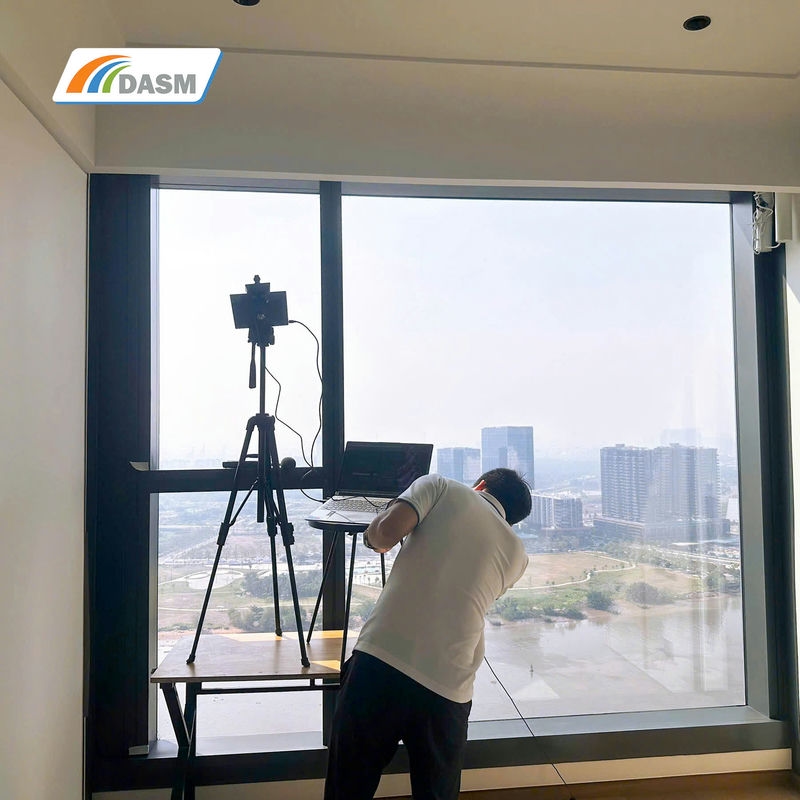
World-class modern measurement equipment system
One of DASM's prominent advantages is owning a modern acoustic measurement and analysis equipment system meeting international standards for specific testing, surveying, and noise assessment:
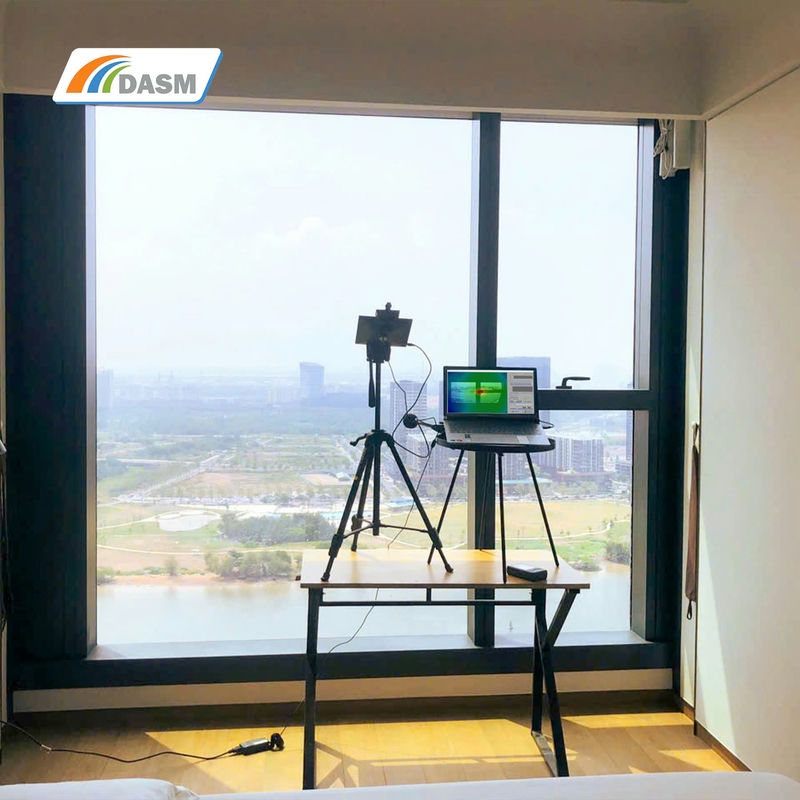
- Acoustic Camera (Microphone Array + Visual Acoustic Display)
The device allows the creation of an image-based sound field map – accurately identifying the sound source in just a few seconds with a deviation of less than 1 cm.
- Sound Board 64 Mic (Beamforming Array)
A specialized sound measurement board with 64 high-sensitivity sensor microphones, supporting beamforming algorithms to 3D scan sound signals and precisely locate sound positions even in reverberant environments.
- Class 1 Sound Level Meter – IEC 61672-1:2002
A periodically calibrated handheld instrument with an accuracy of ±1 dBA, meeting high-reliability measurement requirements, suitable for noise monitoring in construction, urban areas, or manufacturing plants.
Data analysis and cause identification
Data collected from the devices was processed using specialized software (AcousticCAM, NoiseImage) to:
- Create spatial and temporal sound distribution maps.
- Perform spectrum analysis to identify dominant resonance frequencies.
- Calculate transmission loss indices and material vibration damping coefficients.
- Compare empirical results with mechanical vibration and sound transmission prediction models in flat material blocks.
The results showed that some door samples on upper floors experienced resonance in the 160 – 250 Hz frequency band, corresponding to the natural vibration frequency of thin-section aluminum frames – while being subjected to temperature differentials from inside to outside (heat-induced flexural vibration).
Solutions proposed by DASM
After synthesizing data and comparing with technical standards, DASM has proposed treatment solutions including:
- Reinforcing the glass-frame interface using double-layer rubber gaskets with sound-absorbing capabilities.
- Adding a damping fill layer inside the hollow aluminum profile.
- Replacing single hinges with vibration-damping hinges integrated with resonance-absorbing springs.
- Reconstructing the accessory-frame connection system to decouple vibration transmission.
Reasons for choosing DASM for construction noise survey and assessment services
DASM Institute is the first unit in Vietnam with an acoustics laboratory recognized as meeting VILAS standards – possessing sufficient technical capacity to perform measurement, material testing, and consulting in the field of acoustics and noise for:
- Construction projects (hospitals, hotels, high-rises)
- Manufacturing plants – industrial zones
- Recording studios, theaters, cinemas
- Educational facilities, corporate offices
With a team of highly qualified acoustic engineers and experts, along with IEC/ISO-standard machinery systems, DASM provides comprehensive, accurate, and prompt solutions for all acoustic issues in construction.
VIDEO VIỆN DASM
https://youtube.com/watch?v=/ensnv1KqC38?si=X_2r6Yr_bi9k8o5N
Contact for consultation and to schedule acoustic surveys and material testing at:
DASM Institute for Development and Application of Acoustic Materials
📍 Address: Lot 10, Lai Yen Industrial Park, Hoai Duc, Hanoi
🌐 Website: https://dasm.vn
📧 Email: [email protected]
📞 Hotline: 0968.018.216
VILAS 1541 · ISO/IEC 17025
Need advice on Noise Survey & Assessment Services?
Measuring ambient environmental, factory and residential noise to support environmental impact assessment (EIA).
Related Articles
Articles from the same category or related topics
- 6 min read
From Vietnamese Acoustic Knowledge to International Forums: DASM's Research Milestone in Acoustics Australia
A research paper on acoustic materials by DASM was published in Acoustics Australia, a world-renowned acoustic journal, marking a new step forward for DASM in the field of acoustics
Read more → - 3 min read
DASM Sound Absorption Testing for Noise Barriers According to ISO 354:2024 & EN ISO 11654:1997
DASM sound absorption testing for Noise Barriers in a reverberation room according to ISO 354:2024 and EN ISO 11654:1997 standards at a VILAS-certified laboratory
Read more → - 4 min read
DASM Participates in Long-Span Bridge Workshop for High-Speed Railways – Expanding Research Capabilities in Acoustics and Structural Vibration
DASM participates in the long-span bridge workshop for high-speed railways to update structural design trends, control structural vibration and acoustics, and prepare capabilities for projects
Read more →