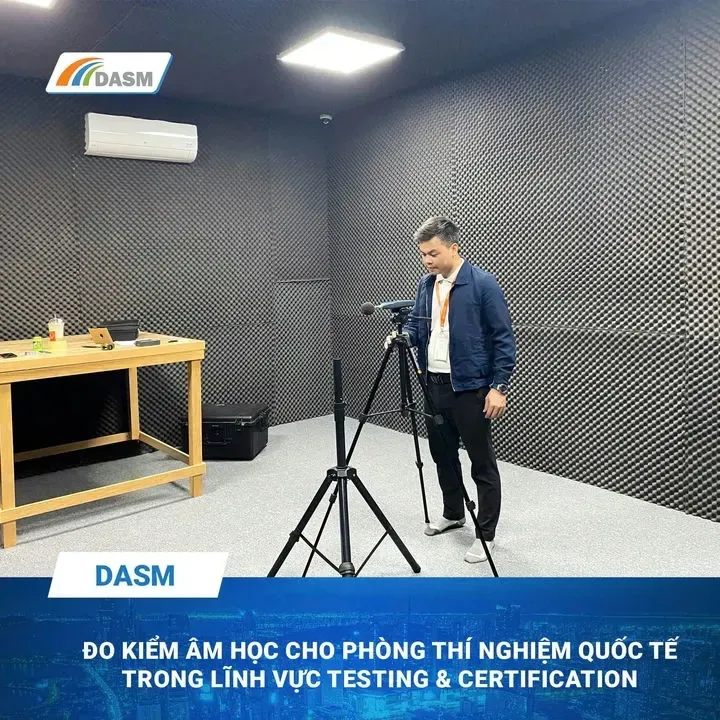
The test Determination of noise inside the cabin and during movement of agricultural and forestry machinery aims to provide information to avoid hearing risks or occupational safety hazards; control noise, control quality during the production process, optimize research and development, etc.
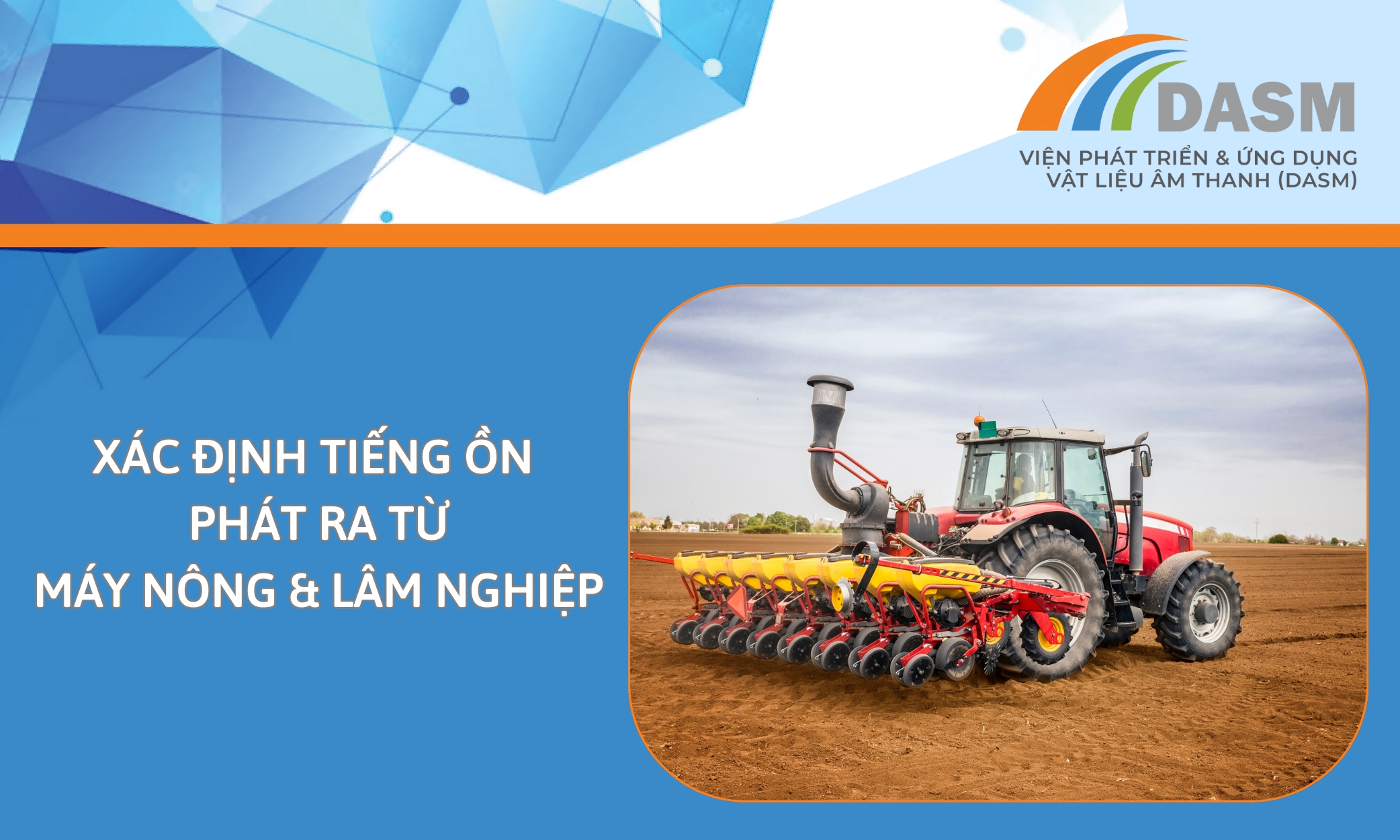

Overview of the test content Determination of noise inside the cabin and during movement of agricultural and forestry machinery
Test name: Determination of noise emitted from agricultural and forestry machinery
Test method:
TCVN 1773-14:1999: Tractors and machinery for agriculture and forestry – Test code – Part 14: Measurement of noise at the operator's position – Survey method [1].
ISO 5131:1996/2015: Acoustics – Tractors and machinery for agriculture and forestry – Measurement of noise at the operator’s position – Survey method [2].
TCVN 7657:2007: Acoustics – Agricultural and forestry wheeled tractors and self-propelled machines – Measurement of noise emitted when in motion [3].
ISO 7216: 1992: Acoustics – Agricultural and forestry wheeled tractors and self-propelled machines – Measurement of noise emitted when in motion [4].
Performed at: Field.
1. Objectives & test subjects
1.1. Test objectives
Determine noise generated by the operation of machinery used in agriculture and forestry.
1.2. Subjects
Tractors and machinery used in agriculture and forestry.
According to ISO 5131, the following groups of agricultural and forestry machinery:
Annex A: Agricultural and forestry tractors
Annex B: Self-propelled agricultural machinery
Annex C: Pedestrian-controlled agricultural machinery
Annex D: Forestry log loaders, skippers, and forwarders.
2. Test conditions
There are 02 different tests to determine noise emitted from the operation of agricultural and forestry machinery:
- A. Cabin noise measurement test according to TCVN 1773-14:1999 and ISO 5131:2015 (see also standard IS 12180-1:2000): evaluate noise impact on the driver.
- B. Pass-by noise measurement test according to TCVN 7657:2007 and ISO 7216:1992 (see also standard IS 12180-2:2000): evaluate noise emission to the surrounding environment.
For test B, the field setup is arranged similarly to the test for vehicle acceleration noise limits (ISO 362-1:2007). Requirements and contents of the test refer to this test (TCVN 7657/ISO 7216) and corresponding descriptive documents.
3. Experimental procedure
+ Procedure development
+ Data processing and reporting

4. Detailed test conditions
4.1. Test equipment and environment
This is a field experiment, the tools and equipment used include:
– Microphone (arranged according to standard diagram)
– Signal converter
– Computer for data acquisition and processing
Acoustic environment, weather conditions, and background noise level
-
Test location
-
Air temperature.
-
Original noise level and sound pressure level
-
During the measurement, no other persons besides the machine or tractor operator shall be present at the driving position or cabin when measuring noise at the operator's position, except for required additional operators. No other persons besides the operator(s) at that position shall affect the noise measurement.
Operation of tractors or self-propelled machinery
Tractors or self-propelled machinery must comply with the manufacturer's product specifications and be operated according to the factory's instructions. The engine, transmission system, and hydraulic system must be operated at appropriate working modes to stabilize the temperature before measuring.
Specific conditions for special machinery within the scope of this standard are provided in Annexes A to D.
Operator
For pedestrian-controlled or stand-on machinery, operators of appropriate height must be selected. Operators must not wear unusual clothing, shoes, or any hats or scarves that could affect the noise measurement.
Microphone position
4.2. Notes on test conditions
Implementation regulations:
For each type of machine, the following regulations are specified in the standard (Annex A to Annex D for each machine type):
General regulations;
Tractor operation;
Cabin and auxiliary equipment;
Noise measurement;
Test result report.
Role – importance of the test Determination of noise inside the cabin and during movement of agricultural and forestry machinery
The test Determination of noise inside the cabin and during movement of agricultural and forestry machinery conducted by the DASM Institute provides useful information, meeting practical needs of customers and businesses wishing to:
- Determine noise generated inside the cabin and during movement of agricultural and forestry machinery.
- Control noise, isolate noise sources, prevent noise, and implement mitigation measures to avoid health, hearing, occupational safety risks and prevent negative impacts on the surroundings.
- Measure the working environment and assign appropriate tasks. Train workers exposed to noisy environments to understand the hazards of noise and safe working measures.
- Control equipment status, early detect signs and causes of damage... to proactively maintain machinery.
- Control quality during the production process, optimize research and development of products, materials, components... related to noise emitted inside the cabin and during movement of agricultural and forestry machinery.
- Have a authentic basis to propose and implement solutions prioritizing components, parts, products... with advanced technology and engineering to reduce noise emitted inside the cabin and during movement of agricultural and forestry machinery.
- Material manufacturers, design consultants... agricultural and forestry machinery producers who want to achieve the goals of noise reduction, sound absorption, sound insulation...; and want to evaluate the effectiveness of noise reduction measures.
If previously you had some concerns, worries, and had to spend a lot of fees for similar activities abroad, now you just need to contact DASM. The entire remaining process will be proactively and comprehensively handled by us in the fastest time to complete the customer experience with us: DASM provides acoustic consulting services with truly superior quality, highly competitive prices in the industry, along with thoughtful and dedicated customer care policies.
The significance of acoustic material testing services at DASM
Today's globalized commercial life opens up countless new markets and sources of supply across five continents. Accompanied by international regulations and standards, it helps customers easily evaluate quality – trace the origin of products, and select suitable/superior items. Especially, they support manufacturers to continuously improve and perfect technology, techniques, raw materials, production methods, sales... etc...
The Institute of Acoustics Science and Materials (DASM) is a pioneering, comprehensive, professional, and leading prestigious brand in Vietnam in the field of acoustics. On January 12, 2023, DASM was granted certificate number 114/TĐC – HCHQ by the Directorate for Standards, Metrology and Quality (Ministry of Science and Technology), certifying registered multi-sector testing activities in the field of Mechanics and Physics (registration number: 707/TN – TĐC).
Our acoustic testing service provides customers with practical professional results to meet sustainability, standard performance, optimal solutions – consulting – design calibration... for products and services. From there, you will update, meet, and adapt to constantly changing international standards to make breakthroughs in revenue, profit, and elevate your brand.
If you have a need to carry out the test method for determining noise inside the cabin and during movement of agricultural and forestry machinery please contact via Hotline for detailed consultation!
VILAS 1541 · ISO/IEC 17025
Need advice on Noise Survey & Assessment Services?
Measuring ambient environmental, factory and residential noise to support environmental impact assessment (EIA).
Related Articles
Articles from the same category or related topics
- 6 min read
From Vietnamese Acoustic Knowledge to International Forums: DASM's Research Milestone in Acoustics Australia
A research paper on acoustic materials by DASM was published in Acoustics Australia, a world-renowned acoustic journal, marking a new step forward for DASM in the field of acoustics
Read more → - 3 min read
DASM Sound Absorption Testing for Noise Barriers According to ISO 354:2024 & EN ISO 11654:1997
DASM sound absorption testing for Noise Barriers in a reverberation room according to ISO 354:2024 and EN ISO 11654:1997 standards at a VILAS-certified laboratory
Read more → - 7 min read
DASM Institute surveyed the acoustics of the recording booth at the Ministry of Public Security according to ISO 3382 standard
DASM Institute conducted an acoustic survey and noise testing in the recording booth at the Ministry of Public Security, including SNR measurement and acoustic characteristic evaluation according to ISO 3382 standard.
Read more →