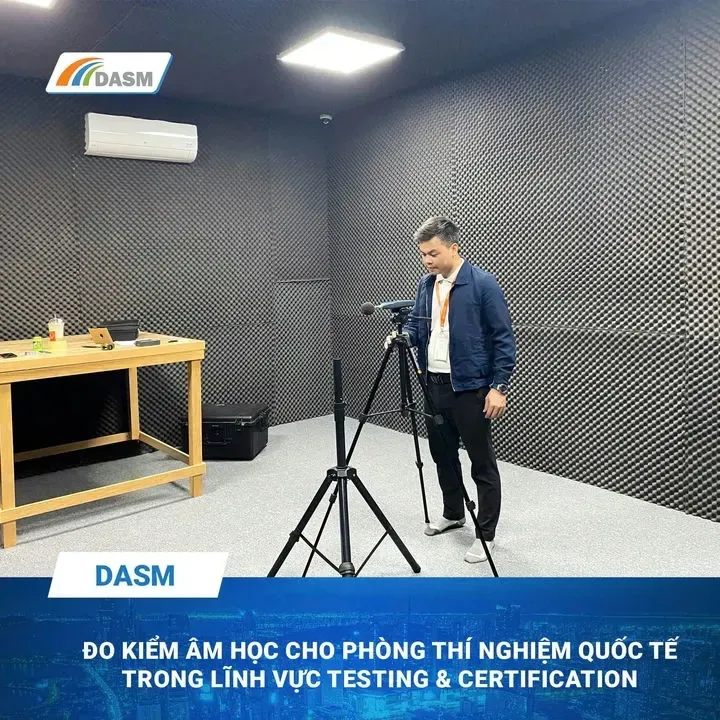
Noise exceeding standards - fines can be up to 160 million VND, this regulation officially applies from December 15, 2025 according to National Technical Regulation QCVN 26:2010/BTNMT - National Technical Regulation on Noise and Decree 282/2025/NĐ-CP

What should businesses, investors, and business households note from December 15, 2025?
From December 15, 2025, the management and penalization of noise violations in Vietnam undergo a fundamental change. The law no longer relies solely on the time milestone “after 22:00”, but directly penalizes based on the level of noise exceeding environmental standards, regardless of day or night.
This means that:
As long as the generated noise level exceeds the allowable limit according to national technical regulations, individuals or organizations can be administratively penalized, even if activities take place during the day.
What is excessive noise? What legal basis is applied?
Noise assessment is carried out based on National Technical Regulation QCVN 26:2010/BTNMT - National Technical Regulation on Noise and Decree 282/2025/NĐ-CP.
According to this regulation, in areas such as residential zones, apartment buildings, and adjacent houses, the maximum allowable noise level is:
+ From 06:00 to 21:00: not exceeding 70 dBA
+ From 21:00 to 06:00 next day: not exceeding 55 dBA
The dBA level (decibel A-weighted) is a quantity measuring sound pressure level adjusted according to the human ear's response characteristics, commonly used in environmental noise impact assessment.
Penalties when noise exceeds environmental standards
According to current administrative violation penalty regulations in the field of environmental protection, fines are applied based on the number of dBA exceeding the standard, specifically:
- Exceeding 2 - 5 dBA: Fine from 1 - 5 million VND
- Exceeding 10 - 15 dBA: Fine from 20 - 40 million VND
- Exceeding 20 - 25 dBA: Fine from 60 - 80 million VND
- Exceeding 40 dBA or more: Fine from 140 - 160 million VND
In particular, for offending organizations, the fine is doubled compared to individuals.
In practice, just a small deviation of a few dBA is enough to generate legal risks, remediation costs, and the risk of operation suspension if noise is not well controlled.
Subjects at high risk of being penalized for noise
Activities generating continuous or high-intensity noise in residential areas currently include:
- Pickleball courts, football fields, sports courts in residential areas (sound of hitting balls, whistles, loudspeakers, shouting of concentrated crowds)
- Karaoke bars, pubs, eateries playing loud music
- Workshops and production facilities interspersed in residential areas
- Construction works in urban areas and apartment buildings
- Apartment buildings and housing projects when noise complaints arise from residents
These are all cases easily subject to feedback, unexpected inspection, and requests to provide noise measurement results as a legal basis.
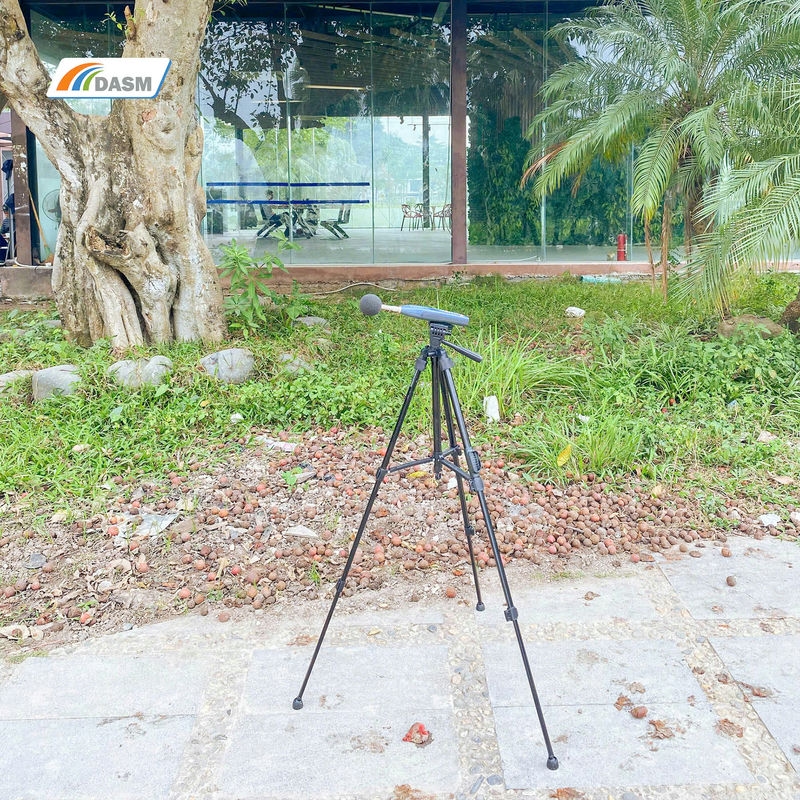
How to know if noise exceeds standards or not?
Noise cannot be assessed subjectively. Determining whether the noise level exceeds the standard must be based on:
- On-site measurement, survey and noise assessment activities
- Measurement equipment meeting technical standards, calibrated periodically
- Measurement method, measurement time, and measurement location correctly following regulations
- The executing unit having sufficient professional and legal capacity
Noise measurement results are the scientific and legal basis to:
- Work with state management agencies
- Resolve complaints and disputes
- Assess legal risks
- Consulting and implementing noise control solutions, suitable acoustic design
DASM - Standard-compliant acoustic measurement and consulting unit in Vietnam
DASM is the first acoustics institute in Vietnam granted VILAS certification, fully meeting requirements for technical capacity, quality management, and legal validity in acoustic testing and measurement activities.
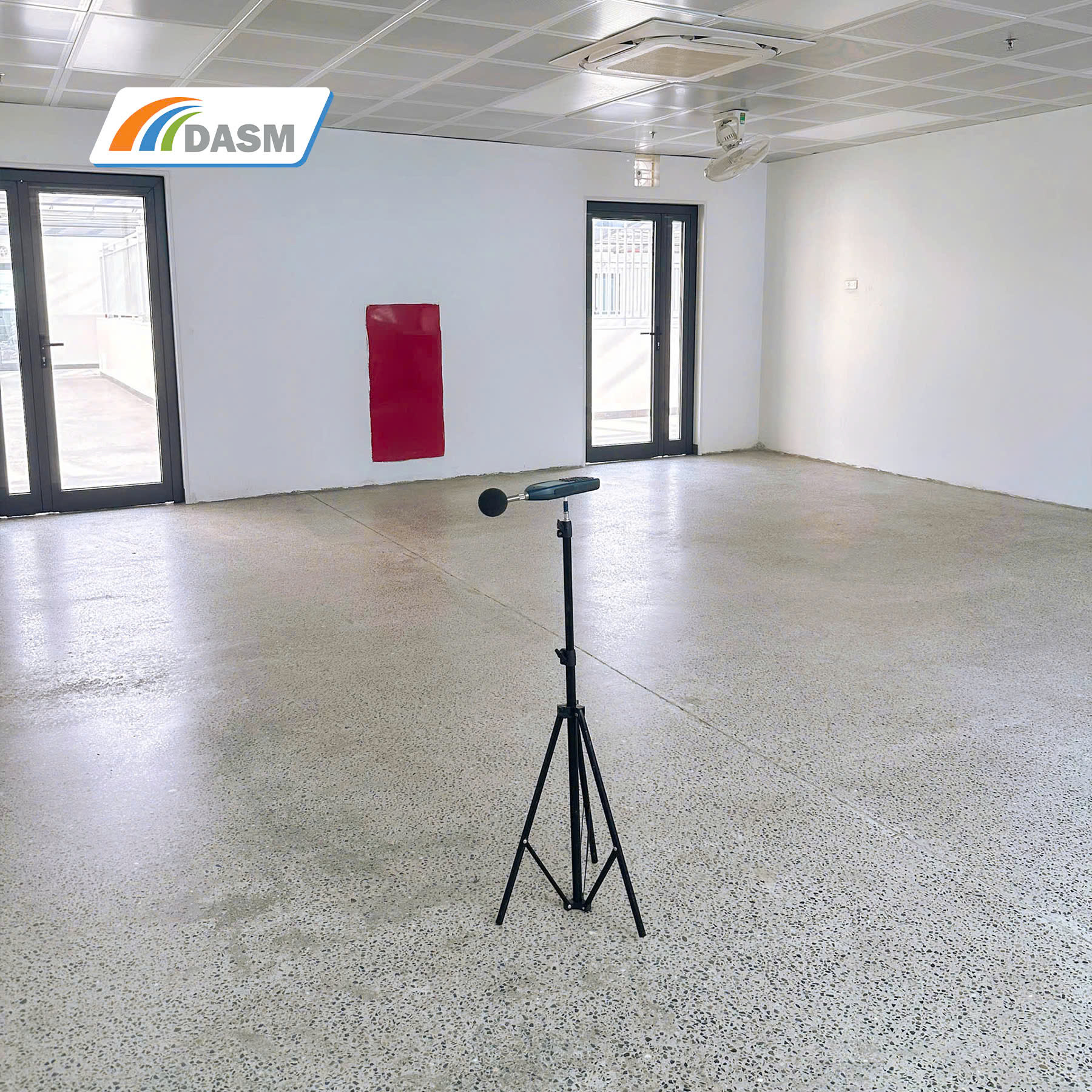
DASM's specialized acoustic services include:
- Survey, measurement, and environmental noise assessment
- On-site noise measurement for workshops, construction works, and residential areas
- Assessment and control of noise and vibration
- Consulting and acoustic design of works meeting technical standards
- Supporting businesses proactively preventing legal risks regarding noise
Correct measurement - correct assessment - correct treatment right from the beginning is the most effective way for businesses to operate stably, sustainably, and in compliance with the law.
VILAS 1541 · ISO/IEC 17025
Need advice on Noise Survey & Assessment Services?
Measuring ambient environmental, factory and residential noise to support environmental impact assessment (EIA).
Related Articles
Articles from the same category or related topics
- 6 min read
From Vietnamese Acoustic Knowledge to International Forums: DASM's Research Milestone in Acoustics Australia
A research paper on acoustic materials by DASM was published in Acoustics Australia, a world-renowned acoustic journal, marking a new step forward for DASM in the field of acoustics
Read more → - 3 min read
DASM Sound Absorption Testing for Noise Barriers According to ISO 354:2024 & EN ISO 11654:1997
DASM sound absorption testing for Noise Barriers in a reverberation room according to ISO 354:2024 and EN ISO 11654:1997 standards at a VILAS-certified laboratory
Read more → - 4 min read
DASM Participates in Long-Span Bridge Workshop for High-Speed Railways – Expanding Research Capabilities in Acoustics and Structural Vibration
DASM participates in the long-span bridge workshop for high-speed railways to update structural design trends, control structural vibration and acoustics, and prepare capabilities for projects
Read more →