Have you ever wondered why non-vulcanized rubber is used for sound insulation, sound-absorbing foam for sound absorption, or glass wool for both sound insulation and sound absorption? That is because of the different composition and molecular structure among material types.
Are sound insulation and sound absorption the same?
Sound insulation and sound absorption are two concepts belonging to acoustics but with completely different natures. However, in reality, there are still many people who fail to distinguish between sound insulation and sound absorption, leading to incomplete treatment of acoustic problems and unsatisfactory sound quality.
What is sound insulation?
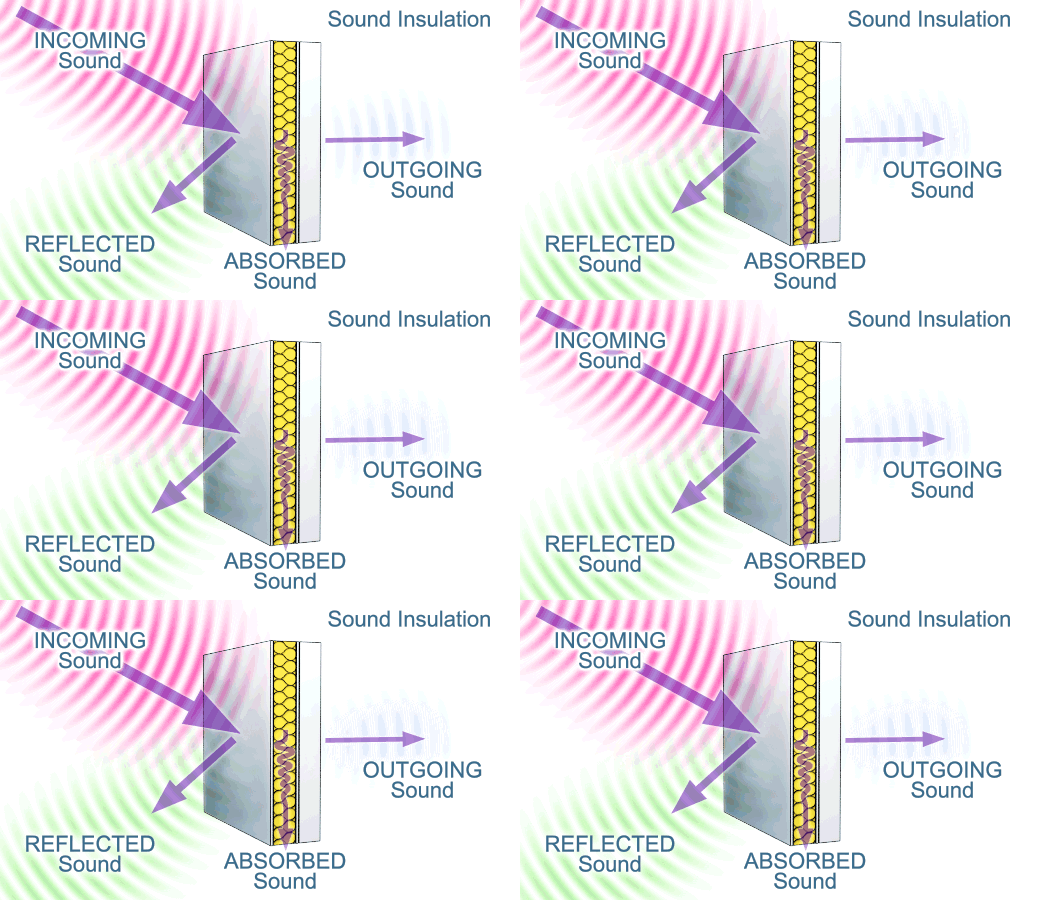
Simply put, sound insulation is blocking sound, preventing sound from propagating from one space to another, from inside to outside, and from outside to inside. To block wave energy from propagating or to transmit very little of it, dense materials with closed molecular structures are needed, such as: concrete, glass, stone, brick, etc.
Thanks to sound insulation materials, almost all sound energy is retained on the incident wave side, and the transmitted energy is very small
What is sound absorption?
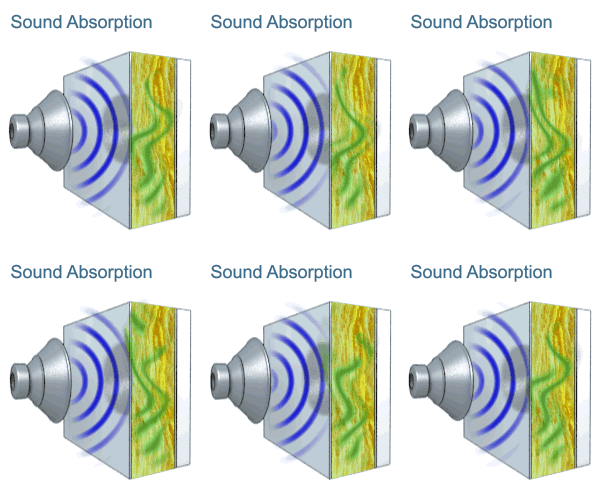
Sound absorption is the use of soft, porous materials so that sound can enter and cannot reflect back off hard, smooth surfaces in a space such as walls, ceilings, and roofs causing reverberation. Sound absorption helps reduce reflected sound and reverberation in a room, creating clearer sound.
Whether a material provides sound insulation or sound absorption depends on its composition and molecular structure.
Composition of some of the most widely used sound insulation and sound absorption materials today
1. PE foam
PE foam is an abbreviation for Polyethylene, this type of foam is also called PE foam, white foam, PE foam, molded foam, sound insulation foam, etc.
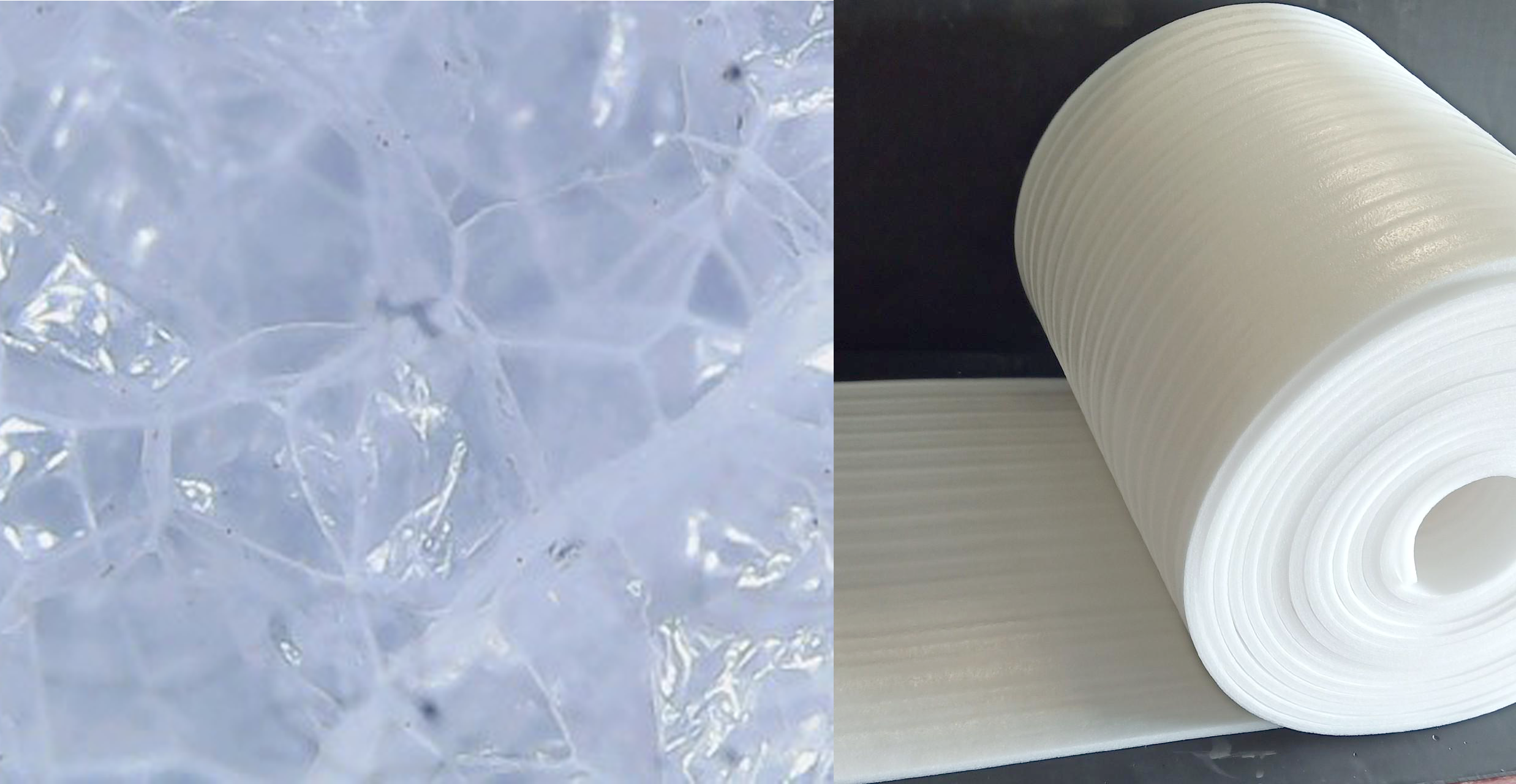
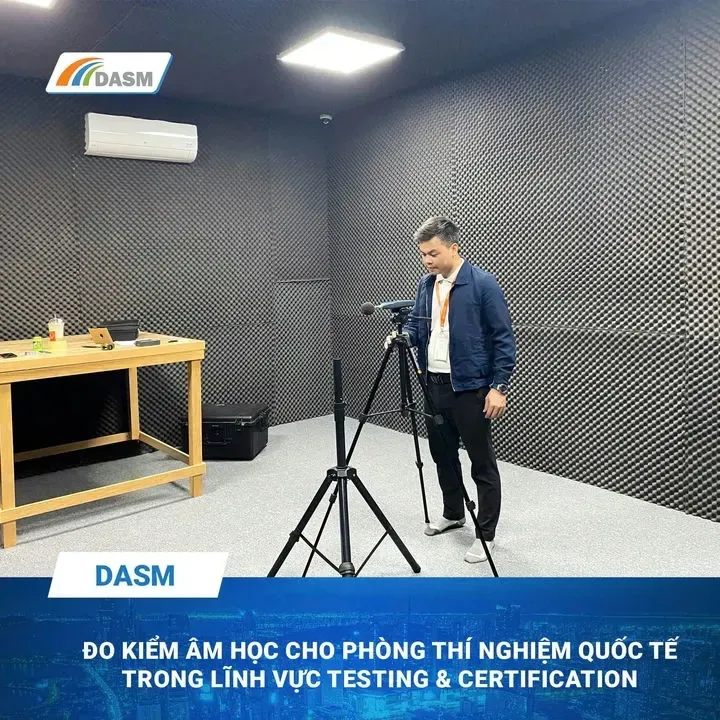
PE foam is composed of air-blown PE layers, a closed molecular structure consisting of millions of microscopic air pockets bonded and separated from each other. Thus, this material has very good sound transmission prevention capabilities. Measurement results at the DASM Institute laboratory show that PE foam has better sound insulation capabilities at low frequencies, capable of reducing up to 42dB.
PE under microscope and actual sample
In practice, this product is used as a fairly common sound insulation, noise-proofing, and sound absorption material layer for ceiling, partition, and floor systems of apartment buildings, stations, schools, hospitals, theaters, recording studios, bars, etc.
2. XPS foam
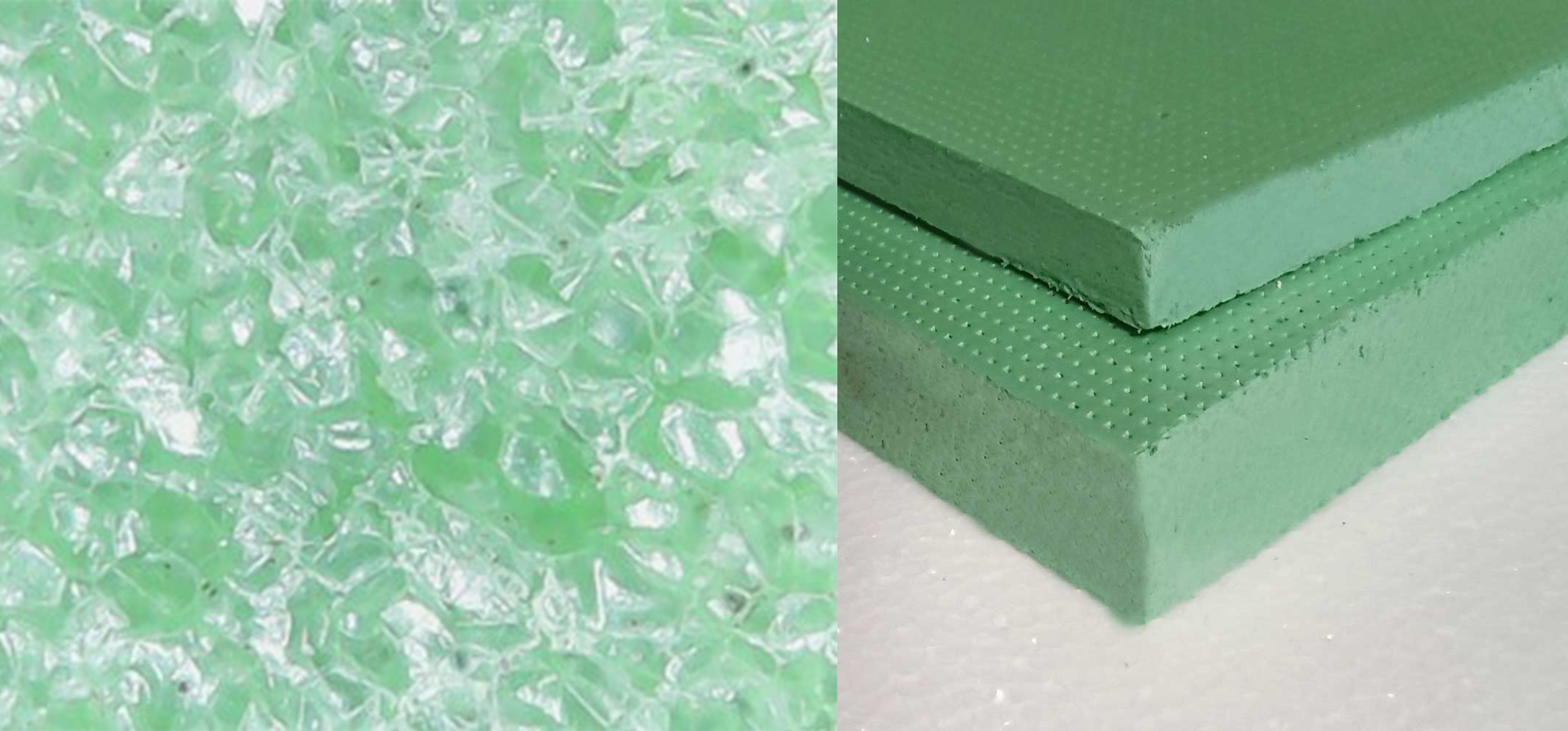
XPS foam– Extruded polystyrene is also called blue foam, ultra-light thermal and sound insulation foam, foundation base foam, thermal insulation foam, etc.
This type of foam is created through a thermal and extrusion process. This continuous process leads to the formation of a closed molecular structure with a smoother outer surface than PE. The closed molecular structure helps XPS prevent sound transmission well, and become a top sound insulation foam material with a maximum sound reduction capability of up to 60dB in the low frequency range.
XPS is used as a sound insulation material layer for walls, ceilings, roofs, and floors of residential, commercial, and industrial buildings such as workshops, warehouses, factories, shopping centers, etc.
Thanks to sound insulation materials, almost all sound energy is retained on the incident wave side, and the transmitted energy is very small
3. Mushroom head sound-absorbing foam
Mushroom head sound-absorbing foam is one of many popular profiled foams such as pyramid foam, egg-crate foam, corner foam, wedge foam, etc.
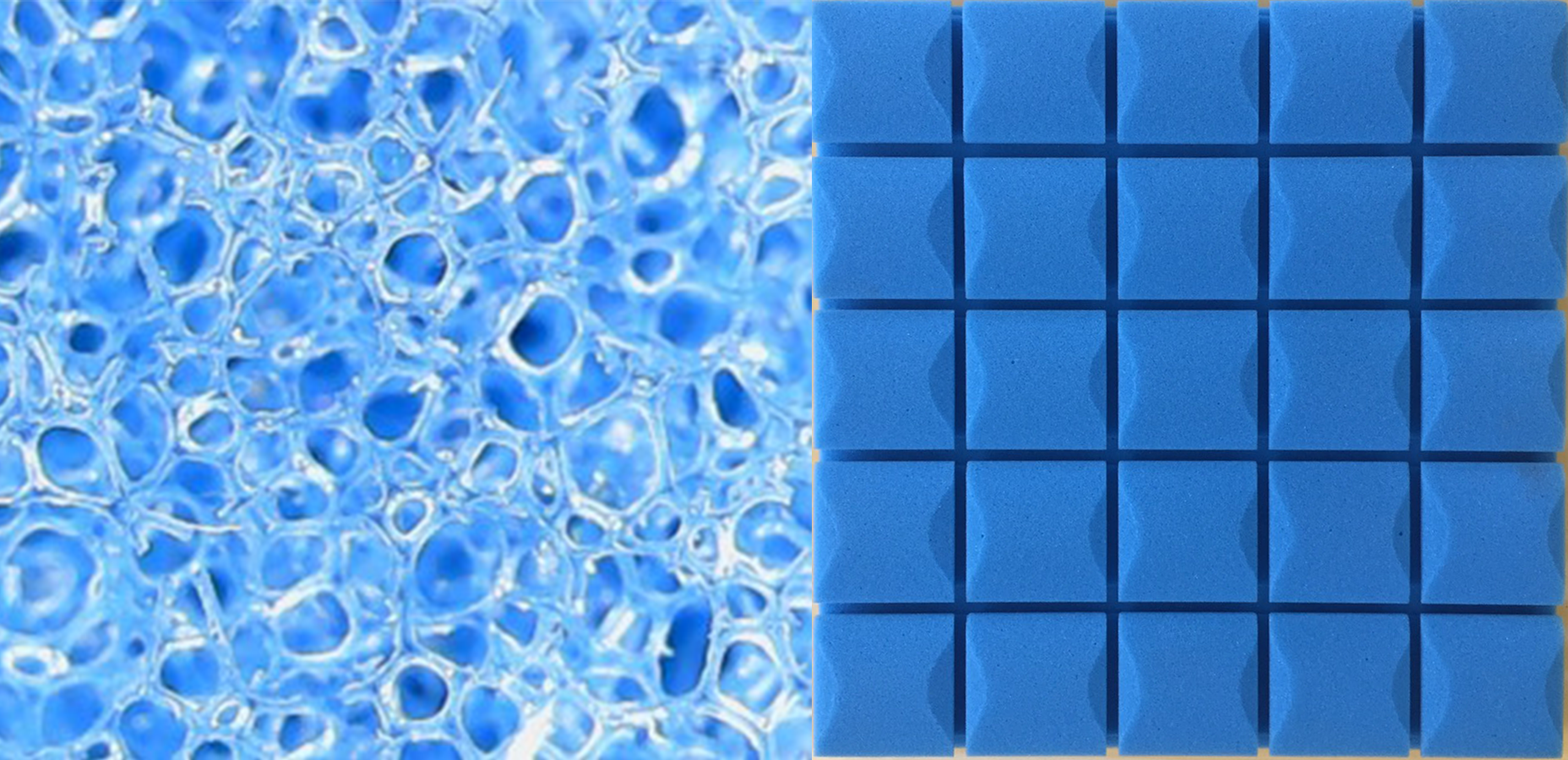
Microscopic observation shows that this type of foam is composed of small fine pores with a honeycomb-like structure, with open and flexible interconnected molecules. The air particles inside vibrate and convert sound energy into thermal energy, reducing the risk of sound waves reflecting back against hard surfaces like walls, floors, and ceilings causing reverberation and reflected sound. Sound absorption is particularly effective in the high and mid frequency ranges.
Sound-absorbing foam is usually used as an outer surface sound-absorbing material layer for recording studios, livestream rooms, instrument rooms, music rooms, home theaters, machine rooms, etc.
Mushroom head foam has an open, interconnected molecular structure
4. Non-vulcanized rubber
Non-vulcanized rubber or also known as EVA foam, EVA sponge foam, EVA foam rubber, is a fairly common sound insulation and vibration damping material today.
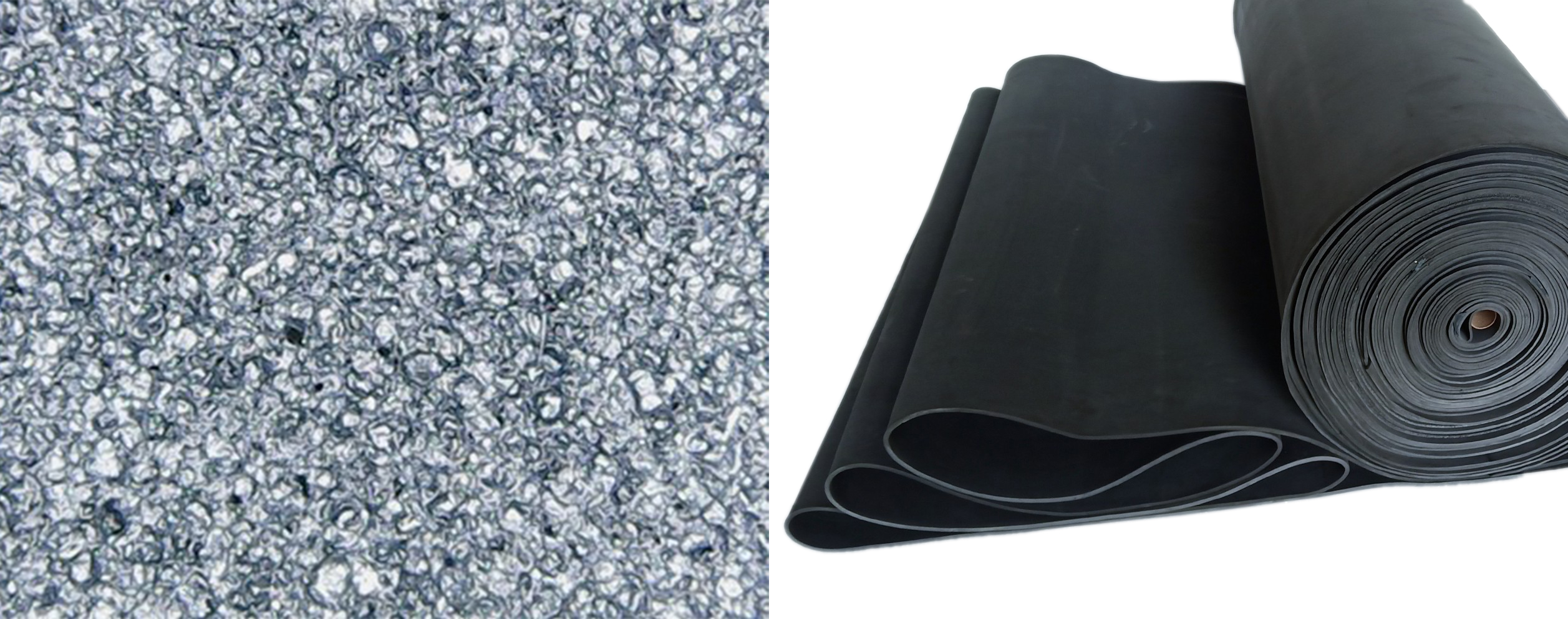
This is a semi-rigid material with chemical cross-linking and a uniform molecular structure. Through a cross-section under a microscope, we can see that EVA rubber has a closed molecular structure, so this material can block sound transmission very well.
Test measurement results show that EVA foam can provide sound insulation up to 65dB along with very good damping and vibration-reducing effects.
Actual sound insulation rubber roll and microscope image of the rubber sample
Non-vulcanized rubber is used as a material layer located at the innermost layer of walls or used as a floor underlay for vibration damping and sound insulation.
5. Sonic
Sonic – sonic sound-absorbing panel, is a leading sound-absorbing material today, made from pressed polyester staple fibers, with a noise reduction coefficient (NRC) close to 1, capable of absorbing up to 94% of sound waves for walls, ceilings, and floors.
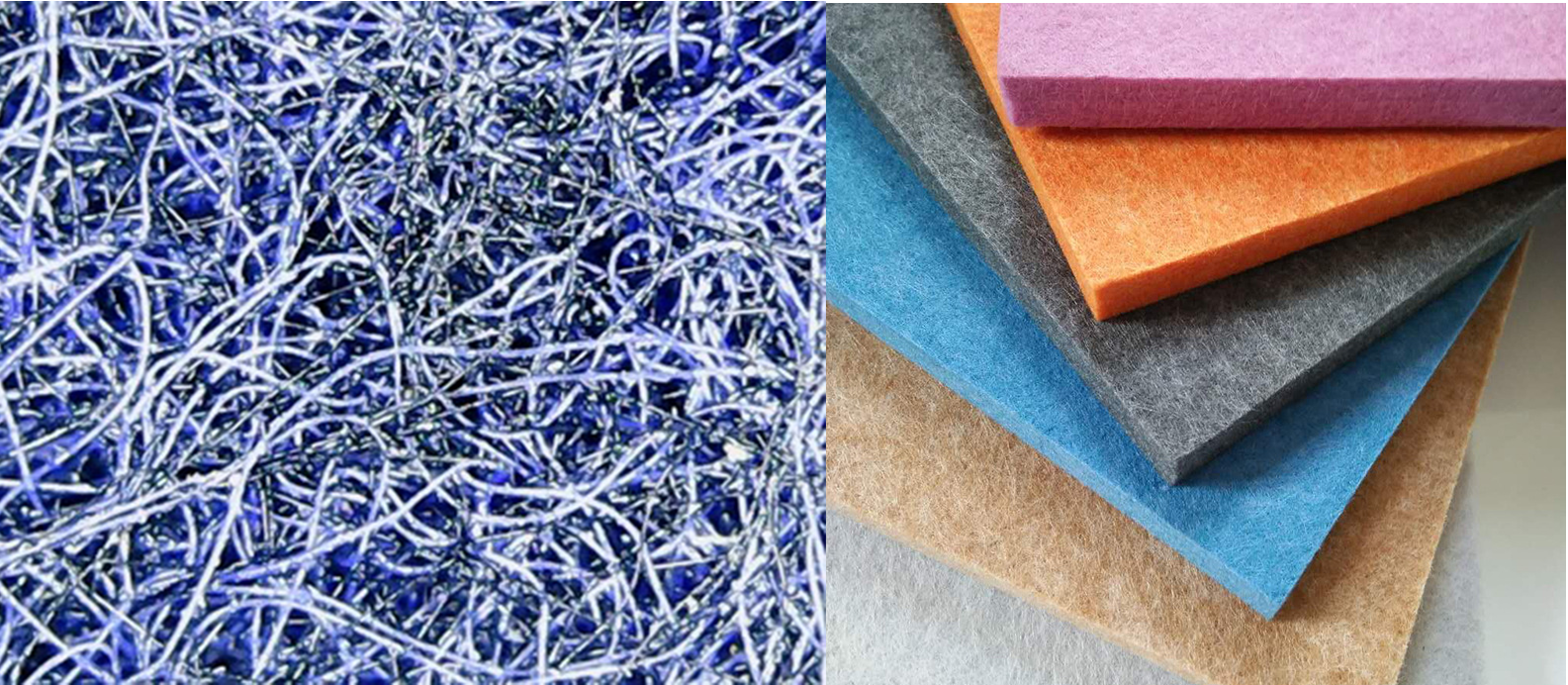
Through the microscopic image below, it can be seen that the composition of this material consists of fine non-woven fibers, tightly bonded together, with gaps in the middle for sound energy to enter.
Acoustic sonic sound-absorbing panels can be used as sound-absorbing drop ceiling panels, wall-cladding sound-absorbing panels, sound-absorbing partitions, sound-absorbing art panels, pinboards, sound-absorbing curtains, etc., and are commonly present in family karaoke rooms, recording studios, livestreams, offices, schools, libraries, restaurants, etc.
Thanks to sound insulation materials, almost all sound energy is retained on the incident wave side, and the transmitted energy is very small
5. Straw
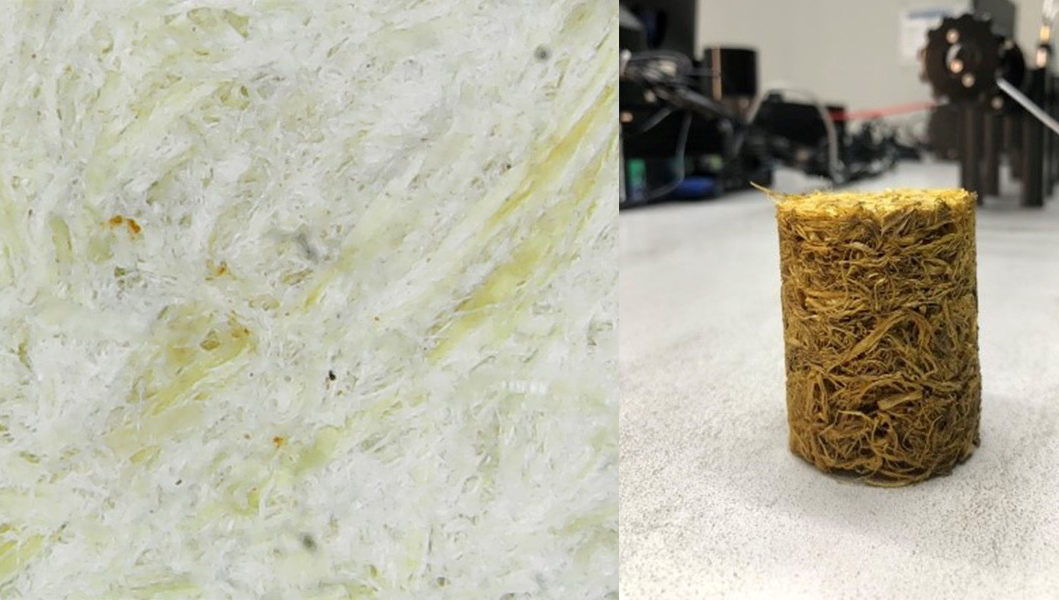
Straw is a 100% natural, eco-friendly material with a hollow fiber structure, thus possessing good sound absorption and sound-absorbing properties. Test measurement results show that the NRC of sound-absorbing materials made from straw is close to 1, equivalent to the sound absorption coefficient of mineral wool and sonic sound-absorbing panels.
And in particular, scientists at the DASMinstitute have discovered that when combining straw fibers with certain other components, including cement, this material gains an additional very good sound transmission prevention capability. A 45mm thick straw panel shows sound insulation performance equivalent to a 100mm thick concrete wall. Straw sound insulation panels can provide the best sound insulation in the frequency range from 1000 to 2000Hz.
Straw fibers have a hollow fiber structure, absorbing sound well
6. Glass wool
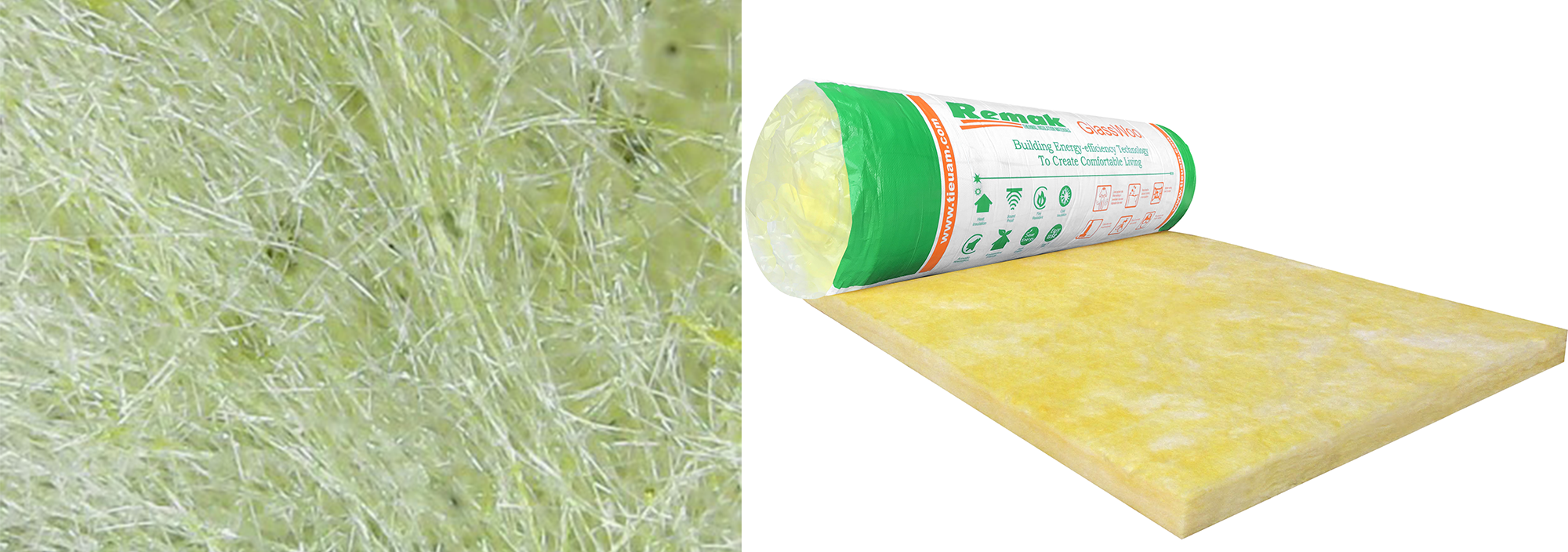
Glass wool is a material made from synthetic fiberglass components, with a texture similar to wool fibers. Under a microscope, this material exhibits a fibrous structure with numerous small air pockets trapped between the glass fibers, thereby increasing the sound absorption efficiency and preventing sound transmission.
Glass wool is known as a material with both excellent sound insulation and sound absorption capabilities, with an NRC sound absorption coefficient of approximately 0.85 and a sound insulation index of about 35dB.
Thanks to the sound insulation material, almost all sound energy is retained on the incident wave side, while the transmitted energy is very small
Glass wool is also used as an internal sound absorption and sound insulation layer, placed between two wall partitions or other material layers. Between these material layers, an air gap is necessary for sound waves to enter and be absorbed or attenuated, as sound travels very poorly through air and cannot reflect back into the space.
The higher the density and thickness of the glass wool, the better its sound insulation and sound absorption performance.
7. Acoustic fabric
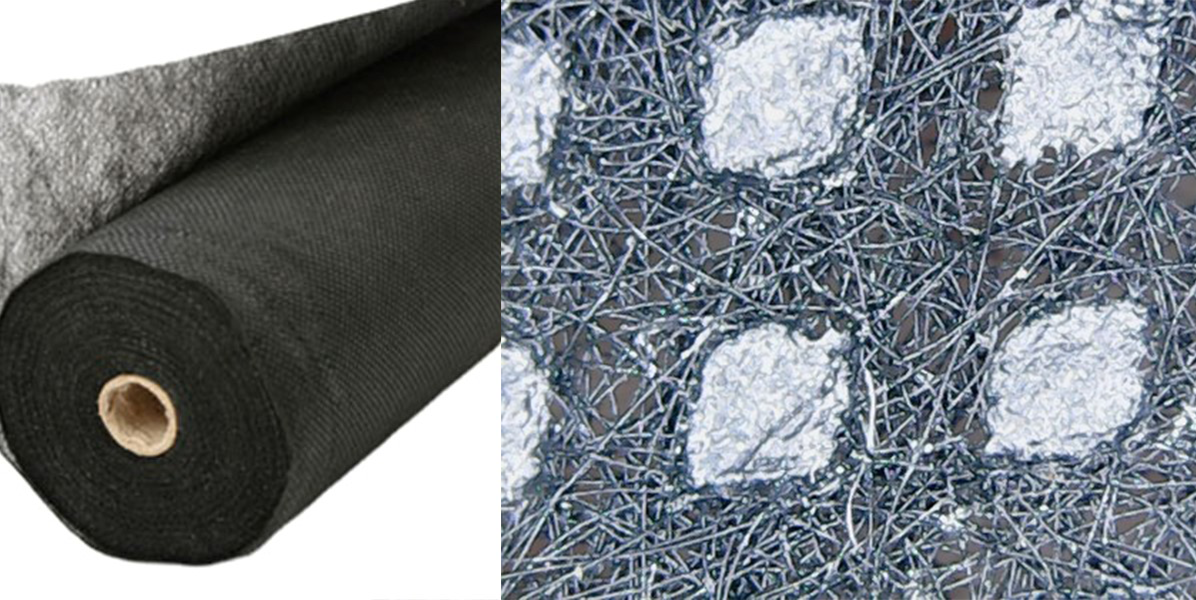
Acoustic fabric, also known as acoustic felt fabric, features a compressed fiber structure with air pockets in between, providing good sound absorption and noise reduction capabilities.
Test results show that acoustic fabric absorbs about 30% of sound energy, particularly in the mid and high frequency ranges, helping to improve sound quality and eliminate echoes.
Acoustic fabric is used as a backing layer behind acoustic wood panels, or as an outer wrapping for sound insulation and sound absorption materials such as rockwool, glasswool, acoustic wood panels, aluminum/gypsum ceilings, and for noise reduction insulation in HVAC duct systems, etc.
Thanks to the sound insulation material, almost all sound energy is retained on the incident wave side, while the transmitted energy is very small
Through this article, you have understood the concepts of sound insulation, sound absorption, and the materials commonly used for constructing sound insulation and sound absorption projects. DASM Institute of Acoustics Materials Application and Development specializes in researching and developing acoustic materials, helping clients measure and accurately identify acoustic issues in their structures, as well as providing comprehensive acoustic treatment design solutions from the design stage to material selection, ensuring cost savings and the highest efficiency for the project.
A research paper on acoustic materials by DASM was published in Acoustics Australia, a world-renowned acoustic journal, marking a new step forward for DASM in the field of acoustics
DASM sound absorption testing for Noise Barriers in a reverberation room according to ISO 354:2024 and EN ISO 11654:1997 standards at a VILAS-certified laboratory
DASM participates in the long-span bridge workshop for high-speed railways to update structural design trends, control structural vibration and acoustics, and prepare capabilities for projects