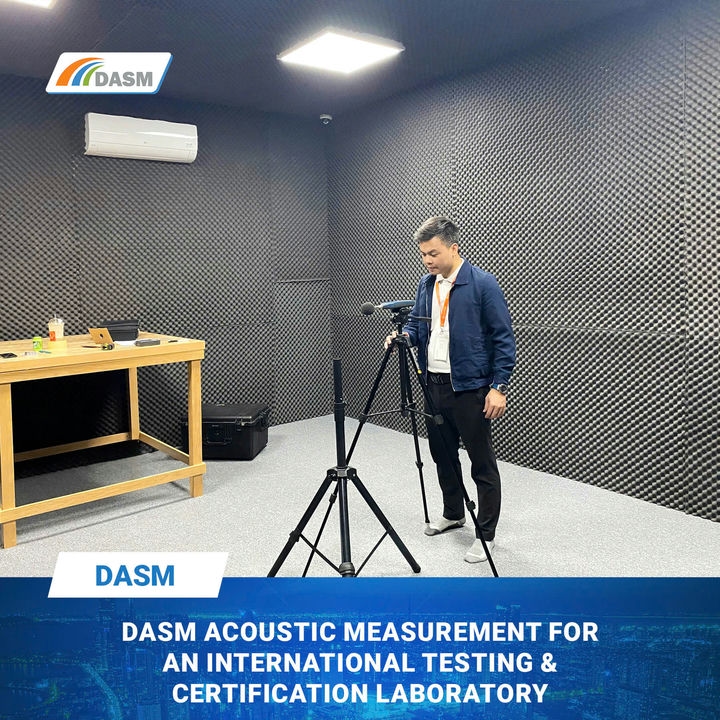
The test method for the determination of mechanical vibration of reciprocating machines with power ratings above 100kW by measurements on the non-rotating parts helps determine priority measures for vibration control and produce – effectively improve product quality.
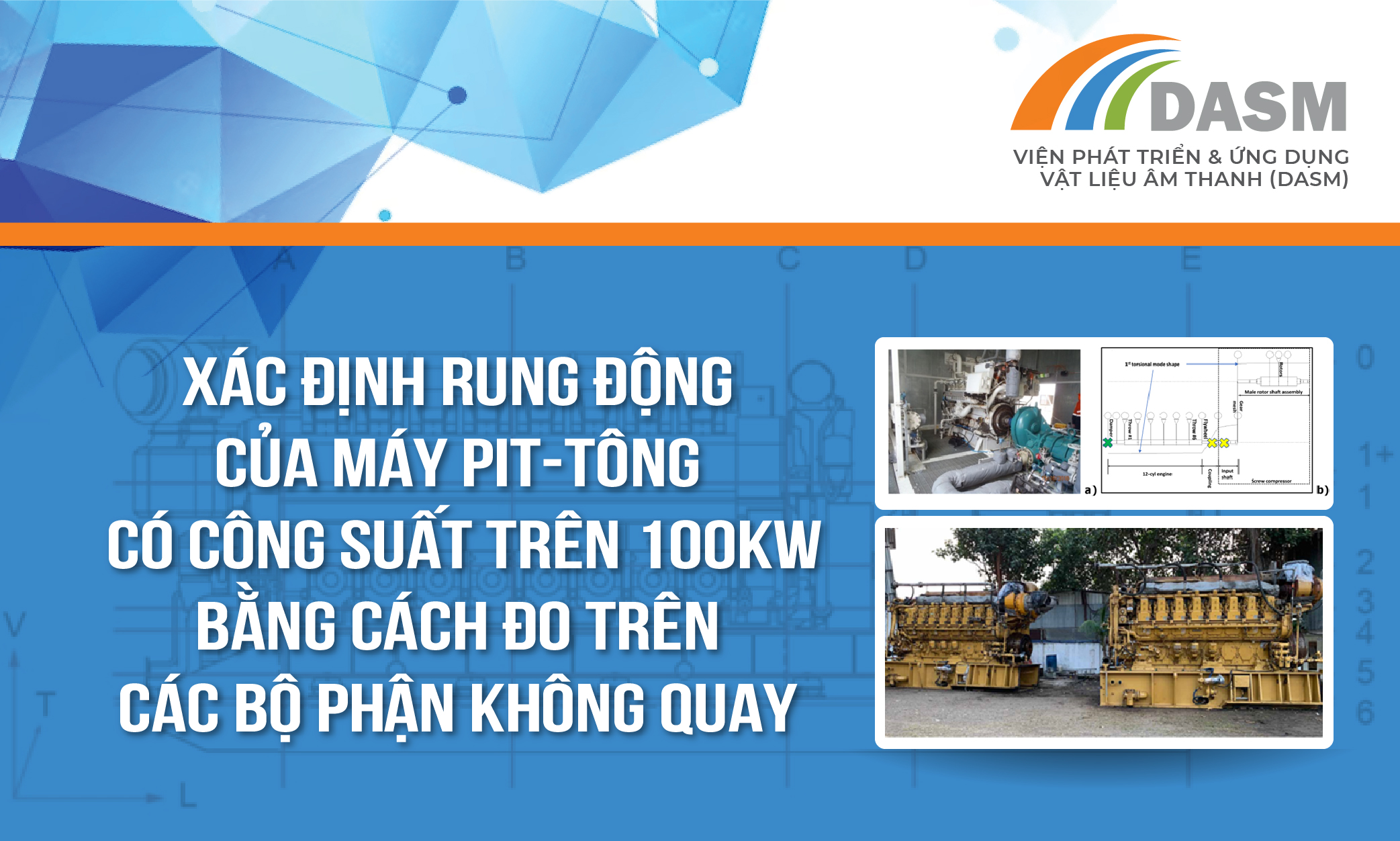

Overview of the test method for the determination of mechanical vibration of reciprocating machines with power ratings above 100kW by measurements on non-rotating parts
Test method name: Mechanical vibration – Evaluation of machine vibration by measurements on non-rotating parts – Part 6: Reciprocating machines with power ratings above 100kW.
Test method:
ISO 10816-6:1995/Amd: 1:2015 Mechanical vibration – Evaluation of machine vibration by measurements on non-rotating parts – Part 6: Reciprocating machines with power ratings above 100kW [1].
Performed at: Field area.
1. Objective and test subject
– Test objective
Determination of machine vibration by measurements on non-rotating parts.
– Test subject
- Reciprocating machines (marine propulsion/auxiliary engines, diesel engines, generator set engines, reciprocating pumps, and diesel locomotive engines) with power ratings above 100kW (similar to test 44).
- The test applies to both types of machines: mounted on rigid supports and mounted on resilient supports.
2. Experimental procedure
Steps to perform:
- Equip fully with devices, transducers, and test samples.
- Perform sample measurement.
- Process and report results.
|
Vibration severity grade |
Limiting values of overall vibration measured on the machine structure |
||
|
Displacement |tm (r.m.s.) |
Velocity mm/s (r.m.s.) |
Acceleration m/s2 (r.m.s.) |
|
|
1,1 |
< 17,8 |
< 1,12 |
< 1,76 |
|
1,8 |
< 28,3 |
< 1,78 |
< 2,79 |
|
2,8 |
< 44,8 |
< 2,82 |
< 4,42 |
|
4,5 |
< 71,0 |
< 4,46 |
< 7,01 |
|
7,1 |
< 113 |
< 7,07 |
< 11,1 |
|
11 |
< 178 |
< 11,2 |
< 17,6 |
|
18 |
< 283 |
< 17,8 |
< 27,9 |
|
28 |
< 448 |
< 28,2 |
< 44,2 |
|
45 |
< 710 |
< 44,6 |
< 70,1 |
|
71 |
< 1 125 |
< 70,7 |
< 111 |
|
112 |
< 1 784 |
< 112 |
< 176 |
|
180 |
> 1 784 |
> 112 |
> 176 |
|
NOTE The values were derived from constant displacement in the range 2Hz to 10Hz, constant velocity from 10Hz to 250Hz and constant acceleration from 250Hz to 1.000Hz. |
|||
Table 1. Classification of vibration severity levels
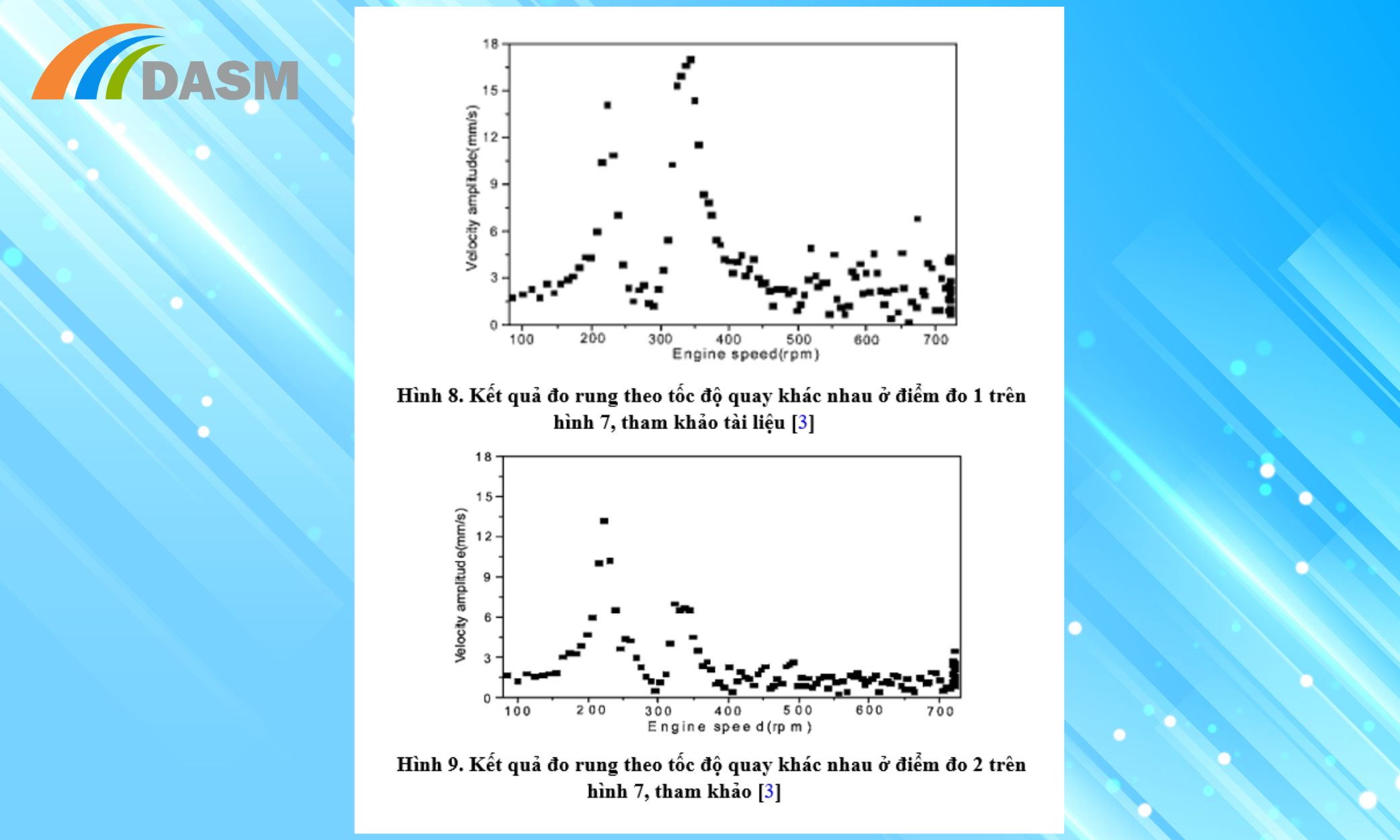

Role – importance of the test method for the determination of mechanical vibration of reciprocating machines with power ratings above 100kW by measurements on non-rotating parts
The test method for the determination of mechanical vibration of reciprocating machines with power ratings above 100kW by measurements on the non-rotating parts conducted by the DASM Institute helps provide useful information, meeting the practical needs of customers and enterprises wishing to:
- Control vibration, isolate vibration sources, prevent vibration, and implement mitigation measures to avoid health and safety risks without negatively impacting the surroundings.
- Material, component, and equipment manufacturers; consulting units – design units wanting to achieve effective damping and vibration isolation..., and wanting to evaluate the effectiveness of vibration treatment and mitigation measures...
- Help control quality during production, optimize research and development of products and materials aiding in damping and vibration isolation related to reciprocating machine vibrations with power ratings above 100kW.
- Commercial/consulting businesses have a verified basis to propose and implement solutions prioritizing suitable machinery, equipment, and technical-technological initiatives capable of minimizing vibration impacts.
- Control equipment condition, early detect signs and causes of damage to proactively maintain machinery.
- Support legal dispute resolution, litigation, forensic examination requests, measurement, and sample analysis in cases of vibration violations exceeding technical standards.
At the same time, DASM will conduct consulting and design work to create shape/structure/material solutions to adjust the anti-vibration and damping functions of the test sample in a streamlined, efficient, and cost-effective manner (in case standards are not yet met).
If previously you had some concerns and worries and had to spend many fees for similar activities abroad, now you only need to contact DASM. The entire remaining process will be proactively implemented by us as a complete package in the shortest time to complete the customer experience about us: DASM provides acoustic consulting services with truly superior quality, the most competitive prices in the industry along with thoughtful and dedicated customer care policies.
Significance of acoustic testing services at DASM
Today's globalized commercial life opens up countless new markets and supply sources across five continents. Accompanied by international regulations and standards helping customers easily evaluate quality – trace product origin, and select suitable/superior items. In particular, they support manufacturers in continuously improving and perfecting technology, techniques, raw materials, production methods, sales, etc.
The Institute of Acoustics Science and Materials (DASM) is a pioneering, comprehensive, professional, and leading prestigious brand in Vietnam in the field of acoustics. On January 12, 2023, DASM was granted certificate No. 114/TĐC – HCHQ by the Directorate for Standards, Metrology and Quality (Ministry of Science and Technology), certifying registered multi-industry testing operations in the Mechanical-Physical field (registration number: 707/TN – TĐC).
Our acoustic testing service portfolio provides customers with practical professional results to meet sustainability, standard performance, and optimal design consulting-adjustment solutions for products and services. From there, you will update, meet, and adapt to constantly changing international standards to achieve breakthroughs in revenue, profit, and elevate your brand.
If you have a demand to perform the test method for the determination of mechanical vibration of reciprocating machines with power ratings above 100kW by measurements on non-rotating parts please contact via Hotline for detailed consultation!
VILAS 1541 · ISO/IEC 17025
Need advice on Vibration & Noise Control?
Measure, test, and consult solutions to reduce the amount of noise and vibration transmitted from the source to the surrounding environment.
Related Articles
Articles from the same category or related topics
- 3 min read
DASM Sound Absorption Testing for Noise Barriers According to ISO 354:2024 & EN ISO 11654:1997
DASM sound absorption testing for Noise Barriers in a reverberation room according to ISO 354:2024 and EN ISO 11654:1997 standards at a VILAS-certified laboratory
Read more → - 7 min read
DASM Institute surveyed the acoustics of the recording booth at the Ministry of Public Security according to ISO 3382 standard
DASM Institute conducted an acoustic survey and noise testing in the recording booth at the Ministry of Public Security, including SNR measurement and acoustic characteristic evaluation according to ISO 3382 standard.
Read more → - 3 min read
Advanced Acoustic Measurement & Noise Emission Testing for International Testing & Certification Laboratories
DASM provides advanced acoustic measurement and noise emission testing services for Testing & Certification laboratories, ISO-compliant procedures
Read more →