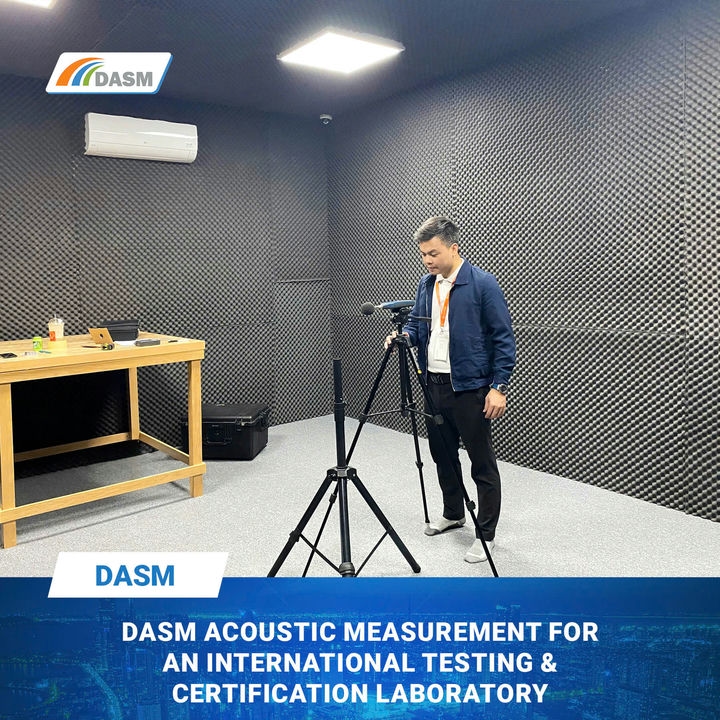
The test procedure for Determination of sound pressure level, jerk and operational acceleration of lifts aims to measure and report the operational quality of lifts during movement and operation; developing manufacturing specifications and calibration methods for equipment.

Overview of the contents of the test procedure for Determination of sound pressure level, jerk and operational acceleration of lifts
Name of the test procedure: Test procedure for Determination of sound pressure level, jerk and operational acceleration of lifts
Testing method:nghiệm:
ISO 8100-34:2021: Lifts for the transport of persons and goods – Part 34: Measurement of lift ride quality [1].
ISO 18738-1-2012: Measurement of ride quality – Part 1: Lifts (elevators) [2].
ISO 18738-2-2012: Measurement of ride quality – Part 2: Escalators and moving walks [3].
Performed at: Field area.
1. Objectives and test subjects
– Test objectives
Determine the sound pressure level, jerk, and acceleration of the lift (3 evaluation indices/criteria).
This document specifies the requirements, measurement methods, and reporting of the operational quality of lifts during their movement.
The objective of this part of ISO 18738 is to encourage industry-wide consistency in the definition, measurement, processing, and expression of vibration and noise signals including the ride quality of escalators and moving walks.
The purpose of such consistency is to benefit industry customers by reducing variations in ride quality measurement results due to differences in signal acquisition and quantification methods.
This part of ISO 18738 is intended as a reference by parties interested in:
- a) Developing manufacturing specifications and calibration methods for equipment.
- b) Determining the scope of ride quality specifications in contracts.
- c) Measuring the ride quality of escalators and moving walks according to international standards.
This part of ISO 18738 aims to produce ride quality measurement methods and results that are:
- a) Easy to understand without specialized knowledge of noise and vibration analysis.
- b) Well-correlated with human response to ensure rationality.
- c) Accountable through calibration procedures traceable to national standards.
Experience in the escalator and – moving walk industry has shown that passenger perception and sound pressure level measured while riding on an escalator/moving walk can be affected by the presence of external noise sources and by the acoustic characteristics of the environment where the equipment is installed. In addition, the close proximity of the escalator/moving walk to highly reflective surfaces such as walls, ceilings, or diagonally opposite equipment can also affect the measured sound pressure level. These influences can cause sound pressure level measurements to significantly overestimate the sound level emitted by the device.
To address this issue, ISO 18738 defines a sound pressure level measurement method corresponding to passenger perception and further defines methods that should be used if further understanding of the results is required, to quantify the noise emitted by the unit versus background or environmental contribution.
– Test subjects
Elevators, escalators, moving walks.
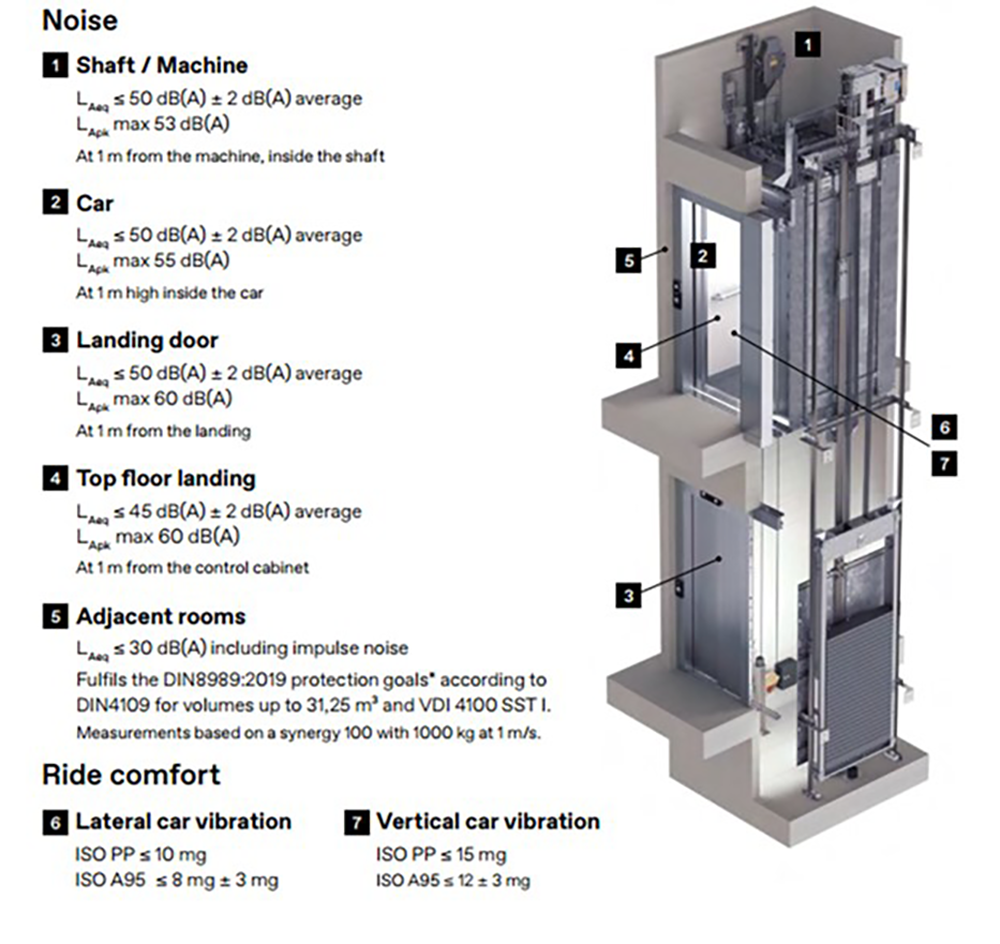
1. Machine room; 2. Cabin; 3. Bottom floor; 4. Top floor landing; 5. Adjacent room
2. Experimental procedure
Implementation steps:
- Fully equip with devices, microphones, and measurement samples.
- Perform sample measurement.
- Process and report results.
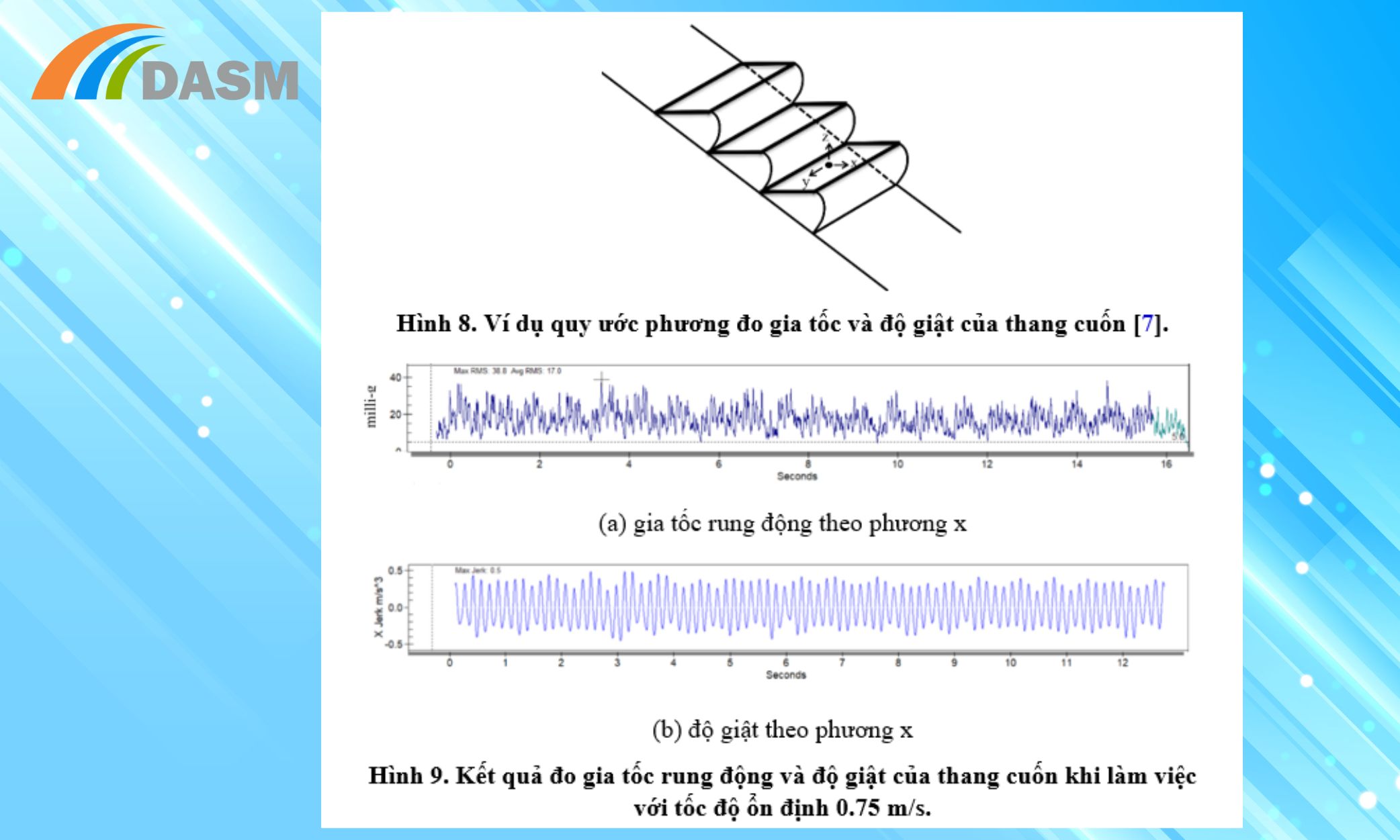

Role – and importance of the test procedure for Determination of sound pressure level, jerk and operational acceleration of lifts
The test procedure for Determination of sound pressure level, jerk and operational acceleration of lifts performed by the DASM Institute helps provide useful information, meeting all practical needs of customers and businesses wanting to:
- Proactively control vibration and noise during production and use; optimize research and development of products. Develop manufacturing specifications and calibration methods for equipment.
- Measure and report the operational quality of lifts during movement and operation.
- Measure the ride quality of escalators and moving walks according to international standards.
- Control equipment status, early detect signs and causes of damage… to proactively perform maintenance.
- Provide testing certificates and results to increase competitiveness and sales, or to bring products into installation, use, and construction… in works and projects smoothly, transparently, and compliantly.
At the same time, DASM will conduct consulting and design work to create shape/structure/material solutions to adjust the anti-vibration, damping, and noise-reduction functions of the lift in a lean, efficient, and cost-effective manner (in case standards are not yet met).
If previously you had concerns and worries and had to spend many fees for similar activities abroad, now you just need to contact DASM. The entire remaining process will be proactively implemented by us as a full package in the fastest time to complete your customer experience with us: DASM provides acoustic consulting services with truly superior quality, the most competitive prices in the industry along with thoughtful and dedicated customer care policies.
Significance of acoustic testing services at DASM
Today's globalized commercial life opens up countless new markets and supply sources across five continents. Accompanied by this are international regulations and standards that help customers easily evaluate quality - trace product origins, and select suitable or superior items. In particular, they also support manufacturers in continuously improving and perfecting technology, techniques, raw materials, production methods, sales, etc.
The DASM Institute is a pioneering, comprehensive, professional, and leading prestigious brand in Vietnam in the field of acoustics. On January 12, 2023, DASM was granted registration certificate number 114/TĐC - HCHQ by the Directorate for Standards, Metrology and Quality (Ministry of Science and Technology), certifying registered testing operations for multidisciplinary synthesis in the Mechanical-Physical field (registration number: 707/TN - TĐC).
Our acoustic material testing services provide customers with practical professional results to meet sustainability, standard performance, and optimal design solutions - consulting - calibration for products and services. From there, you will update, meet, and adapt to constantly changing international standards to achieve breakthroughs in revenue, profit, and elevate your brand.
If you have a need to perform Testing method for determining sound pressure level, jerk and operating acceleration of elevators please contact via Hotline for detailed consultation!
VILAS 1541 · ISO/IEC 17025
Need advice on SOUND DESIGN & SIMULATION SERVICES?
Acoustical design services, sound simulation using software for projects specializing in acoustics
Related Articles
Articles from the same category or related topics
- 3 min read
DASM Sound Absorption Testing for Noise Barriers According to ISO 354:2024 & EN ISO 11654:1997
DASM sound absorption testing for Noise Barriers in a reverberation room according to ISO 354:2024 and EN ISO 11654:1997 standards at a VILAS-certified laboratory
Read more → - 7 min read
DASM Institute surveyed the acoustics of the recording booth at the Ministry of Public Security according to ISO 3382 standard
DASM Institute conducted an acoustic survey and noise testing in the recording booth at the Ministry of Public Security, including SNR measurement and acoustic characteristic evaluation according to ISO 3382 standard.
Read more → - 3 min read
Advanced Acoustic Measurement & Noise Emission Testing for International Testing & Certification Laboratories
DASM provides advanced acoustic measurement and noise emission testing services for Testing & Certification laboratories, ISO-compliant procedures
Read more →