1. How do Airborne Sound and Impact Sound differ?
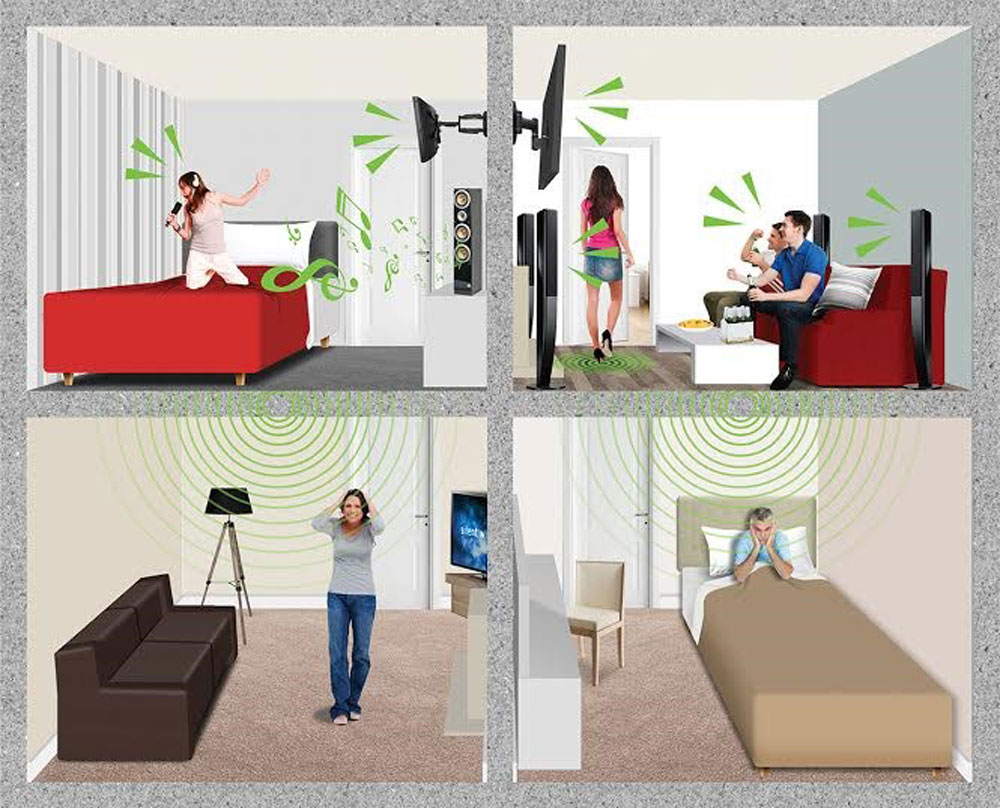
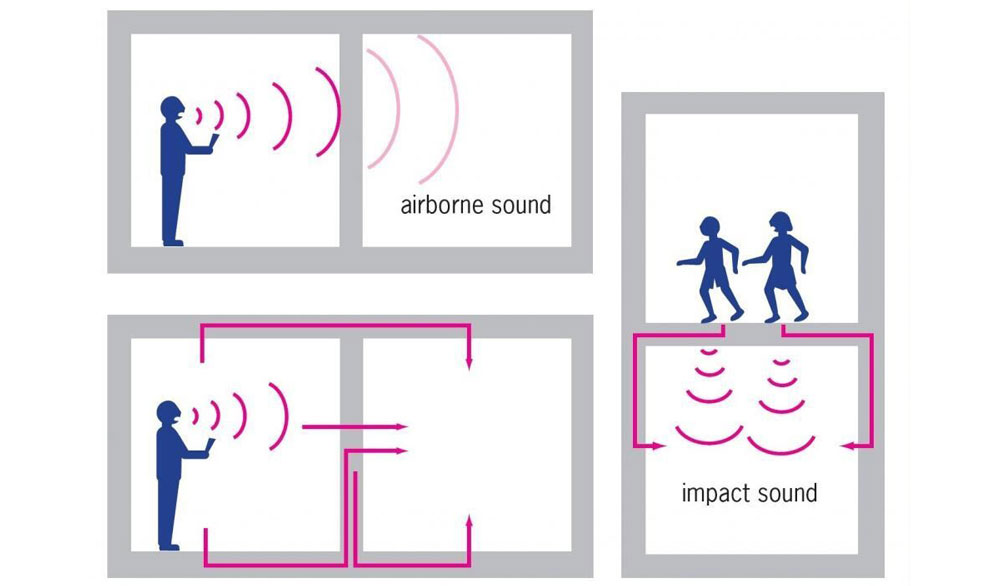
Airborne sound (Airborne Sound)
Airborne noise occurs when sound travels through the air, such as music, speech, and television. This type of noise is quite common, so it is usually what you think of when considering noise.
Impact sound (Impact Sound)
Impact noise occurs when sound vibrations travel through a medium other than air and happen when two or more objects collide. Examples of impact noise include construction jackhammers, a ball bouncing on the floor above you, or water rushing through your pipes. Impact noise can travel through structures, and therefore it is sometimes called structure-borne noise.
2. How to test?
Below is a brief description of the acoustic testing types we typically perform:
Airborne Sound Testing
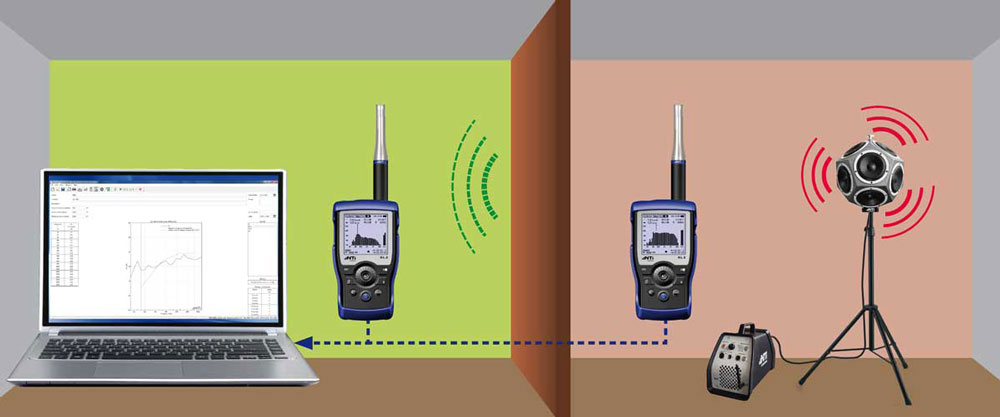
Airborne sound testing is performed on walls and floors. First, a controlled noise is generated by an amplifier and speaker over a wide frequency range. The generated noise is very loud and typically exceeds 100dB. Initial measurements are made using a class 1 sound level meter in the 'source room', followed by subsequent measurements in the 'receive room' on the other side of the wall or floor being surveyed. The speaker position in the source room is then changed and measurements are repeated on both sides of the partition under test. Background noise measurements are then made using a class 1 sound level meter in the receiving room and used to apply appropriate corrections for external sounds such as traffic noise.
Similarly, the reverberation time (reverberation time (RT60)) is measured in the receiving room using a sound source and sound level meter to determine corrections that must be applied to account for the room's absorption characteristics and capacity. The difference between the two airborne noise levels (for walls and floors), corrected for background characteristics and reverberation, determines the airborne sound insulation performance of the wall or floor. A larger airborne noise difference between the source room and receive room determines a higher airborne sound insulation performance.
Impact Sound Testing
Impact sound testing is typically performed only for floors. This testing is different; a calibrated Norsonic "tapping machine" consisting of five "hammers" driven up and down by a cam and electric motor is used to "tap" the floor surface by applying a known force to the floor structure. The machine is placed in several predefined positions. The resulting noise is measured in the dwelling below using a sound level meter. Background noise measurements are then made using a class 1 sound level meter in the receiving room and used to apply appropriate corrections for external sounds such as traffic noise.
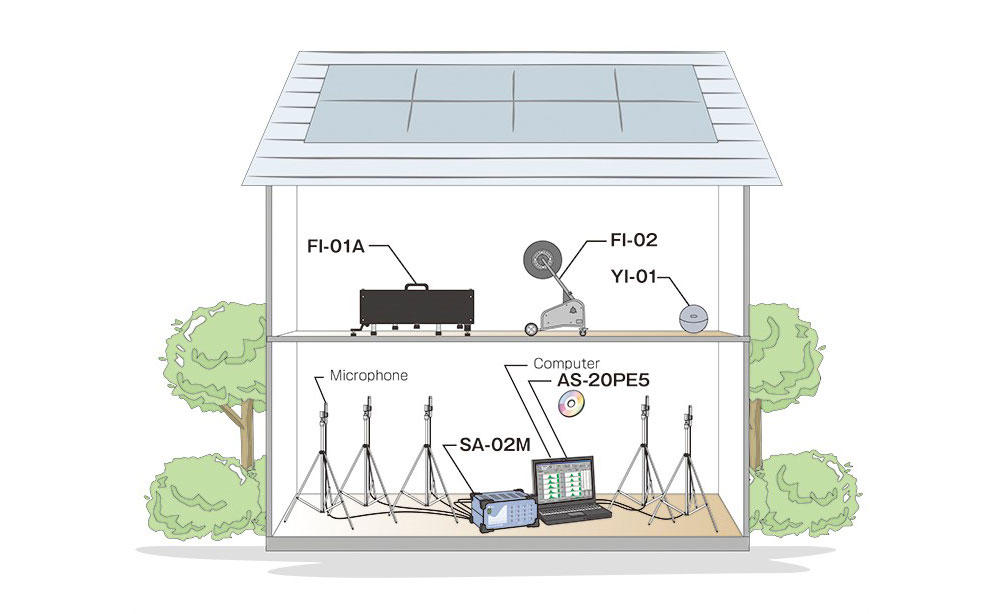
Similarly, the reverberation time (reverberation time (RT60)) is measured in the receiving room using a sound source and sound level meter to determine corrections that must be applied to allow for the room's characteristics and absorption capacity.
VILAS 1541 · ISO/IEC 17025
Need advice on SOUND DESIGN & SIMULATION SERVICES?
Acoustical design services, sound simulation using software for projects specializing in acoustics
Related Articles
Articles from the same category or related topics
- 6 min read
From Vietnamese Acoustic Knowledge to International Forums: DASM's Research Milestone in Acoustics Australia
A research paper on acoustic materials by DASM was published in Acoustics Australia, a world-renowned acoustic journal, marking a new step forward for DASM in the field of acoustics
Read more → - 3 min read
DASM Sound Absorption Testing for Noise Barriers According to ISO 354:2024 & EN ISO 11654:1997
DASM sound absorption testing for Noise Barriers in a reverberation room according to ISO 354:2024 and EN ISO 11654:1997 standards at a VILAS-certified laboratory
Read more → - 4 min read
DASM Participates in Long-Span Bridge Workshop for High-Speed Railways – Expanding Research Capabilities in Acoustics and Structural Vibration
DASM participates in the long-span bridge workshop for high-speed railways to update structural design trends, control structural vibration and acoustics, and prepare capabilities for projects
Read more →