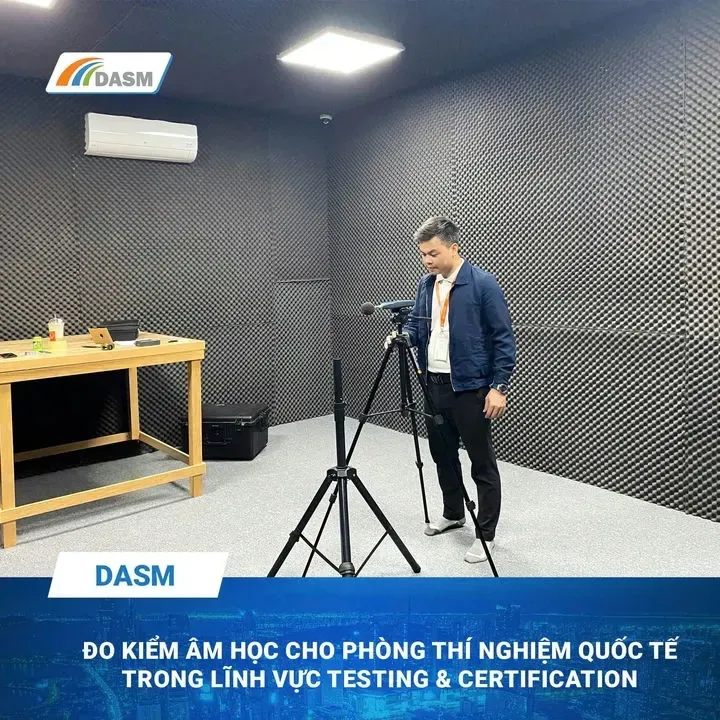
Acoustics is the science studying sound, noise, vibration, and its applications in medicine, construction, industry and manufacturing, environment, and more. Together with DASM , let's explore the basics of acoustics in the following article.

What is acoustics?
By definition, acoustics is a branch of physics and technology that studies audible sound phenomena arising from the propagation of waves in space. Originally, acoustics focused only on waves traveling through air. Today, it has expanded to include inaudible phenomena such as infrasound, ultrasound, and vibration affecting the human body as well as structures.
Modern applications of acoustics
Modern acoustics not only studies music or sound in concert halls, but also:
- Measuring noise in workplaces and living environments.
- Creating urban acoustic maps.
- Measuring vibrations and analyzing their impacts on human health and structures.
- Designing spaces to ensure acoustic comfort for humans.
What is noise? (What is Noise?)
By definition, noise is "loud and annoying sounds". These are unwanted sounds that can arise from:
- Manufacturing plants.
- Highways, railways, airports.
- Clubs, bars, industrial machinery.

Consequences of long-term exposure to noise
- Hearing loss, occupational deafness.
- Sleep disorders, stress, irritability.
- Vibration syndrome, affecting the nervous and circulatory systems.
Two types of noise in acoustics
1) Acoustic noise
The first type of noise is acoustic noise — all sounds we hear and find annoying. This is primarily airborne sounds. This type of noise directly damages the auditory system. Measuring acoustic noise typically uses a sound level meter with a microphone.
2) Vibration noise
The second type is vibration noise. Vibration can cause damage to structural integrity. When vibration affects humans, we perceive it in various ways: it can be heard, or felt through touch when contacting a surface or when inside a vibrating structure. Consequences of excessive exposure include vibration disease, circulatory and nervous system disorders. To measure vibration noise, vibration meters and vibration transducers attached to measuring equipment are used.
How to measure noise and vibration levels
Frequently used measurements:
- Sound Level Meter.
- Vibration Meter.
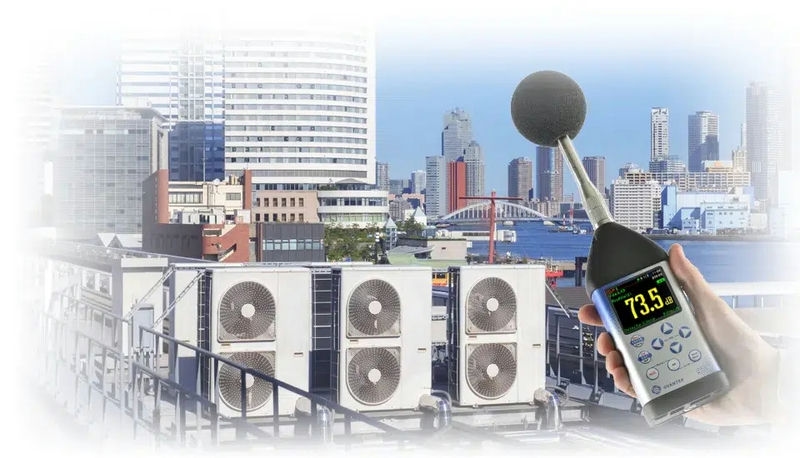
Common parameters:
- LAeq – equivalent continuous sound level with A-weighting.
- Reverberation Time.
- Sound insulation of walls and ceilings.
- Speech Intelligibility in theaters, opera houses.
Environmental Noise
- Controlled under environmental protection laws.
- Environmental protection agencies conduct scheduled and unscheduled measurements.
- Main sources: traffic and industrial noise.
Industrial Noise
- Originated from machinery and production equipment.
- Hazardous to directly operating workers and affects the environment.
- Typically measuring the sound power level of equipment.
Machine diagnosis using vibration
- Well-functioning machinery usually emits less noise than faulty machinery.
- Vibration measurement assists in technical diagnosis, failure detection, and timely repair.
Noise and vibration in the workplace
- Noise threshold (according to TCVN): 85 dB/8 working hours.
- Hand-arm vibration: 2.5 m/s².
- Whole-body vibration: 0.5 m/s².
- Workers have the right to request compensation or a change of working environment if thresholds are exceeded.
Acoustic comfort in offices
- Open spaces are often affected by noise interference from other positions.
- Solutions: acoustic ceilings, sound absorption foam, sonic wall sound absorption panels, sound insulation panels, Remak® SoundOFF Barrier sound insulation panels.
Traffic Noise
- Main sources: railways, cars, airplanes, seaports.
- Produces loud sounds and vibrations affecting structures.
- Solutions: noise barriers and natural acoustic fences (forests, earth dikes).

Eco-Acoustics
- Researching sound in nature: seas, oceans, and wildlife habitats.
- Analyzing the impact of noise on wildlife.
- Developing urban soundscapes.
Architectural and building acoustics
- Sound insulation of walls, ceilings, doors, and floors in residences and apartments.
- Legal regulations requiring minimum sound insulation indices.
- Besides objective measurements, studying subjective perception through psychoacoustics.
Psychoacoustics
- Studying the relationship between sound waves reaching the human ear and subjective perception.
- Sound can be pleasant to one person but annoying to another.
Medical acoustics
- Measuring vocal cord vibrations to diagnose voice disorders.
- Ultrasound for diagnosing pulmonary and cardiovascular diseases.
Electroacoustics
- Combining electronics and acoustics.
- Studying the conversion of acoustic vibrations into electrical signals and vice versa.
- Applications: microphones, speakers, vibration sensors, recording, playback, and sound transmission.
Acoustics in music and entertainment
- Applications in the design of recording studios, theaters, and opera houses.
- Optimizing sound before concerts, stage setups, and speaker systems.
- Helping enhance the listening and performance experience.
Applications of acoustics in daily life
- Interior design for noise reduction – using appropriate solutions and sound insulation materials (meeting rooms, research rooms, machine rooms, ventilation systems).
- Reducing reverberation time using sound absorption materials.
- Isolating noise-generating equipment in rooms.
Acoustics is an interdisciplinary science that not only studies the nature of sound but also provides practical solutions for medicine, construction, environment, and human life.
Contact DASM Institute – International standard acoustic services
DASM Institute is a pioneering unit in acoustic research and application in Vietnam, with a laboratory recognized by VILAS as meeting international standards.
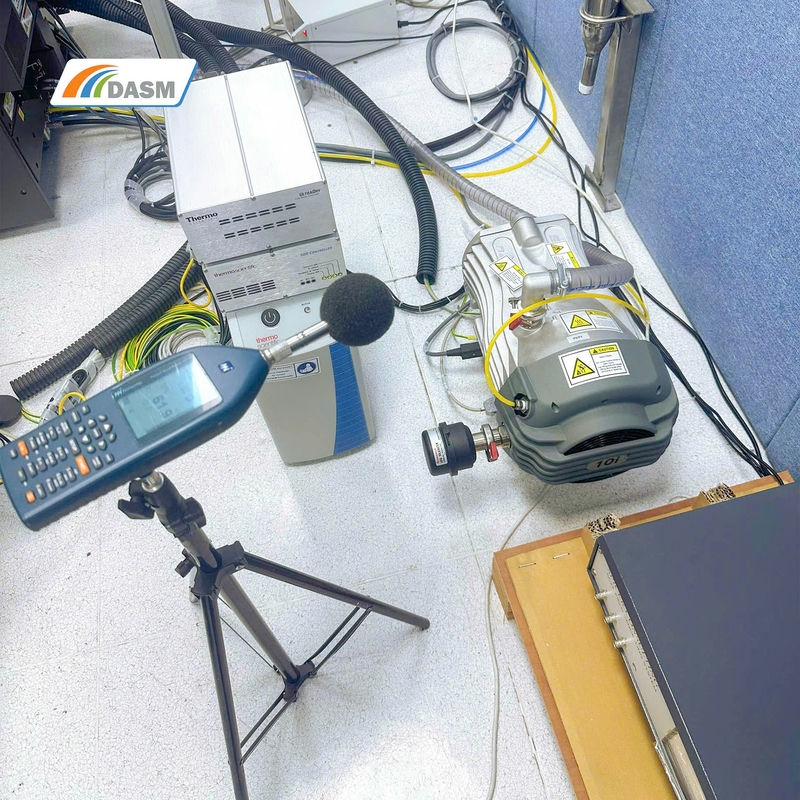
DASM Institute provides the following services:
+ Testing, noise survey and assessment
+ Measuring noise and vibration at workplaces, factories, and construction sites.
+ Consulting on noise and vibration control solutions, architectural acoustic design – ensuring compliance with TCVN and international standards.
+ Acoustic simulation design
+ Noise and vibration control
+ Providing professional reports for inspection, legal purposes, and improving the working environment.
Contact DASM Institute for consultation, measurement, and professional acoustic solutions, ensuring safety – health – production efficiency for your business and project.
VILAS 1541 · ISO/IEC 17025
Need acoustic engineering advice?
Get in touch with DASM specialists for on-site surveys, VILAS 1541 testing, and optimized solutions for your facility.
Related Articles
Articles from the same category or related topics
- 6 min read
From Vietnamese Acoustic Knowledge to International Forums: DASM's Research Milestone in Acoustics Australia
A research paper on acoustic materials by DASM was published in Acoustics Australia, a world-renowned acoustic journal, marking a new step forward for DASM in the field of acoustics
Read more → - 3 min read
DASM Sound Absorption Testing for Noise Barriers According to ISO 354:2024 & EN ISO 11654:1997
DASM sound absorption testing for Noise Barriers in a reverberation room according to ISO 354:2024 and EN ISO 11654:1997 standards at a VILAS-certified laboratory
Read more → - 4 min read
DASM Participates in Long-Span Bridge Workshop for High-Speed Railways – Expanding Research Capabilities in Acoustics and Structural Vibration
DASM participates in the long-span bridge workshop for high-speed railways to update structural design trends, control structural vibration and acoustics, and prepare capabilities for projects
Read more →