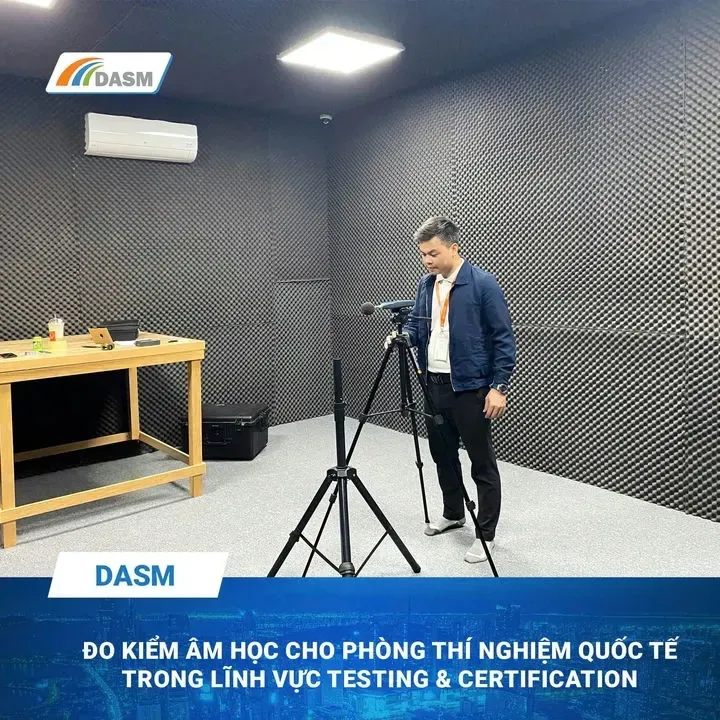
DASM is currently a leading unit in acoustic services noise testing for adapters according to ISO 7779:2018 & 3745:2012 standards with an actual background noise level below 15 dB(A) - perfectly meeting the requirements for testing equipment with ultra-low noise levels.
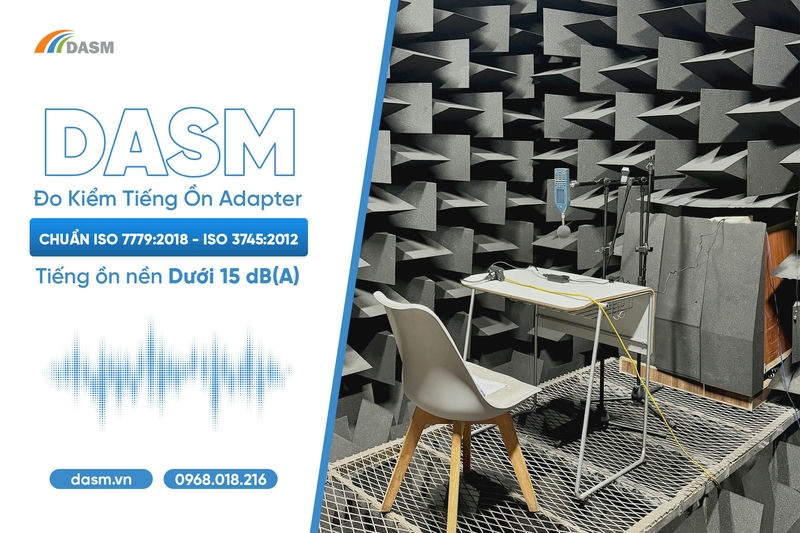
This advantage is achieved thanks to the VILAS-standard acoustic laboratory system along with a team of experienced and highly specialized acoustic engineers and experts.
DASM - Electrical Equipment and Ventilation Fan Noise Testing Service According to ISO 7779 Standard
Adapter Noise Testing According to ISO 3745-2012 Standard - Quality Certification at DASM Institute
Why is it necessary to test noise for adapters, fast chargers, and electrical equipment?
In the trend of modern electrical and electronic equipment manufacturing technology development, the "low noise" factor is becoming one of the important criteria alongside functionality and performance.
Measuring and proving that equipment operates quietly and meets international standards on noise levels is a key factor when:
- Participating in bidding for projects with high requirements for noise
- Preparing export certification dossiers (to the EU, Japan, South Korea, USA, etc.)
- Conducting R&D testing, comparing product versions, and optimizing design
Which standards does DASM use for electrical equipment noise testing?
Adapter noise testing according to ISO 7779:2018 standard
ISO 7779:2018 is an international standard specifying methods for measuring the noise level emitted by information technology and telecommunications equipment during operation.
This standard is suitable for equipment such as:
- Adapters - fast chargers - low-power charging equipment
- Switching power supplies, computer power supplies, power supply equipment
- IoT devices, mini fans, small printers, compact medical equipment
DASM tests adapter noise according to ISO 3745:2012 standard
ISO 3745:2012 is an international standard specifying methods for determining the sound power level of machinery and equipment by measurements in an anechoic or hemi-anechoic chamber.
This standard ensures the highest accuracy among noise measurement methods by eliminating the influence of sound reflection and background noise.
Objective: To measure sound power levels across a wide frequency range, serving the evaluation of equipment noise according to international standards.
This standard applies to: Electrical, electronic, and mechanical equipment in acoustically standardized laboratory environments.
DASM - International Standard Adapter Noise Testing
- VILAS standard measurement environment
- Sound absorption laboratory meeting ISO/IEC 17025 (VILAS) standards
- Ensuring a measurement environment with a background noise level < 10 dB(A)
- Suitable for ultra-quiet devices such as adapters, small chargers, and low-power equipment
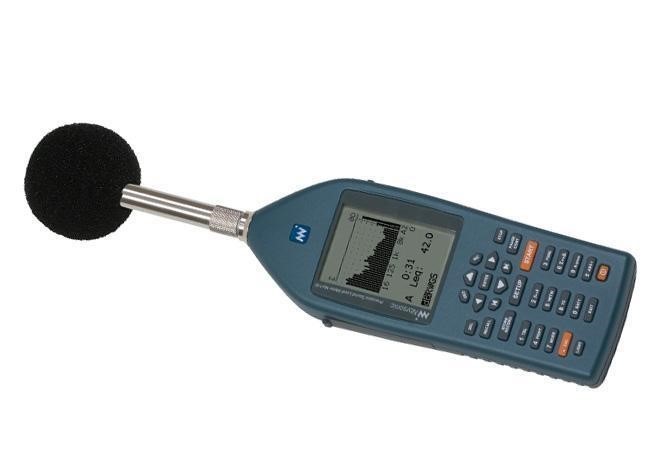
- Class 1 measurement system
- Class 1 microphone and sound recording system according to IEC 61672
- Octave and 1/3 Octave frequency band analysis
- Full compliance with ISO 7779:2018 procedures
Measuring all operating and idle states completely
- Recording parameters: L_Aeq, L_max, L_min, and sound spectrum graphs
- Arranging equipment, microphones, temperature, and humidity in strict accordance with regulations
- Bilingual report - clear - ready to use
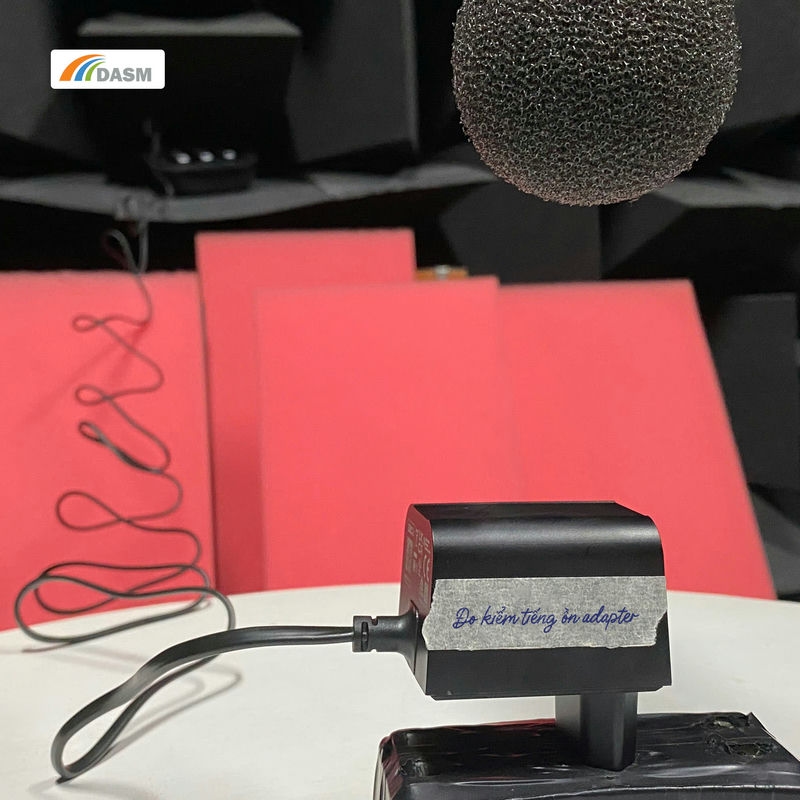
- Including images of equipment placement in the measurement room
- Professional comments, noise charts by frequency band
- Suitable for attaching to inspection dossiers, export documents, and technical marketing materials
Business benefits of adapter noise testing at DASM
- Proving that equipment operates smoothly without causing interference
- Increasing competitiveness in bidding and B2B negotiations
- Ready to meet the strict technical requirements of export markets
- Early detection of noise issues during the R&D stage, helping to refine designs more effectively
What equipment can DASM test noise for?
With the VILAS standard lab system and a team of engineers and highly specialized acoustic experts, DASM Institute can perform material testing noise testing for various equipment such as:
- Adapters, fast chargers, small charging equipment
- Mini fans, low-power cooling equipment
- IoT devices, small medical equipment
- Computer power supplies, network cabinets, electrical boxes, printers
Contact DASM Institute now to schedule fast, accurate, and efficient adapter noise testing according to ISO 7779:2018 and 3745:2012!
DASM is committed to providing accurate, transparent noise testing services, professional reports, and full support for technical and inspection dossiers for customers. Besides adapter noise testing, DASM also provides acoustic testing services, noise survey and evaluation, acoustic consulting and design for constructions, noise and vibration control, etc.
Copyrighted standard notice
According to international copyright regulations and DASM policy, only the standard summary and test methodology are displayed. Direct download is not available.
VILAS 1541 · ISO/IEC 17025
Need advice on Noise Survey & Assessment Services?
Measuring ambient environmental, factory and residential noise to support environmental impact assessment (EIA).
Related Articles
Articles from the same category or related topics
- 6 min read
From Vietnamese Acoustic Knowledge to International Forums: DASM's Research Milestone in Acoustics Australia
A research paper on acoustic materials by DASM was published in Acoustics Australia, a world-renowned acoustic journal, marking a new step forward for DASM in the field of acoustics
Read more → - 3 min read
DASM Sound Absorption Testing for Noise Barriers According to ISO 354:2024 & EN ISO 11654:1997
DASM sound absorption testing for Noise Barriers in a reverberation room according to ISO 354:2024 and EN ISO 11654:1997 standards at a VILAS-certified laboratory
Read more → - 4 min read
DASM Participates in Long-Span Bridge Workshop for High-Speed Railways – Expanding Research Capabilities in Acoustics and Structural Vibration
DASM participates in the long-span bridge workshop for high-speed railways to update structural design trends, control structural vibration and acoustics, and prepare capabilities for projects
Read more →