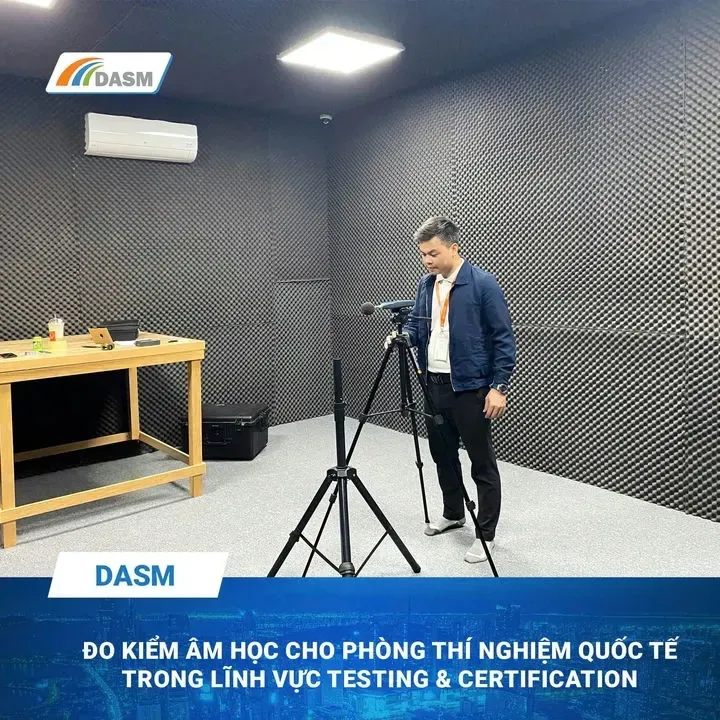
Sound Absorption Coefficient Material Testing Service at DASM Institute according to ISO 354 & ASTM C423 standards, helping businesses evaluate and optimize the sound absorption performance of materials. The laboratory meets VILAS standards, ensuring accurate and objective results
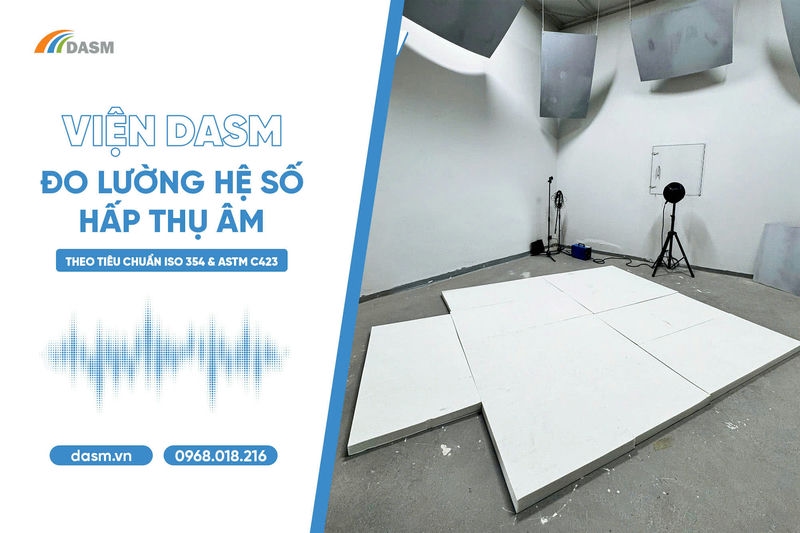
Introduction to sound absorption testing service at DASM Institute
In the field of acoustics, accurately evaluating the sound absorption capacity of materials plays an important role in architectural design, interior production, and professional audio systems. DASM Institute, a pioneer unit in acoustic research and testing in Vietnam, provides sound absorption coefficient measurement services according to ISO 354 & ASTM C423 standards.
With a VILAS-standard laboratory, DASM Institute ensures accurate and objective results, helping businesses and manufacturers evaluate the sound absorption performance of products, thereby improving and optimizing material quality before launching to the market.
How important is the sound attenuation testing of ductwork?
Adapter Noise Measurement According to ISO 3745-2012 – Quality Inspection at DASM Institute
What is the sound absorption coefficient?
The sound absorption coefficient is also known as the sound absorption index, which is an important indicator showing the ability of a material to absorb sound waves. This index ranges from 0 to 1, in which:
- Coefficient = 0: The material reflects all sound (e.g., metal surfaces, glass, hard concrete).
- Coefficient = 1: The material absorbs all sound (e.g., Thai rockwool, specialized acoustic foam).
Determining this coefficient helps evaluate the sound absorption efficiency of materials, thereby adjusting and optimizing products to meet the technical requirements of each project or practical application.
Method for sound absorption coefficient testing at DASM Institute
Testing standards
At DASM Institute, the process of measuring the sound absorption coefficient is carried out according to two international standards:
- ISO 354: Reverberation Room Method, evaluating the sound absorption level of materials in an environment with many sound reflections.
- ASTM C423: A common testing procedure in the United States, measuring the sound absorption coefficient across frequency bands from low to high.
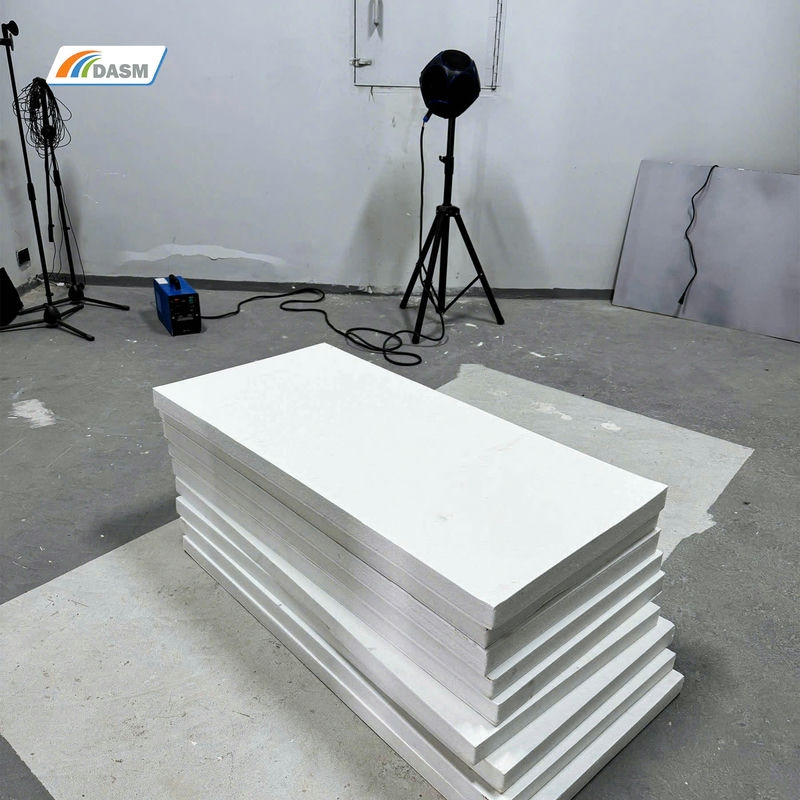
Testing process at DASM
Step 1: Material sample preparation
- Material samples are prepared according to the dimensions specified in ISO 354 or ASTM C423 standards.
- Place the sample on the floor or hang it on the test frame depending on the application of the test sample.
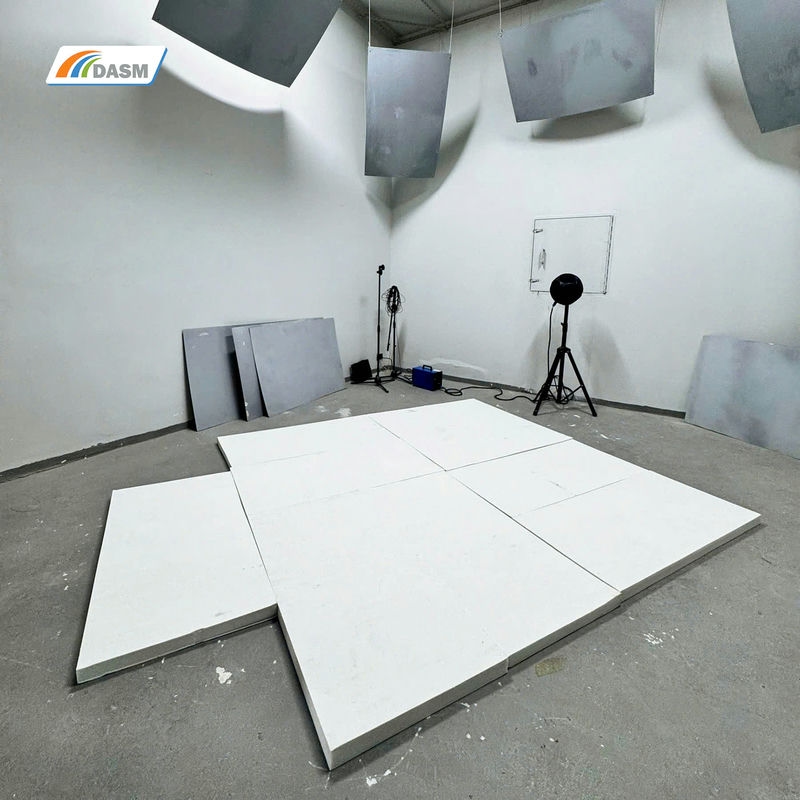
Step 2: Conducting measurement in the reverberation room
- The reverberation room of DASM is designed to meet international standards, ensuring optimal acoustic conditions.
- The microphone system and sound receiver will record the change in sound energy level with and without the test sample.
Step 3: Result analysis
- The collected data is analyzed to calculate the sound absorption coefficient at different frequency bands.
- Test results help clients clearly understand the sound absorption performance of products, thereby improving and optimizing materials.
Benefits of testing sound absorption coefficient at DASM Institute
Quality assurance and product optimization
Accurately measuring the sound absorption coefficient helps businesses evaluate and improve material design, enhance sound absorption performance, reduce noise, and optimize product features.
Supporting international standard certification
The test results of DASM Institute have high value in the construction, interior, and acoustic technology industries. Businesses can use this data to certify product quality according to international standards, creating a competitive advantage in the market.
Helping control and improve construction quality
For construction projects, checking the sound absorption coefficient helps architects and acoustic engineers optimize spatial design, reduce echoes and reverberation, and improve the quality of living and working environments.
Applications of sound absorption coefficient testing
The sound absorption coefficient measurement service at DASM Institute serves many fields, including:
- Interior design & architecture: Optimizing sound-absorbing materials for offices, hotels, theaters, and meeting rooms.
- Production of sound insulation materials & sound absorption materials: Evaluating product quality before commercialization.
- Automotive & aerospace industry: Testing the sound absorption capacity of materials in vehicle cabins and aircraft.
- Professional audio systems: Supporting the design of recording studios, theaters, and conference centers.
Why choose the sound absorption coefficient measurement service at DASM institute?
🔹 VILAS-standard laboratory – Ensuring accuracy and prestige.
🔹 Modern equipment system – Meeting international standards ISO 354 & ASTM C423.
🔹 Years of experience in acoustics – Supporting in-depth technical consultation.
🔹 Fast testing time – Helping businesses optimize production processes.
Do you need to measure the sound absorption coefficient for your products? Contact DASM Institute immediately for quick and accurate consultation and support!
Copyrighted standard notice
According to international copyright regulations and DASM policy, only the standard summary and test methodology are displayed. Direct download is not available.
VILAS 1541
DASM conducts testing according to this standard
DASM Acoustic Laboratory has accredited capability to conduct 1 testing method(s) compliant with standard ASTM C423:
- Determination of sound absorption coefficient – reverberation room method(ASTM C423-22; ISO 354:2003)
VILAS 1541 · ISO/IEC 17025
Need advice on SOUND DESIGN & SIMULATION SERVICES?
Acoustical design services, sound simulation using software for projects specializing in acoustics
Related Articles
Articles from the same category or related topics
- 6 min read
From Vietnamese Acoustic Knowledge to International Forums: DASM's Research Milestone in Acoustics Australia
A research paper on acoustic materials by DASM was published in Acoustics Australia, a world-renowned acoustic journal, marking a new step forward for DASM in the field of acoustics
Read more → - 3 min read
DASM Sound Absorption Testing for Noise Barriers According to ISO 354:2024 & EN ISO 11654:1997
DASM sound absorption testing for Noise Barriers in a reverberation room according to ISO 354:2024 and EN ISO 11654:1997 standards at a VILAS-certified laboratory
Read more → - 4 min read
DASM Participates in Long-Span Bridge Workshop for High-Speed Railways – Expanding Research Capabilities in Acoustics and Structural Vibration
DASM participates in the long-span bridge workshop for high-speed railways to update structural design trends, control structural vibration and acoustics, and prepare capabilities for projects
Read more →