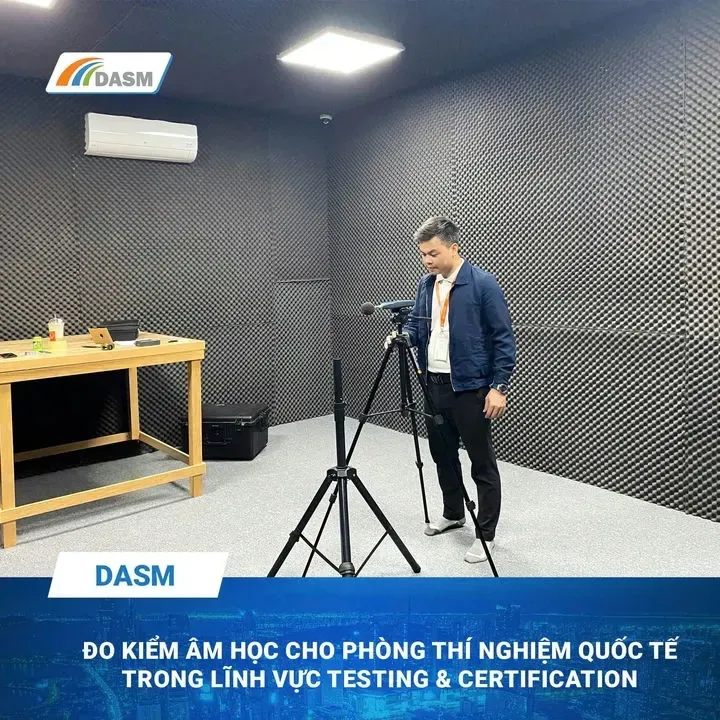
To determine the sound insulation of thermal insulation foam in HVAC ducts, DASM must apply ISO 7235:2023 combined with ISO 3745:2012 – instead of using conventional testing standards which fail to simulate airflow conditions.
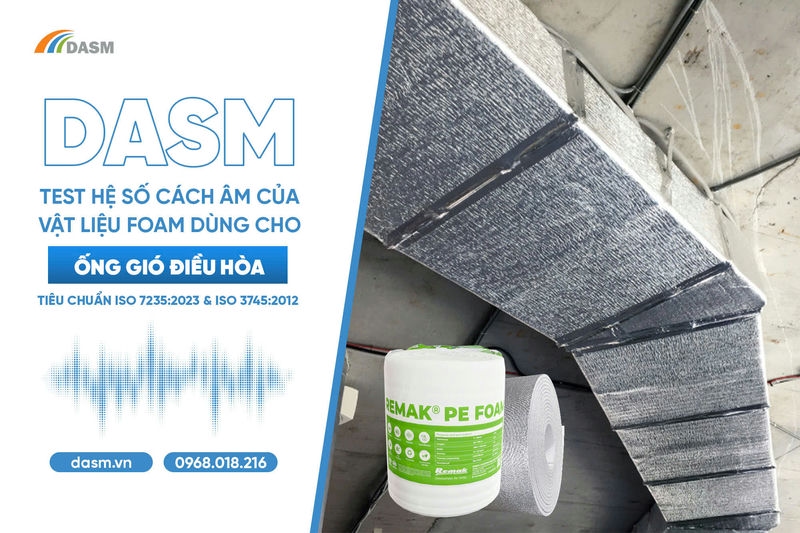
In central air conditioning systems (HVAC), sound-absorbing foam materials are increasingly applied to minimize noise generated within ducts. However, to ensure that the sound insulation performance is scientifically verified and recognized by international technical experts, contractors, and investors, choosing a standardized measurement method is mandatory.
At DASM Institute, we deploy the process of material testing for Insertion Loss of foam used in HVAC ducts strictly according to ISO 7235:2023, combined with ISO 3745:2012 – currently the only specialized standard pair that simulates the actual working conditions of materials in an airflow environment.
Why is it impossible to use conventional sound insulation determination standards?
ISO 10140-2, ASTM E90: Not suitable for materials in airflow
Most popular sound insulation measurement standards today, such as ISO 10140-2 and ASTM E90, only measure in a static environment without airflow, mainly applied to building materials like walls, floors, and partitions. These standards do not accurately reflect the acoustic performance of foam when operating in an aerodynamic environment, such as inside HVAC ducts.
Therefore, measurement results from these methods have no practical value if used to calculate or verify the sound-absorbing effectiveness of foam in industrial HVAC systems.
ISO 7235:2023 – Core standard for systems with airflow
ISO 7235:2023 – Acoustics – Measurement procedures for ducted silencers and air-terminal units – Insertion loss, flow noise and total pressure loss is the specialized standard used to measure:
- Insertion Loss
- Flow Noise
- Total Pressure Loss
- Simulating actual working conditions
This standard establishes test conditions with airflow passing through, similar to the actual operating environment of foam in duct systems. Thus, the measured sound insulation results can be used to design, calculate, verify, and compare acoustic performance accurately.
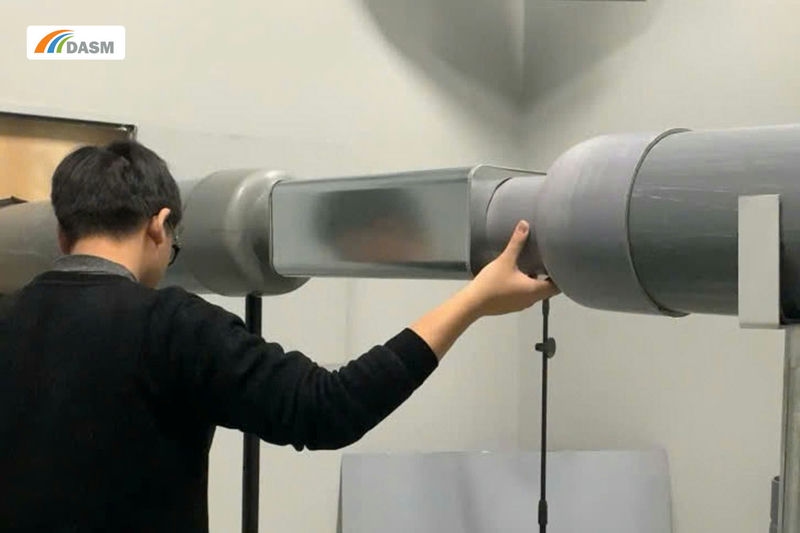
ISO 7235 applies effectively to:
- Ducts integrated with sound-absorbing foam
- Silencers (sound attenuation units in HVAC systems)
- Noise-reducing terminal devices
ISO 3745:2012 – Foundation ensuring accurate sound insulation measurement conditions for air conditioning duct foam
ISO 3745:2012 – Acoustics – Determination of sound power levels using sound pressure – Precision methods is the standard regulating:
- Structure and acoustic conditions of the test room
- Accuracy in measuring sound power levels
- Sound reflection – sound absorption capacity – and allowable error ratio
At DASM, all material sound insulation determination measurements according to ISO 7235 are performed in semi-anechoic or full anechoic rooms meeting ISO 3745 standards, helping to ensure:
- Stability of the measurement environment
- High accuracy when calculating Insertion Loss
- Capability to compare with international data
Foam material insertion loss determination service at DASM institute
We provide professional, standardized international insertion loss determination service – suitable for material manufacturing plants, HVAC contractors, inspection units, and design consultants:
Service contents:
- Full technical report – Bilingual Vietnamese/English
- Insertion Loss measurement results according to standard frequency bands: 125Hz – 4000Hz
- Equipment layout diagram, test room technical parameters
- Test result certification – Can be used in project technical dossiers or bidding documents
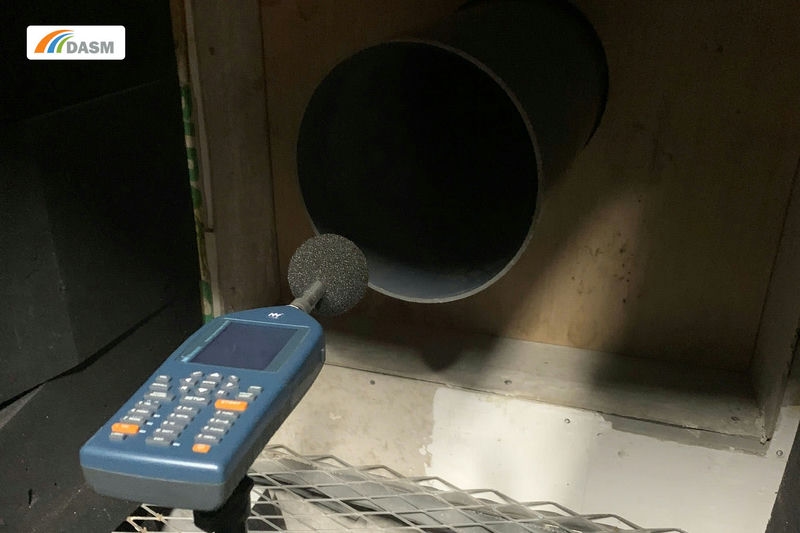
Benefits of using the insertion loss determination service at DASM
- The first laboratory in Vietnam to achieve VILAS accreditation for acoustic testing
- Team of specialized acoustic and measurement engineers with many years of experience in the HVAC industry, sound-absorbing materials, and sound insulation materials
- Modern equipment, synchronized according to ISO standards
- Commitment to accurate, objective, internationally recognized measurement results
- Optimal acoustic consulting and project design
DASM is currently rated as a leading acoustic technical partner for the HVAC industry in Vietnam. Customers who are manufacturers of sound insulation thermal insulation materials for air conditioning ducts or HVAC contractors in need of a unit to determine insertion loss and accurately determine the sound insulation capacity of materials standardized according to international standards, please contact DASM for consultation, quotation, and specific measurement scheduling.
Copyrighted standard notice
According to international copyright regulations and DASM policy, only the standard summary and test methodology are displayed. Direct download is not available.
VILAS 1541
DASM conducts testing according to this standard
DASM Acoustic Laboratory has accredited capability to conduct 1 testing method(s) compliant with standard ISO 7235:2023:
- Determination of insertion loss, flow noise and total pressure loss of silencers(ISO 7235:2003)
VILAS 1541 · ISO/IEC 17025
Need advice on Consulting, Design, and Improvement of Acoustic Materials and Equipment?
Consulting, design and improve materials/equipment/products to ensure optimal acoustic performance
Related Articles
Articles from the same category or related topics
- 6 min read
From Vietnamese Acoustic Knowledge to International Forums: DASM's Research Milestone in Acoustics Australia
A research paper on acoustic materials by DASM was published in Acoustics Australia, a world-renowned acoustic journal, marking a new step forward for DASM in the field of acoustics
Read more → - 3 min read
DASM Sound Absorption Testing for Noise Barriers According to ISO 354:2024 & EN ISO 11654:1997
DASM sound absorption testing for Noise Barriers in a reverberation room according to ISO 354:2024 and EN ISO 11654:1997 standards at a VILAS-certified laboratory
Read more → - 4 min read
DASM Participates in Long-Span Bridge Workshop for High-Speed Railways – Expanding Research Capabilities in Acoustics and Structural Vibration
DASM participates in the long-span bridge workshop for high-speed railways to update structural design trends, control structural vibration and acoustics, and prepare capabilities for projects
Read more →