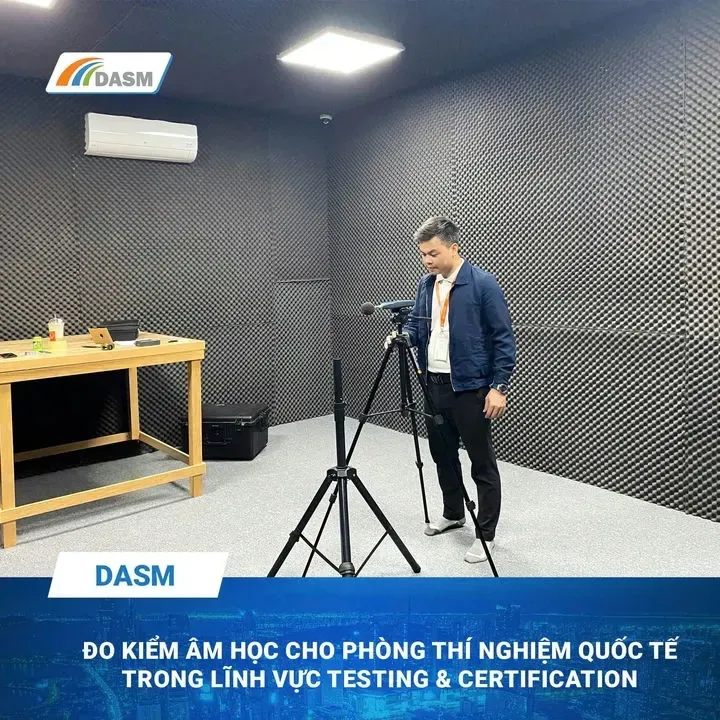
Acoustics and reverberation are the keys to a quality space. Optimizing the reverberation threshold is a necessary step in the design process of modern buildings.

Acoustics – an essential foundation in modern architecture
In an era where spatial experience is increasingly valued, acoustics plays a pivotal yet often overlooked role. From meeting rooms, classrooms, and hotels to recording studios and theaters – sound is not merely a secondary element, but a crucial part that creates the quality of a building.
DASM – The First and Only VILAS Acoustic Testing Laboratory in Vietnam!
Understanding Acoustic Indices Correctly – ISO Standards
DASM Surveys and Evaluates Noise at Top High-End Real Estate Projects in Vietnam
In essence, acoustics is the science studying the propagation and reflection of sound waves in space – thereby helping us control noise, reverberation, and listening-speaking quality.
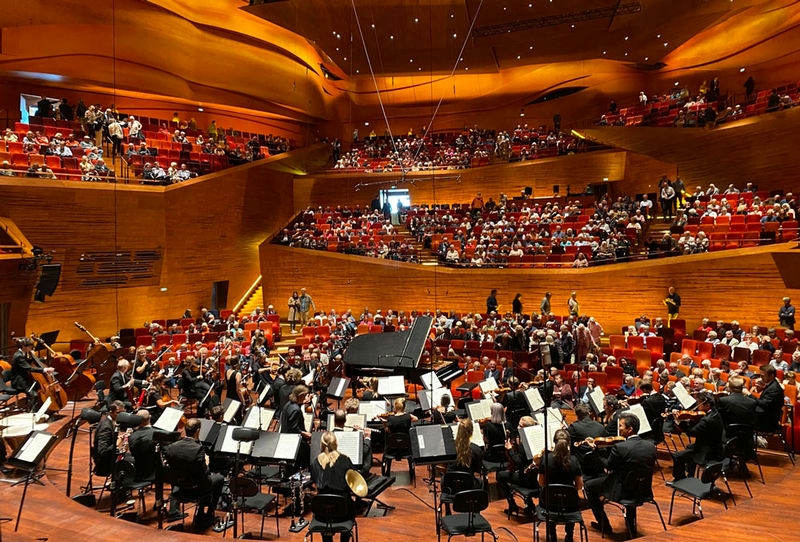
From Pythagoras to Sabine: The journey of shaping the acoustic industry
The concept of acoustics is not new. Since the 6th century BC, Pythagoras discovered the relationship between string length and sound pitch. By the 20th century, physicist Wallace C. Sabine laid the foundation for modern architectural acoustics when he published the formula for calculating reverberation time (RT60) – a core index for acoustic design in enclosed spaces.
What are reverberation and reverberation time (RT60)?
Reverberation is the phenomenon where sound continues to exist in a space after the source has stopped – due to sound waves reflecting back and forth between surfaces such as ceilings, walls, and floors.
This terminology is also known as reverberation time, reverberation time, reverberation time, reverberation time (English), RT60 (technical term, common)
If left uncontrolled, reverberation causes:
- The “echo” phenomenon, making speech unclear
- Loss of concentration, causing ear fatigue and reduced work efficiency
- Greatly affecting the sound experience in entertainment spaces
Reverberation time (RT60) is the time it takes for the sound intensity to decrease by 60 dB after the sound stops. Sabine introduced the formula:
T60 = 0.16 × V / A
Where:
V: spatial volume (m³)
A: total sound absorption area (m²)
Simply put: the more sound absorption materials there are (curtains, carpets, sound absorption, soft furniture...), the shorter the reverberation time – and vice versa.
Each space – a reverberation time “standard”
There is no single T60 value for all buildings. Depending on the purpose of use, the space needs an ideal reverberation threshold:
|
Space |
Ideal reverberation time (RT60) |
|
Meeting room, office |
0.5 – 0.8 seconds |
|
Classroom |
0.7 – 0.9 seconds |
|
Studio, recording room |
0.3 – 0.5 seconds |
|
Gym |
2 – 4 seconds |
|
Station, large lobby |
1.5 – 3 seconds |
|
Concert hall, church |
1.8 – 2.5 seconds |
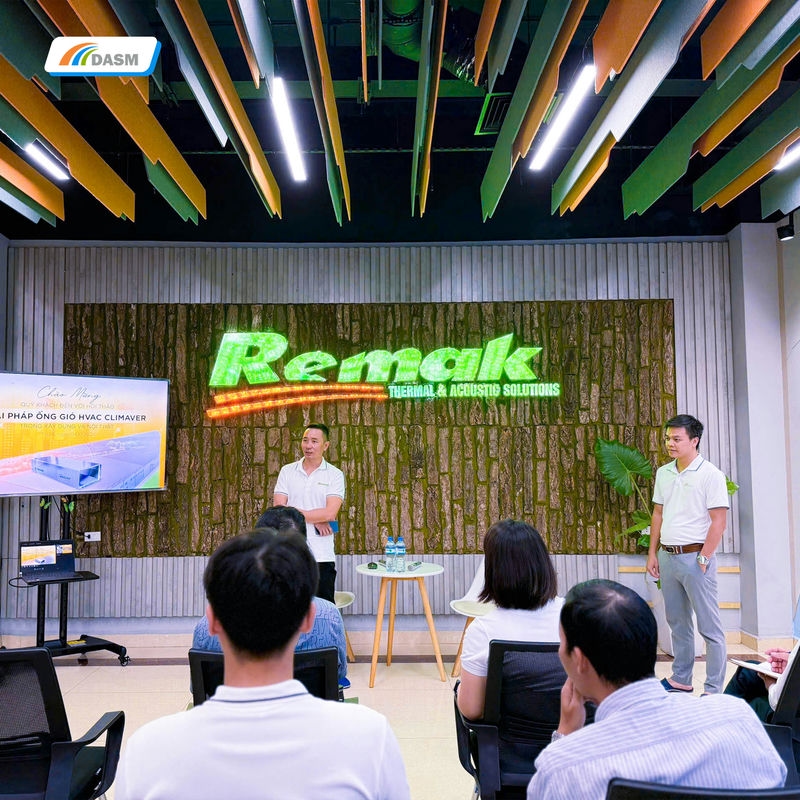
A small deviation in T60 can significantly affect the actual sound quality: speech loses clarity, echoes overlap, musical instruments lack emotion, or volume is uncontrollably reflected.
DASM – Pioneer unit in acoustic treatment and ISO-standard material testing
At DASM, we not only measure, but also survey and evaluate noise, advising optimal acoustic solutions for your building.
Services of DASM include:
✅ Measure actual reverberation time (RT60) using specialized ISO-standard equipment
✅ Analyze the sound absorption coefficient of materials
✅ Acoustic treatment solution consulting: sound absorption, diffusion, sound insulation
✅ Standard architectural acoustic design for meeting rooms, offices, cinemas, schools, studios…
With a team of experienced experts and internationally standardized equipment, DASM is currently a trusted partner for hundreds of construction projects nationwide.
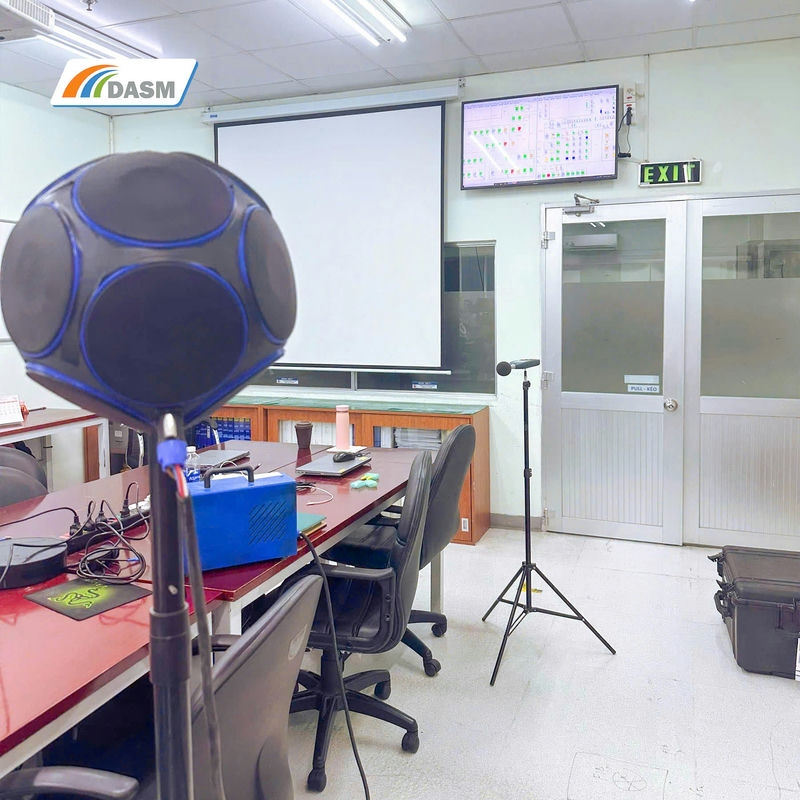
It can be said that this is an exact science – and the key to a standard building. From Sabine's formula to actual measurement, every decision in acoustic treatment requires in-depth understanding and proper investment.
If you are in need of a space with high requirements for sound quality, do not let acoustics be an overlooked step. Let DASM accompany you in material testing, consulting, and acoustic design for your building.
VILAS 1541 · ISO/IEC 17025
Need acoustic engineering advice?
Get in touch with DASM specialists for on-site surveys, VILAS 1541 testing, and optimized solutions for your facility.
Related Articles
Articles from the same category or related topics
- 6 min read
From Vietnamese Acoustic Knowledge to International Forums: DASM's Research Milestone in Acoustics Australia
A research paper on acoustic materials by DASM was published in Acoustics Australia, a world-renowned acoustic journal, marking a new step forward for DASM in the field of acoustics
Read more → - 3 min read
DASM Sound Absorption Testing for Noise Barriers According to ISO 354:2024 & EN ISO 11654:1997
DASM sound absorption testing for Noise Barriers in a reverberation room according to ISO 354:2024 and EN ISO 11654:1997 standards at a VILAS-certified laboratory
Read more → - 4 min read
DASM Participates in Long-Span Bridge Workshop for High-Speed Railways – Expanding Research Capabilities in Acoustics and Structural Vibration
DASM participates in the long-span bridge workshop for high-speed railways to update structural design trends, control structural vibration and acoustics, and prepare capabilities for projects
Read more →