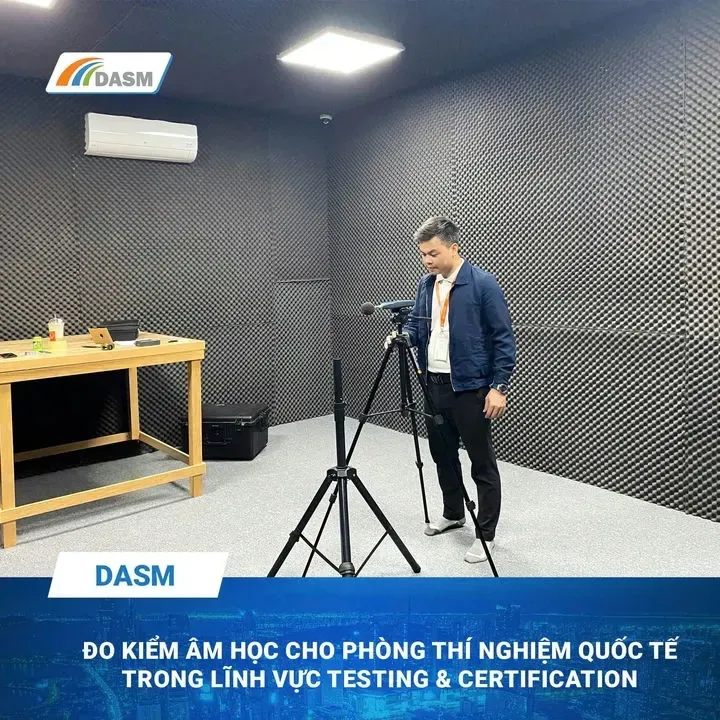
DASM Institute is one of the pioneering units in Vietnam implementing sound power measurement according to ISO 3741. The institute's acoustic testing service DASM ensures accuracy, promptness, and compliance with international standards.
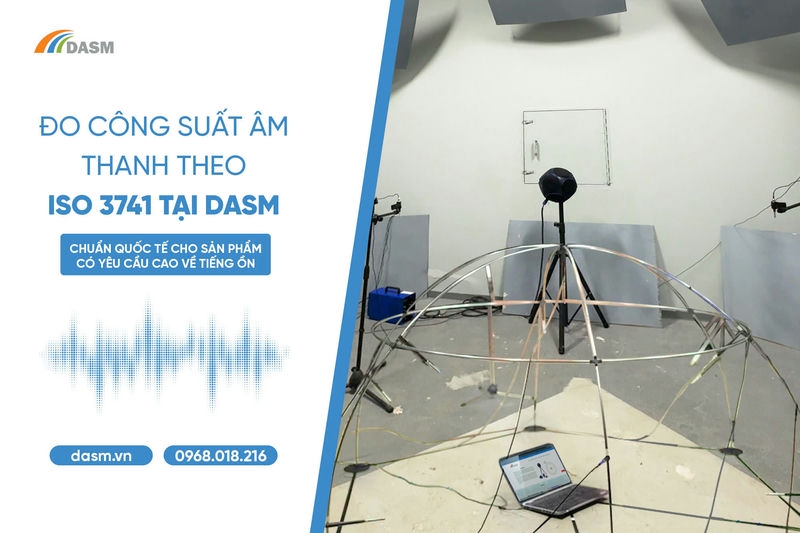
In the context of globalization and the increase of strict technical standards for industrial products, ensuring the acoustic quality of equipment has become one of the key factors to enhance competitiveness. Especially in industries such as HVAC, electromechanical, automation, household appliances, and industrial equipment, the requirement for sound power measurement is not only for internal control but also a mandatory condition for exporting to markets with strict regulations such as the EU, USA, Japan, and South Korea.
One of the most commonly applied and strictest standards is ISO 3741 – Acoustics — Determination of sound power levels of noise sources using sound pressure — Precision methods for reverberation test rooms. DASM Institute is a pioneer unit in Vietnam implementing a testing laboratory that meets ISO 3741 standards, providing services for accurate – fast – internationally standardized sound power measurement.
Adapter Noise Measurement According to ISO 3745-2012 Standard – Quality Inspection at DASM Institute
What is sound power measurement according to ISO 3741 standard?
ISO 3741:2010 is an international standard specifying the method for measuring the sound power level (Lw) of equipment by using sound pressure measured in a standard reverberation test room. This method belongs to the Precision Method category, commonly used as a basis for:
- Comparing designs among equipment lines
- Evaluating noise emission levels according to environmental laws
- Serving as technical evidence for certifications such as CE, RoHS, UL, JIS...
- Optimizing acoustic performance in product systems
ISO 3741 standard applies when the equipment to be measured has a relatively small size compared to the room volume, and when the emitted noise is within the measurable threshold with an appropriate signal-to-noise ratio (S/N ratio).
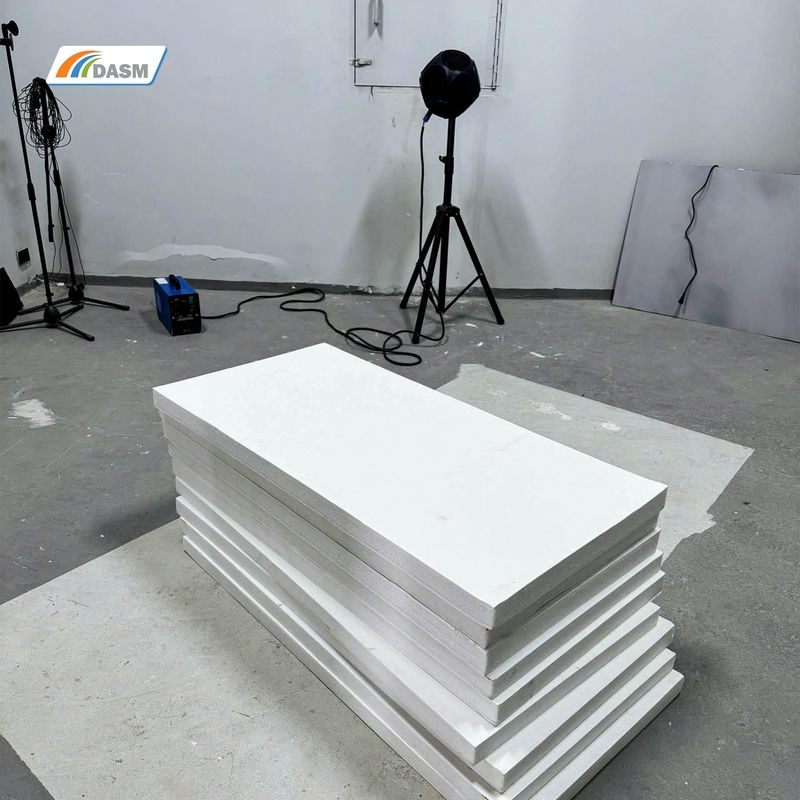
Standard reverberation room at DASM – the foundation for accurate Lw measurements
The testing laboratory at DASM is designed and constructed strictly according to the technical parameters in ISO 3741. Technical characteristics include:
Uniform sound reflection environment:
- Reverberation time (RT60) ratio is controlled according to the frequency spectrum from 100 Hz to 5000 Hz.
- Spatial uniformity of the sound field meets the standard.
- Background noise level is below the specified threshold.
Class 1 measuring equipment:
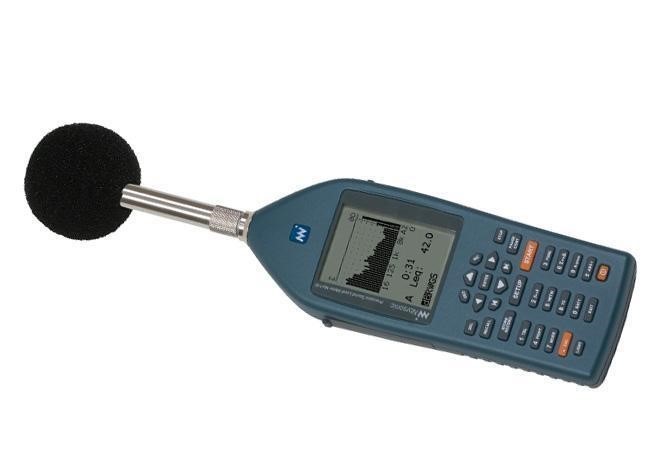
- Microphones: Sound level microphones type 1 according to IEC 61672-1.
- Data acquisition systems: Real-time analyzer and data logger with high resolution.
- Calibrator meeting ISO/IEC 17025 standard with international traceability.
Reasons why businesses need to measure sound power according to ISO 3741
Meeting international technical regulations:
Most developed countries require imported products to have sound power level assessment dossiers according to international standards. Sound power measurement reports from DASM help businesses complete CE Marking, UL Certification dossiers or customs procedures related to environmental and occupational health.
Improving product design:
Accurately measuring the sound emission level (Lw) helps the R&D department identify the main noise-generating frequencies and locations, thereby adjusting the structure, casing materials, dampers, or using suitable sound insulation layers.
Increasing reliability and brand value:
Products with clear acoustic certification often build trust with customers, especially in large projects involving international contractors, FDI investors, or key technical construction works.
Sound power measurement procedure at DASM
Step 1: Receiving equipment and technical dossier
- Customers provide:
- Equipment layout diagram
- Operating voltage and capacity
- Working conditions simulating reality
Step 2: Setting up equipment in the test room
The equipment is placed in the center of the reverberation room, ensuring a minimum distance to the walls to avoid boundary effects. Each measurement position is clearly marked according to the standard matrix.
Step 3: Measuring sound pressure at fixed points
At least 6 – 12 measurement points are sampled using mobile microphones or fixed microphones according to ISO 3741 rules. Analysis frequency: Octave band or 1/3 octave band from 100 Hz to 10 kHz.
Step 4: Calculating sound power Lw
Applying formula: Lw = Lp + 10 × log10 (A/A0)
Where:
- Lp: average sound pressure level
- A: equivalent sound absorption area in the room
- A0: reference area (1 m²)
Step 5: Correction and reporting
Calculating total uncertainty, analyzing noise frequency spectrum, correcting for background noise and resonance. Finally, DASM provides a bilingual report (Vietnamese – English) of legal value, accompanied by charts and technical recommendations.
Product types suitable for testing according to ISO 3741 at DASM
- Industrial fans (axial fans, centrifugal fans)
- Air compressors, generators
- HVAC equipment: AHU, FCU, residential and industrial air conditioners
- Household appliances: Range hoods, air purifiers, washing machines
- Power supplies, electric motors, control cabinets
Advantages of choosing DASM
✅ No need to send samples abroad – saving logistics costs and time
✅ Class 1 measuring equipment, ISO 17025 calibration
✅ International standard acoustic testing laboratory
✅ Valid report used for CE, RoHS, UL dossier...
✅ Fast turnaround time: 3-5 working days
✅ In-depth technical support, accompanying enterprises throughout product development
Frequently Asked Questions (FAQ)
Q1: What is the difference between sound power level Lw and sound pressure level Lp?
→ Yes. Lp depends on the listener position and distance, whereas Lw is a fixed value describing the noise generation capacity of the equipment - an objective parameter independent of the environment.
Q2: How often should the sound power of a product be re-measured?
→ Depending on the product development cycle, but typically for each new design version, or before launching the product to the international market.
Q3: Can measurements be conducted at the factory?
→ Sound power can be measured according to ISO 3744 (engineering method in an essentially free field over a reflecting plane), however, the accuracy is lower than ISO 3741. DASM's reverberation room is an ideal choice for products requiring high accuracy.
VILAS 1541 · ISO/IEC 17025
Need advice on Noise Survey & Assessment Services?
Measuring ambient environmental, factory and residential noise to support environmental impact assessment (EIA).
Related Articles
Articles from the same category or related topics
- 6 min read
From Vietnamese Acoustic Knowledge to International Forums: DASM's Research Milestone in Acoustics Australia
A research paper on acoustic materials by DASM was published in Acoustics Australia, a world-renowned acoustic journal, marking a new step forward for DASM in the field of acoustics
Read more → - 3 min read
DASM Sound Absorption Testing for Noise Barriers According to ISO 354:2024 & EN ISO 11654:1997
DASM sound absorption testing for Noise Barriers in a reverberation room according to ISO 354:2024 and EN ISO 11654:1997 standards at a VILAS-certified laboratory
Read more → - 4 min read
DASM Participates in Long-Span Bridge Workshop for High-Speed Railways – Expanding Research Capabilities in Acoustics and Structural Vibration
DASM participates in the long-span bridge workshop for high-speed railways to update structural design trends, control structural vibration and acoustics, and prepare capabilities for projects
Read more →