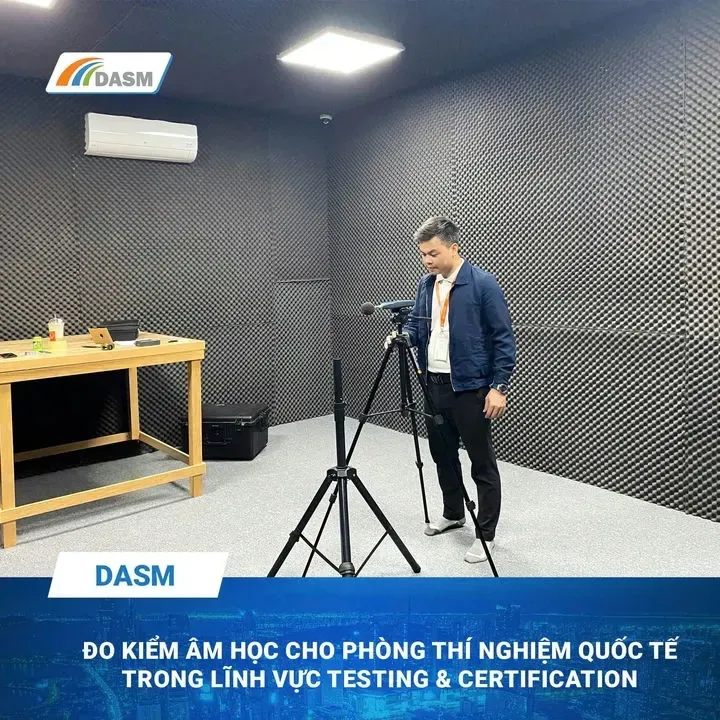
Sound absorption coefficient (symbol: α) is an index representing the sound absorption capacity of a material when sound waves impact its surface.
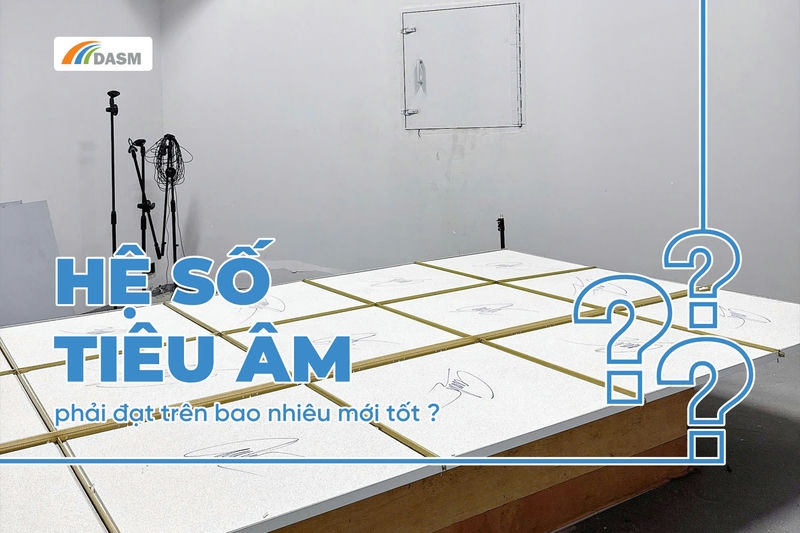
What is the sound absorption coefficient?
The sound absorption coefficient, also known as the sound absorption coefficient – symbol: α. This is an index representing the sound absorption capacity of a material when sound waves impact its surface. This index ranges from 0 to 1, in which:
- α = 0: The material does not absorb, all sound is reflected back
- α = 1: The material absorbs completely, ideal in acoustic treatment
In summary, the higher the measured sound absorption coefficient result, the better the material is classified into the group of sound absorption materials. Sound absorption materials will absorb sound well and the space will reduce reverberation, resonant sound, and noise interference. Thus, the sound quality is better, the sound is clearer, more faithful, and more pleasant.
DASM is certified for acoustic testing operation registration
Sound absorption level testing for Vinh Hung perforated barrier acoustic panels
What sound absorption coefficient is considered “good”?
Below is the classification table of the sound absorption capacity of materials according to the α value:
|
α value |
Evaluation |
Typical materials |
|
0.00 – 0.30 |
Poor (strong reflection) |
Brick, glass, concrete |
|
0.30 – 0.50 |
Medium |
Thin carpet, vulcanized rubber, simple perforated ceiling |
|
0.50 – 0.70 |
Fair |
|
|
0.70 – 0.90 |
Good |
Sonic panels, fiberglass, acoustic wood panels, mineral wool for acoustics, acoustic foam |
|
≥ 0.90 |
Very good |
Acoustic wood, acoustic mineral wool, bass traps, high-end composite systems, etc. |
In practice, good sound absorption materials usually have an α of 0.7 or higher and should be combined correctly with other sound insulation and sound absorption materials to achieve the highest efficiency for the project.
Combining with which type of material appropriately depends on the function and purpose of the project as well as the design and budget of the investor.
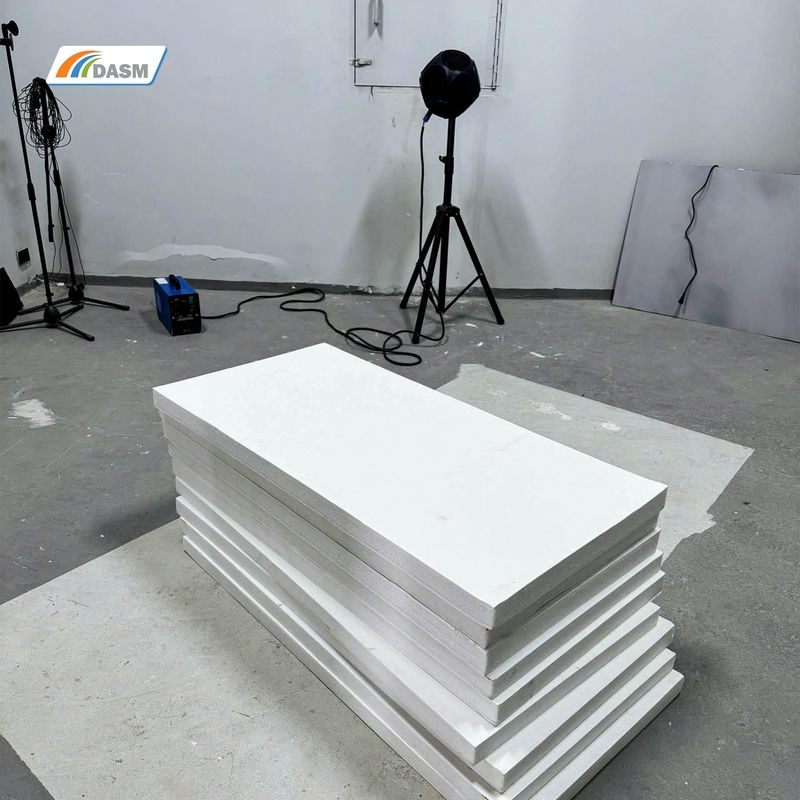
What is NRC? Is it important?
NRC (Noise Reduction Coefficient) is the average index of the sound absorption coefficient at 4 important frequency bands (250Hz – 500Hz – 1000Hz – 2000Hz).
The sound absorption coefficient NRC is a familiar index in technical documents of civil, industrial projects, conference rooms, studios, etc.
|
NRC |
Evaluation |
|
NRC < 0.50 |
Low efficiency |
|
NRC ≥ 0.70 |
Good – meets design standards |
In summary: NRC ≥ 0.70 is considered a good standard to ensure the space absorbs sound effectively, limits reverberation, interference, and echoes; helping the space achieve more professional sound quality.
Recommended sound absorption coefficient by project type
|
Project type |
Recommended α value |
|
Office, classroom |
≥ 0.50 |
|
Meeting room, auditorium |
≥ 0.60 |
|
Studio, cinema |
≥ 0.75 |
|
Factory, corridor |
≥ 0.40 |
Choosing sound absorption materials and sound insulation materials for noise reduction correctly according to the standard α level helps ensure sound quality and compliance with construction and interior design regulations, bringing you a better sound experience.
DASM – Testing sound absorption coefficient according to international standards
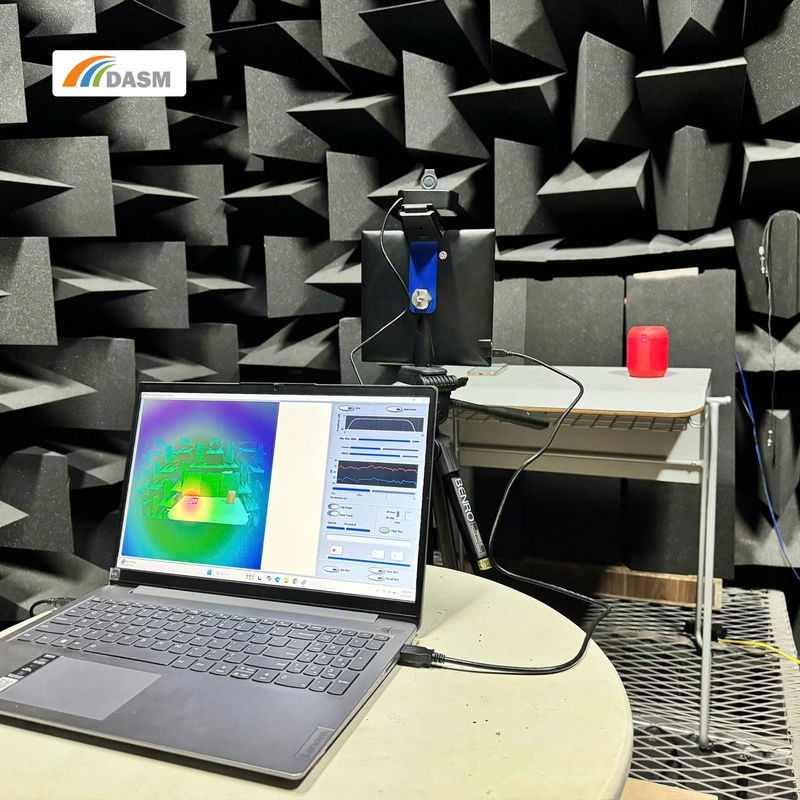
At the VILAS standard laboratory – where acoustic measurements and material testing of the DASM institute are specialized, we perform measurements of the sound absorption coefficient according to two popular international standards: ISO 354 and ASTM C423
International standard equipment:
- Standard reverberation room
- Calibrated Class 1 microphone
- Automatic sound absorption coefficient measurement system, accurate and transparent results
Test results can be used for:
- Technical dossiers, project bidding
- Sound absorption material certification
- Product export according to ISO standards
When should you measure the sound absorption coefficient?
You should perform sound absorption coefficient measurements at DASM when:
- When you are a manufacturer of sound absorption materials needing technical certification
- When you are a design and construction unit needing to verify material efficiency
- When you need to compare and select materials suitable for each type of project
- When preparing bidding documents or projects requiring in-depth acoustic testing
Contact DASM today if you need to measure the sound absorption coefficient? Want to know if your materials meet the standards?
DASM is currently a trusted partner in sound absorption coefficient measurement and acoustic material certification in Vietnam. Our experienced technical team and acoustic experts will consult – design architectural acoustics to meet specific practical needs and your dossier.
VILAS 1541 · ISO/IEC 17025
Need advice on Materials Acoustic Testing?
Services of testing, measuring and analyzing acoustic properties of equipment, products, vehicles, acoustic materials, etc.
Related Articles
Articles from the same category or related topics
- 6 min read
From Vietnamese Acoustic Knowledge to International Forums: DASM's Research Milestone in Acoustics Australia
A research paper on acoustic materials by DASM was published in Acoustics Australia, a world-renowned acoustic journal, marking a new step forward for DASM in the field of acoustics
Read more → - 3 min read
DASM Sound Absorption Testing for Noise Barriers According to ISO 354:2024 & EN ISO 11654:1997
DASM sound absorption testing for Noise Barriers in a reverberation room according to ISO 354:2024 and EN ISO 11654:1997 standards at a VILAS-certified laboratory
Read more → - 4 min read
DASM Participates in Long-Span Bridge Workshop for High-Speed Railways – Expanding Research Capabilities in Acoustics and Structural Vibration
DASM participates in the long-span bridge workshop for high-speed railways to update structural design trends, control structural vibration and acoustics, and prepare capabilities for projects
Read more →