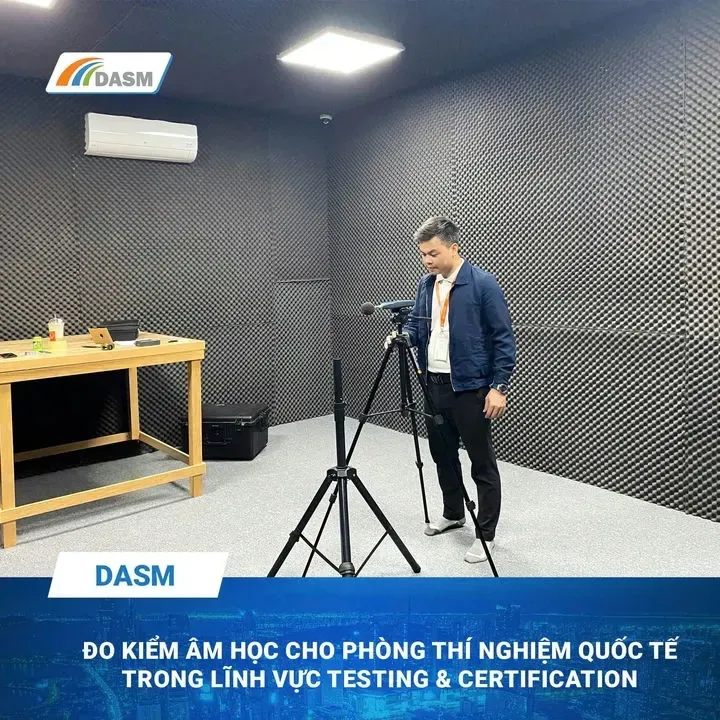
ASTM International (formerly known as the American Society for Testing and Materials) is an international organization that develops and publishes technical standards for materials, products, systems, and services. ASTM standards are applied in various fields, including construction materials, energy, electronics, healthcare, and particularly acoustics.
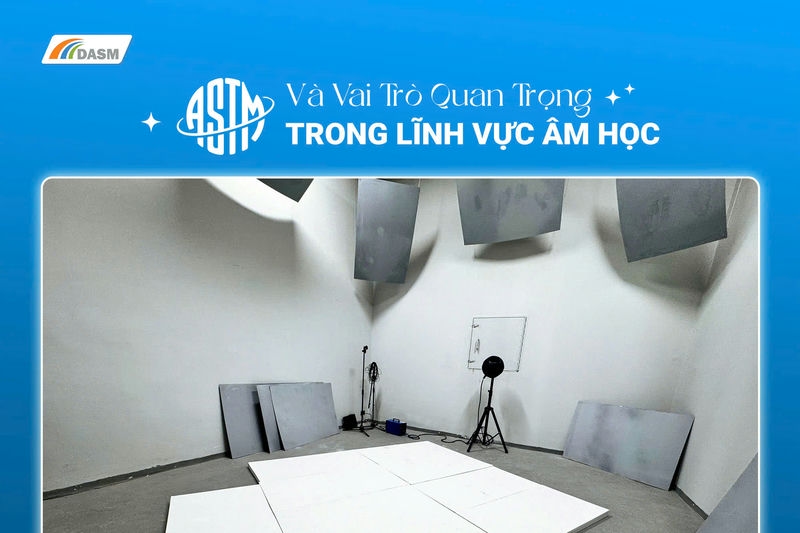
ASTM Standards and Acoustics
In the field of acoustics, ASTM standards play a crucial role in determining and measuring the acoustic properties of materials, helping to optimize design and construction quality, especially in areas such as sound absorption, sound insulation, and thermal insulation.
ASTM standards provide test methods to determine the sound absorption coefficient, sound insulation properties of materials or building structures, helping engineers and designers ensure that materials used in a space can meet noise and acoustic performance requirements.
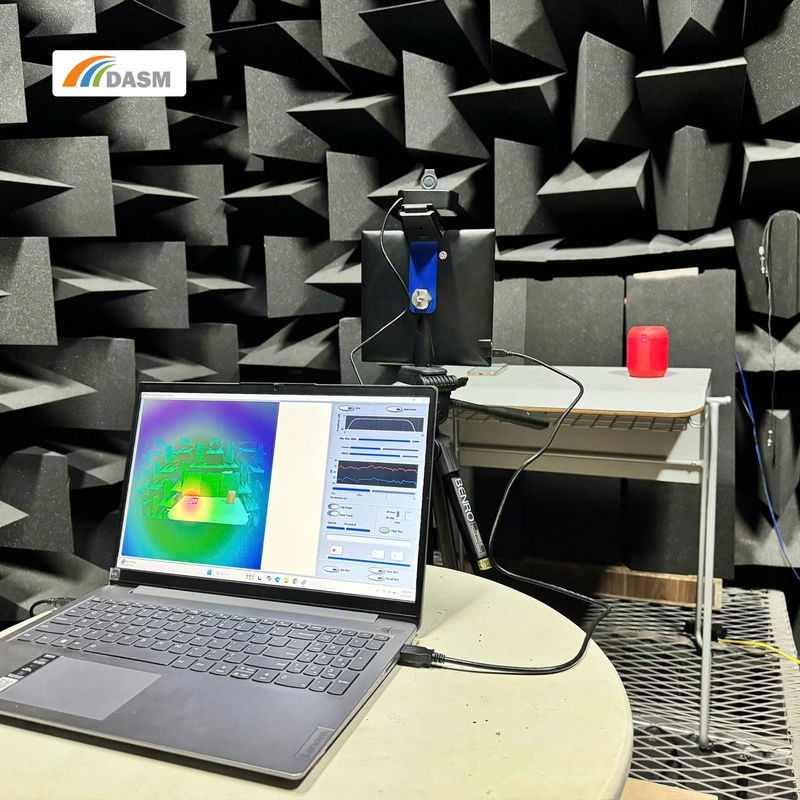
Adapter Noise Measurement According to ISO 3745-2012 Standard – Quality Inspection at DASM Institute
Common ASTM Standards in Acoustics
Below is a list of common ASTM standards in the field of acoustics, including standards related to measuring and evaluating sound insulation, sound absorption, and noise reduction capabilities:
- ASTM C423 – Standard Test Method for Sound Absorption and Sound Absorption Coefficients by the Reverberation Room Method (NRC)
This standard is used to determine the sound absorption capacity of materials in a reverberation room, thereby helping to evaluate the sound insulation and noise reduction performance of materials.
- ASTM E90 – Standard Test Method for Laboratory Measurement of Airborne Sound Insulation of Building Partitions (Sound Transmission Loss):
This standard measures the noise reduction through walls or structures, helping to evaluate the sound insulation efficiency between spaces.
- ASTM E413 – Classification for Rating Sound Insulation (Sound Transmission Class - STC):
STC is an index used to evaluate the overall sound insulation capability of materials and structures in blocking noise.
- ASTM E336 – Standard Test Method for Measurement of Airborne Sound Attenuation Between Rooms in Buildings:
This standard measures airborne sound transmission between rooms in an actual building, helping to evaluate the sound insulation efficiency between spaces in a living or working environment.
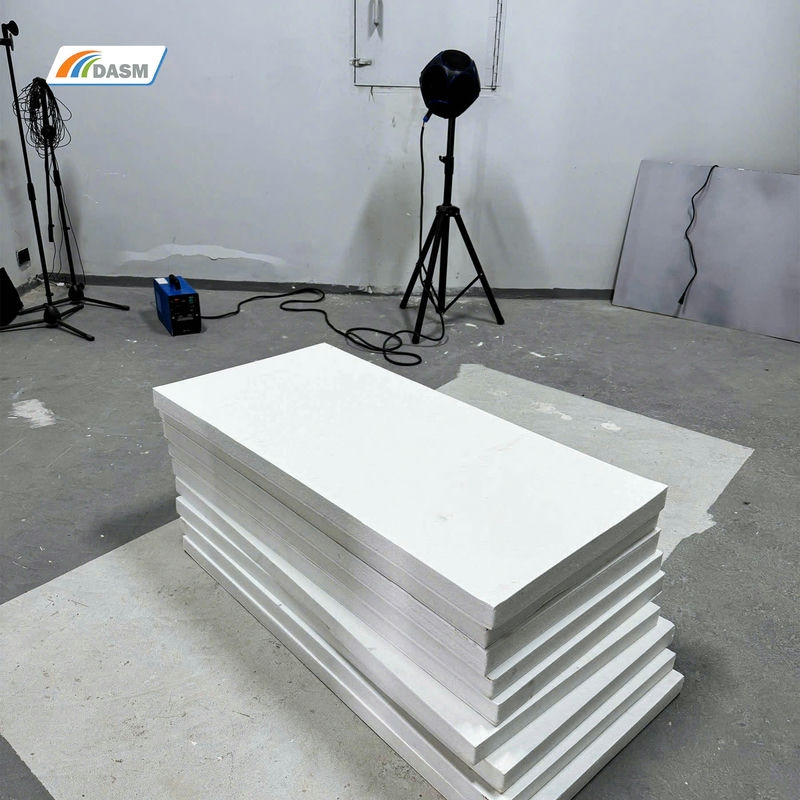
- ASTM E1050 – Standard Test Method for Impedance and Absorption of Acoustical Materials Using Tube, Two Microphone and Digital Frequency Analysis System:
This is a method using an impedance tube to measure the sound absorption capacity of materials, thereby evaluating sound-absorbing properties and assisting in designing effective sound insulation spaces.
- ASTM E795 – Standard Practices for Mounting Test Specimens During Sound Absorption Tests:
This standard is used to measure sound insulation capabilities within rooms and between areas in the same building, ensuring effective sound insulation between spaces.
- ASTM C1340 – Standard Test Method for Estimating Sound Insulation of Windows:
This standard measures the sound insulation capability of windows, helping to evaluate the effectiveness of preventing outdoor noise from entering interior spaces.
- ASTM C1428 – Standard Test Method for Evaluating Sound Insulation of Building Material Panels:
This standard is used to evaluate the sound insulation capacity of material panels, especially in comprehensive sound insulation systems for construction projects.
- ASTM E1238 – Standard Test Method for Acoustic Properties of Double Walls:
This standard measures the sound insulation capability of double walls, helping to evaluate noise reduction effectiveness in buildings with dual-layer partitions.
- ASTM E1332 – Standard Classification for Rating Outdoor-Indoor Sound Attenuation:
This standard evaluates the sound reduction capability of room structures and measures background noise level in spaces, helping to create quieter and more comfortable environments.
These standards not only serve the design of recording studios, theaters, offices, and apartments but also form the foundation for green building projects achieving LEED, LOTUS, and WELL certifications.
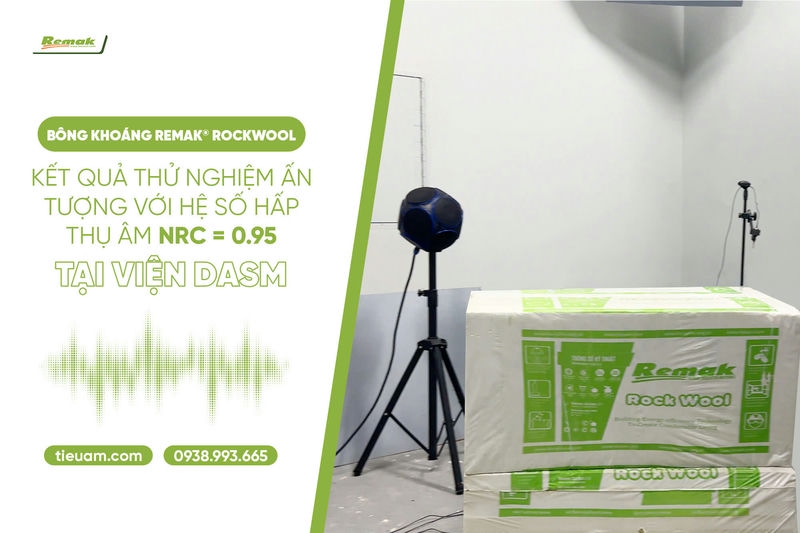
The Important Role of International ASTM Standards in Acoustic Design
Providing accurate testing methods: Helps evaluate the effectiveness of materials, assisting in selecting the right materials for spaces requiring noise reduction.
Ensuring international standards: ASTM standards are globally recognized, helping products and projects meet international technical and quality requirements.
Supporting space design optimization: ASTM standards allow for the measurement, calculation, and adjustment of acoustic performance in construction projects, helping to improve living and working spaces.
DASM – An Acoustic Testing Unit According to ASTM, VILAS Accredited
DASM is an ASTM acoustic testing laboratory accredited by VILAS, operating under the ISO/IEC 17025 quality management system. This is the highest international certification for technical competence in the field of measurement and material testing.
At DASM, measurements, material testing, and acoustic inspections are carried out strictly according to ASTM standards with:
✅ Modern equipment, regularly calibrated, meeting international standards
✅ Experts with years of experience, thoroughly trained
✅ Strict procedures, objective measurement results with legal validity
Benefits of choosing DASM:
- Meeting technical requirements in construction acceptance and inspection dossiers
- Accepted in bidding, design consulting, and acoustic supervision
- Effective support for projects requiring international green certifications
ASTM standards are important tools to help ensure that acoustic requirements are implemented accurately and effectively. Applying these standards properly will help achieve optimal acoustic quality in architectural design and construction, ensuring an ideal living and working environment for everyone.
Contact DASM Institute immediately for consultation and detailed quotation on international standard acoustic services for your products and projects of yours.
VILAS 1541 · ISO/IEC 17025
Need acoustic engineering advice?
Get in touch with DASM specialists for on-site surveys, VILAS 1541 testing, and optimized solutions for your facility.
Related Articles
Articles from the same category or related topics
- 6 min read
From Vietnamese Acoustic Knowledge to International Forums: DASM's Research Milestone in Acoustics Australia
A research paper on acoustic materials by DASM was published in Acoustics Australia, a world-renowned acoustic journal, marking a new step forward for DASM in the field of acoustics
Read more → - 3 min read
DASM Sound Absorption Testing for Noise Barriers According to ISO 354:2024 & EN ISO 11654:1997
DASM sound absorption testing for Noise Barriers in a reverberation room according to ISO 354:2024 and EN ISO 11654:1997 standards at a VILAS-certified laboratory
Read more → - 4 min read
DASM Participates in Long-Span Bridge Workshop for High-Speed Railways – Expanding Research Capabilities in Acoustics and Structural Vibration
DASM participates in the long-span bridge workshop for high-speed railways to update structural design trends, control structural vibration and acoustics, and prepare capabilities for projects
Read more →