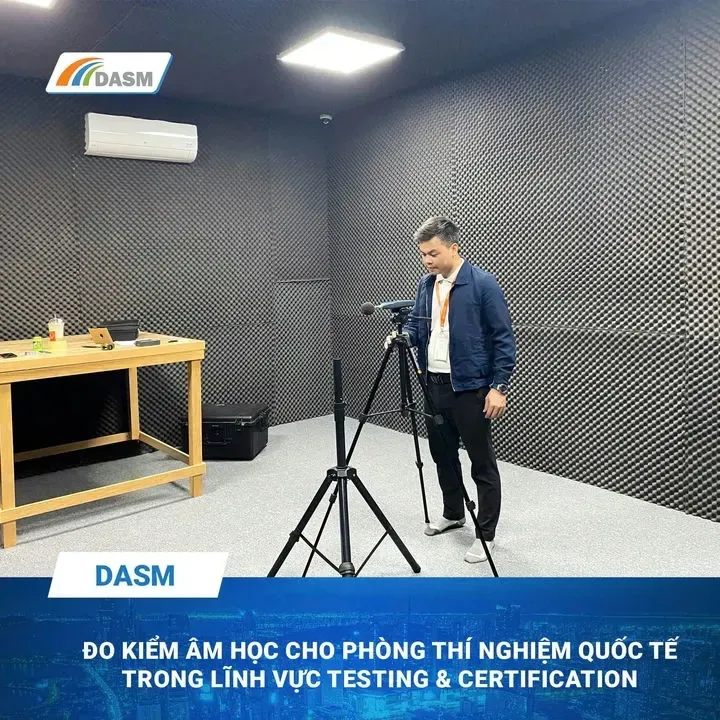
Foam is not a sound insulation material, yet currently there are still many people who misunderstand the nature of this sound absorption material, using it incorrectly so it is ineffective and wasteful!
"My room is too noisy, can I stick foam to get sound insulation?" This is one of the common questions that DASM Institute frequently receives from clients. And the answer from the acoustics experts at DASM is: ABSOLUTELY NOT.
What Sound Absorption Coefficient Is Good? DASM The Number 1 Acoustic Testing Unit In Vietnam
Acoustics And Reverberation: Essential Foundation In Modern Architecture
Sound treatment in living, working, or entertainment spaces is increasingly receiving attention. However, many people misunderstand sound insulation and sound absorption, leading to the use of inappropriate materials, typically sound-absorbing foam.
Distinguish clearly: sound insulation and sound absorption
Understanding the true nature of sound insulation and sound absorption is the first step to choosing an effective solution.
What is sound absorption?
Sound absorption is the process of absorbing and reducing sound reflection in the same space, helping sound become clear, free from echoes or reverberation, making the sound clearer and sharper.
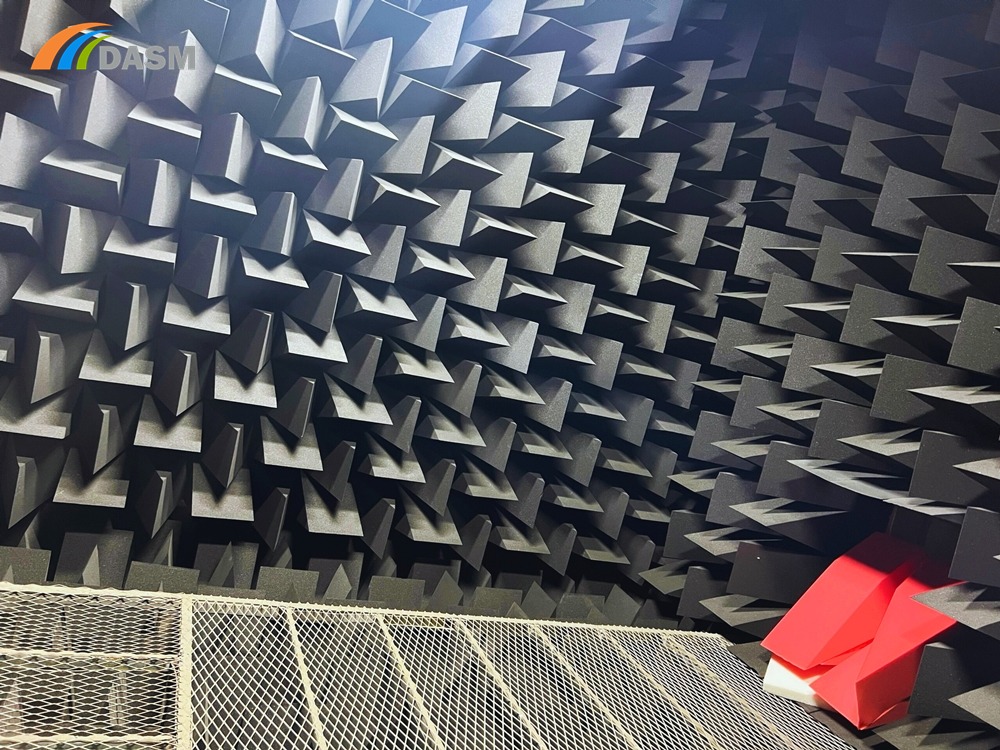
Commonly used sound-absorbing foams such as egg crate acoustic foam, wedge foam, pyramid foam, mushroom profile acoustic foam… or sound-absorbing materials like sonic acoustic panels, wood wool acoustic panels only have the effect of absorbing sound inside the room, and cannot prevent sound from transmitting out or entering from the outside.
What is sound insulation?
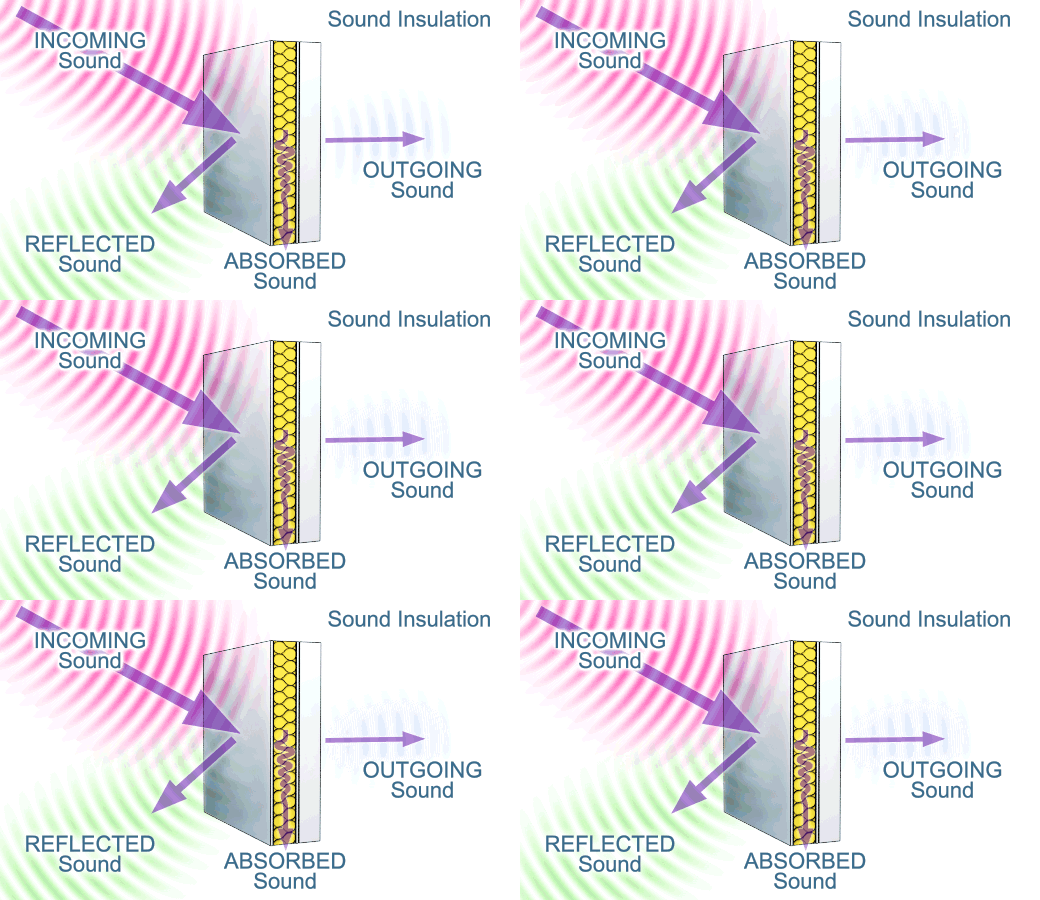
Sound insulation is the ability to prevent sound from transmitting from one space to another. It requires specialized construction systems and materials that can completely block sound or significantly reduce the level of sound transmission.
Therefore, using sound-absorbing foam for sound insulation is one of the most common mistakes, making the solution ineffective and causing a waste of time and cost.
Effective sound insulation materials – What should be chosen?
For sound insulation to be truly effective, materials with the following characteristics must be chosen:
+ High density
+ Dense and closed structure – limiting vibration transmission
+ Ability to dissipate acoustic energy passing through the material
+ Some effective sound insulation materials:
Traditional sound insulation materials:
+ Concrete
+ Solid brick
+ Multi-layer pressed wood
+ Thick glass
Modern sound insulation materials:
+ Acoustic non-vulcanized rubber, anti-vibration vulcanized rubber
+ High-density mineral wool, glass wool
+ XPS foam boards, PE foam
+ Soundoff Barrier panel: for walls and partitions
+ Ultralight XPS Panel: ultra-light sound insulation for floors and walls
+ SoundOFF Isophon panel: high-performance wall sound insulation
Depending on each project, purpose as well as the client's budget, acoustic engineers and experts will advise appropriate acoustic solutions. No two projects are alike.
In practice, sound insulation materials and sound absorption materials are often combined to enhance the acoustic quality of the project. And to maximize effectiveness, proper technical installation is also very important.
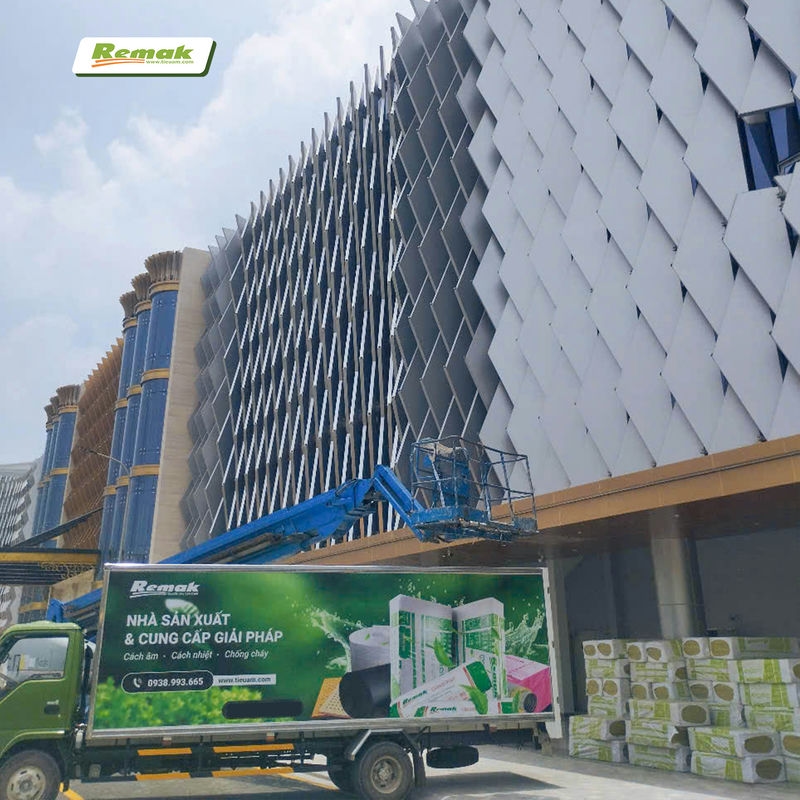
Why should you not arbitrarily choose sound insulation materials – sound absorption materials?
Acoustics is an advanced engineering science, therefore sound treatment and noise control require knowledge and clear technical verification. Choosing the wrong materials and applying incorrect noise treatment solutions will not only increase costs and cause waste but may even make the noise problem more severe.
At DASM, all acoustic treatment solutions are researched based on:
+ Purpose of use
+ Space characteristics
+ Noise conditions
+ Technical indices that have been tested and simulated in practice
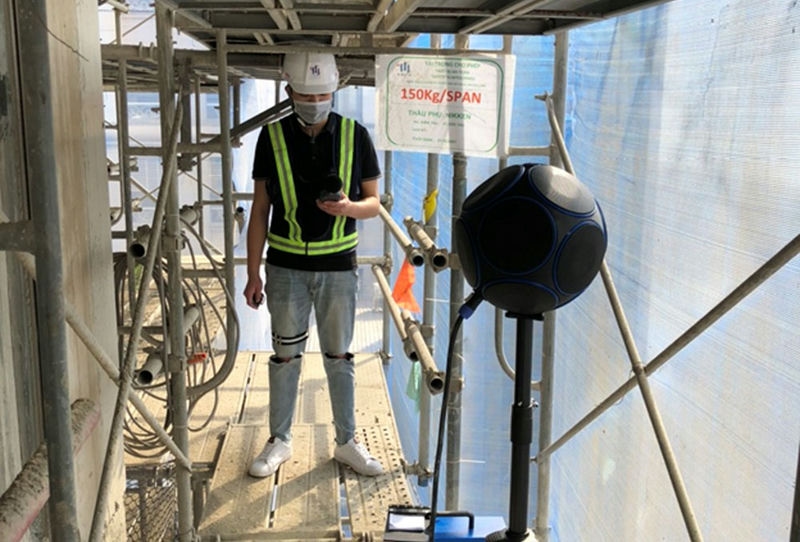
DASM – Leading Acoustics Institute in Vietnam
The pioneering unit possessing a VILAS standard Acoustics Lab
DASM Institute is the first and only organization in Vietnam with an acoustics laboratory accredited with VILAS according to ISO/IEC 17025 standards, providing a full range of services in the field of sound treatment:
+ Testing and acoustic material testing
+ On-site noise survey and assessment
+ Consulting – designing sound insulation and sound absorption systems
+ Building acoustics simulation using specialized software
+ Noise and vibration control in industrial and residential applications
+ Research on improving acoustic materials and equipment upon request
Whether it is treating noise for offices, factories, restaurants, hotels, residences, studios, or public projects – DASM is always ready to accompany you from survey – design – testing – technical consulting stages. Contact DASM Institute immediately for thorough advice on the project noise problem you are facing.
VILAS 1541 · ISO/IEC 17025
Need advice on Noise Survey & Assessment Services?
Measuring ambient environmental, factory and residential noise to support environmental impact assessment (EIA).
Related Articles
Articles from the same category or related topics
- 6 min read
From Vietnamese Acoustic Knowledge to International Forums: DASM's Research Milestone in Acoustics Australia
A research paper on acoustic materials by DASM was published in Acoustics Australia, a world-renowned acoustic journal, marking a new step forward for DASM in the field of acoustics
Read more → - 3 min read
DASM Sound Absorption Testing for Noise Barriers According to ISO 354:2024 & EN ISO 11654:1997
DASM sound absorption testing for Noise Barriers in a reverberation room according to ISO 354:2024 and EN ISO 11654:1997 standards at a VILAS-certified laboratory
Read more → - 4 min read
DASM Participates in Long-Span Bridge Workshop for High-Speed Railways – Expanding Research Capabilities in Acoustics and Structural Vibration
DASM participates in the long-span bridge workshop for high-speed railways to update structural design trends, control structural vibration and acoustics, and prepare capabilities for projects
Read more →